Lately, two of Sacramento’s cultural storytelling arms have been leaning into low-cost admission initiatives with a boldness that mirrors their plays and exhibits.
For both Capital Stage and the California Museum, prioritizing access is a non-negotiable extension of their missions, even through the ebbs of nonprofit funding and post-pandemic shifts within the arts landscape.
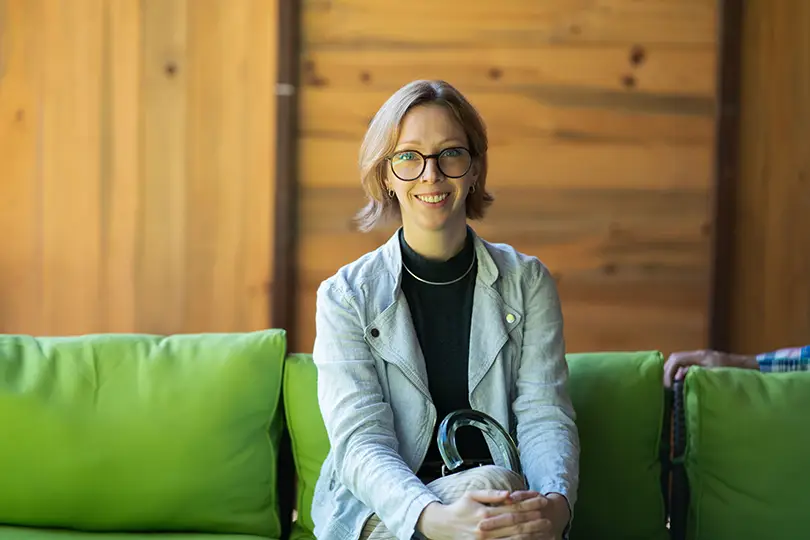
“Our mission and our values are such that the vision that we see for the company moves in the direction of access,” said Liz Gray, managing director of Capital Stage, who, shortly after stepping into that role late last summer, implemented recurring pay-what-you-will nights and fixed $10 ticketing for students and school faculty and staff, now available in advance and at the door.
“It’s my hope and part of my job right now to figure out how to make these fiscally accessible programs make sense for the theater,” Gray said.
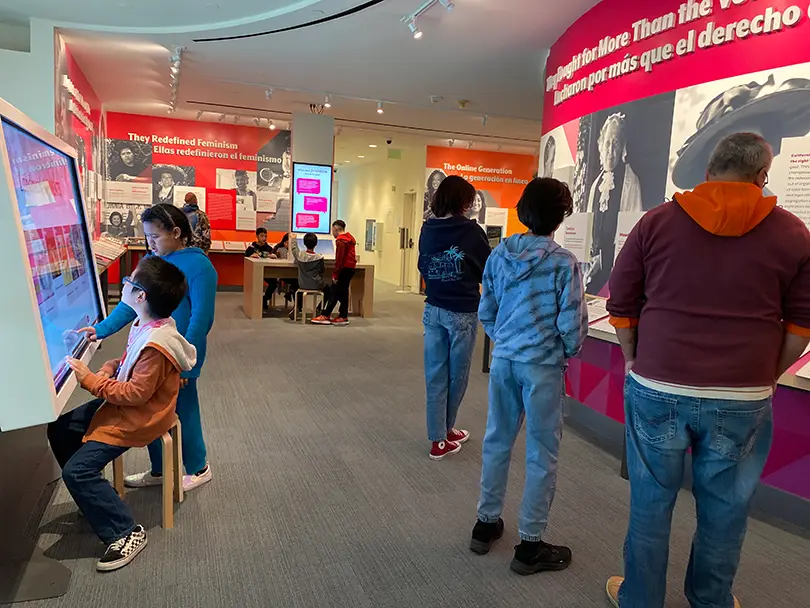
Making art, history and cultural experiences accessible to all is central to California Museum’s mission, said Danielle Wood, the communications and marketing director of the museum, which caps adult general admission at $10 and offers multiple free or reduced-cost programs.
“This accessibility ensures that everyone, regardless of background, can benefit from and participate in cultural experiences,” Wood said.
Grounded in thoughtful stewardship, the two institutions are executing on community affordability initiatives strategically and creatively, while identifying visitor touchpoints beyond ticket price where access can grow.
Along the way, they are seeing patron enthusiasm and community response to donation opportunities tied to access.
Pay what you will, see a play and more
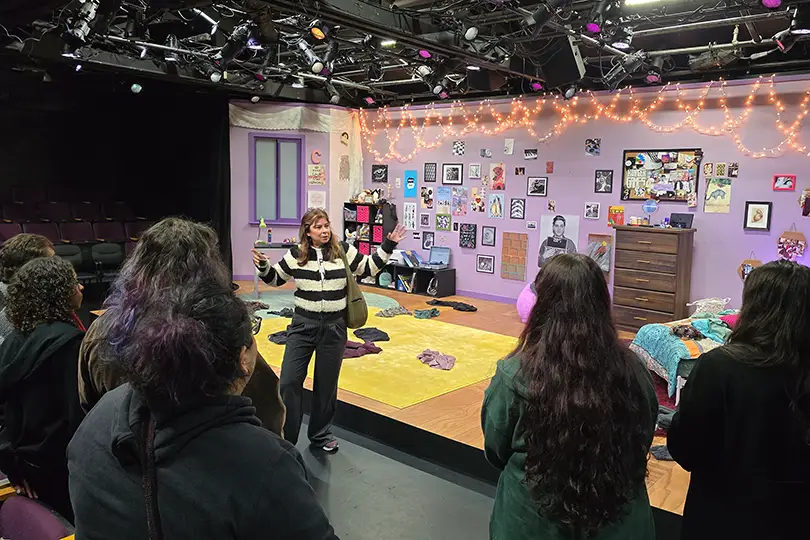
At Capital Stage’s Dec.13 show, youth poets from 916 Ink in Sacramento recited their work before a performance of “I and You,” an exploration of teenage identity sparked by a poetry-related school assignment. That night, audience members got in the door for as little as $5 — a steep cut from the theater’s typical ticket prices, which generally range upward from $51.
The evening marked the second of the theater’s Community Nights, now offered on the second Saturday of each production run, which pair pay-what-you-will entry with programming presented in collaboration with other nonprofit and arts organizations aligned with the play’s themes, according to Gray.
“They’re by far the most full nights that we see outside of a subscription night,” said Gray, nodding to promotional efforts by Misty McDowell, CapStage’s marketing manager. “You can feel the liveliness in the audience, and you feel that it’s a theater full of people who really want to be there.”
Attendees can reserve advance tickets for Community Nights online or by calling the box office, allowing them to plan ahead and arrive with guaranteed admission, said Gray. Previously, reduced-price tickets were available only on select occasions through a same-day, at-the-door-only rush system.
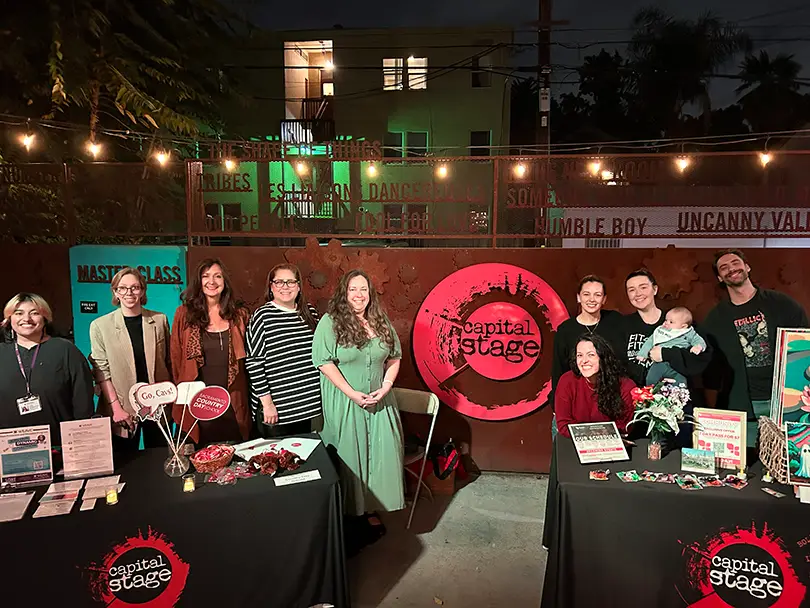
Tickets are going quickly for the Feb. 7 Community Night performance of “The Sound Inside,” which Gray said will feature tabling by CapLit and a follow-up pay-what-you-will creative writing workshop at a venue provided by CapStage.
“We’re providing a space for other nonprofits to share their work, but we’re also providing space for other artists to be able to show their art in a way that is exciting for them, is meaningful for them, is a new space for them that they may not have had the ability to have an access point into sharing their work before,” Gray said.
Offering pay-what-you-will nights can be fiscally challenging, Gray said. Forty percent of CapStage’s funding comes from ticket sales, and over 60% of the theater’s total revenue goes to paying its actors, designers, staff members, directors, carpenters, electricians, audio engineers, apprentices and others, she said.
“In order to run an organization that values supporting our crew and creatives, we have to generate funding from wherever we can to foster Sacramento’s creative economy,” said Gray. “Any reduction in our earned revenue impacts our ability to operate sustainably and puts pressure on our need to find funding from other sources.”
With diminishing fiscal support from the public sector, individual donors — who make up the majority of the theater’s overall funding — are becoming more crucial, she added.
Some generous patrons of the first two Community Nights have been eager to pay full price, or more, to help feed the program, Gray said. While the number of those donations so far does not cover the loss generated from pay-what-you-will tickets, “the holistic value of offering this ticketing model to the Sacramento community far outweighs the fiscal deficit,” she added.
“It’s a big challenge, but these kinds of programs, and accessibility in general, are not going away,” Gray said. “It’s something that’s always been necessary for the theater.”
Access points like ticketing, Gray said, often lead to other forms of access that help people engage more fully in the arts community. The theater recently installed new handrails and received a grant to do one American Sign Language-interpreted performance per production, and Gray hopes in the future to expand sensory access at every step of the theatergoing experience, from online information and physical navigation to performances designed to welcome parents with young children.
“Once you open the door, you realize how many more doors there are to open,” said Gray. “We’re trying to be intentional about which doors we feel like we can create keys for first before we just try to fling every door open in a way that we wouldn’t be able to plan for as easily.”
Free museum admission days nurture visitor growth
Since 1999, the California Museum has opened its doors for annual citywide free museum days. It also previously participated in the annual Smithsonian Free Museum Day. But recognizing a need for additional free admission opportunities, the museum made offering its own free community appreciation day one of its fundraising goals in 2024.
About a year later, the museum saw nearly 1,000 visitors attend a celebration of California’s 175th birthday — the second of its free community days made possible by donor generosity during Big Day of Giving and throughout the year, said Wood.
“We find that whenever we offer free admission days, we see hundreds of visitors, including people with large families, who ordinarily find the cost of admission to be a barrier to their attendance,” said Wood.
Admission fees are an important source of earned income for the museum and help to underwrite operating costs (unlike grants, which are typically restricted in how they can be spent), said Wood, but “providing free or reduced-cost admission does not translate directly into lost revenue because many of the guests using these programs could not afford to, or would not choose to, purchase full-price admission.”
Even though free admission days require higher staffing and more resources, they still find any negligible impact on their bottom line worth it. (The California Museum’s funding primarily comes from grants, in-kind support from the state and sponsorships from California-based businesses.)
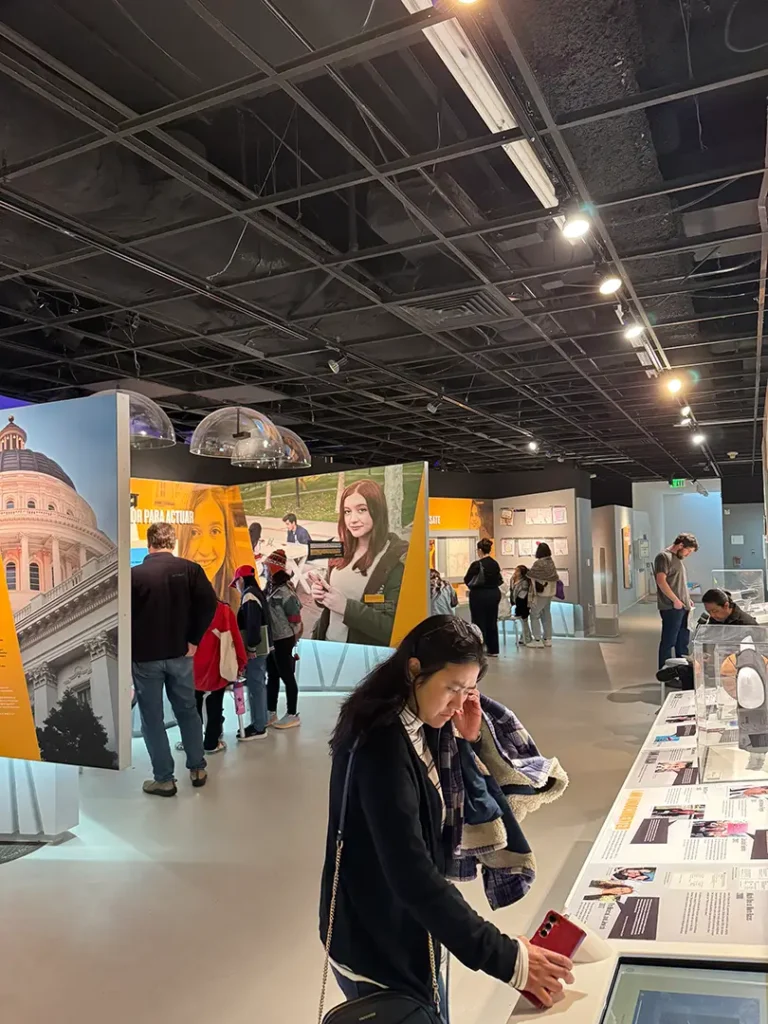
“Considering the value of reaching a wider audience, we find it worthwhile to offer a limited number of free admission days, as well as to participate in programs like Museums for All,” Wood added.
Reaching wide audiences doesn’t happen by accident. It follows from the museum’s firmly rooted identity as a storyteller that nurtures the audiences at the heart of its people-centered, partnership-driven exhibits.
“The California Museum is dedicated to uncovering the lesser-told stories of the Golden State,” said Wood. “We elevate underrepresented histories through exhibits and programs designed for and shaped by the diverse communities that call California home.”
On top of maintaining strong ties with organizations serving the communities that its exhibits highlight, the museum spreads print and digital postings liberally. It also partners with SacRT to snip public transportation costs for ticket holders on free admission days whenever possible, said Wood.
Scholarships to help cover field trips and transportation for more of the roughly 20,000 K-12 students who visit each year has also become a fundraising priority, especially as bus funding grows harder for educators to access, Wood said.
In 2025, the museum’s scholarship fund provided free admission — and in some cases, buses — to 493 students, 74 chaperones and 29 teachers from underserved schools. While onsite field trip scholarships fill up quickly, those slotted for the museum’s virtual field trips are underutilized, she added.
Another key access priority, Wood said, is to keep expanding language offerings so more communities can engage with the museum in their primary language.
Full disclosure: Serena Roberts was formerly special projects manager at the California Museum.
This story is part of a six-part series called “Solving California,” a project of the Solving Sacramento journalism collaborative that explores models to improve California. Our partners include California Groundbreakers, CapRadio, Capitol Weekly, Hmong Daily News, Russian America Media, Sacramento Business Journal, Sacramento News & Review and Sacramento Observer. Support stories like these here, and sign up for our monthly newsletter.