Every January, Las Vegas briefly becomes something else. The city famous for spectacle turns into a testing ground for what comes next. In 2026, the Consumer Electronics Show did not shout about the future. It spoke calmly and with confidence.
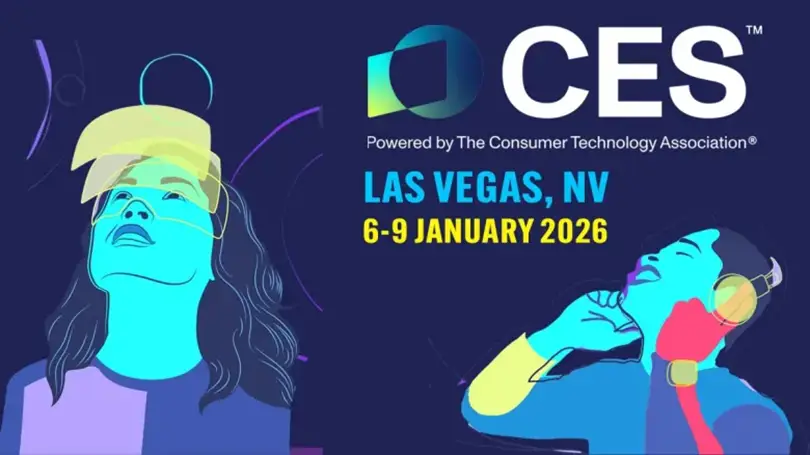
CES 2026 was not about shock or excess. It was about technology that feels ready. Ready to leave the demo stage and enter real life.
No Longer Trapped Behind a Screen
One thing became obvious early on. Artificial intelligence has moved beyond software. It is no longer something you open or launch. It surrounds you.
At CES 2026, AI lived inside devices that see rooms, hear voices, move through space, and respond in real time. It was no longer framed as a replacement for people, but as quiet support that reduces daily effort.
This shift changed the mood of the show. Instead of bold promises, there were working systems. Instead of abstract ideas, there were practical tools.
Less Showmanship, More Purpose
In past years, robots at CES were designed to entertain. They danced, jumped, and impressed crowds. In 2026, robots focused on doing useful work.
Visitors saw robots assisting in homes, hospitals, offices, and public spaces. They moved carefully, avoided disruption, and interacted naturally with people around them. These machines were designed to blend into human environments, not dominate them.
The message was clear. Robots are not meant to replace people. They are meant to support spaces where people live and work.
Comfort Without Commands
CES 2026 marked a turning point for the smart home. Connected devices stopped acting like obedient tools and started behaving like adaptive systems.
Homes now learn routines instead of waiting for instructions. Climate systems adjust based on behavior. Kitchen appliances anticipate needs. Energy use improves quietly in the background.
The smart home no longer feels technical. It feels attentive.
Care That Starts Before Symptoms
Health innovation stood out as one of the most meaningful areas of the show. AI powered devices focused on awareness, prevention, and daily well being.
Instead of reacting to illness, these systems monitor subtle signals and offer guidance early. For aging populations and people managing long term conditions, this approach could change everyday life.
Healthcare at CES 2026 felt personal, calm, and continuous.
Virtual Copies With Real Impact
Few concepts generated as much conversation as digital twins. These virtual models mirror real people, homes, and systems using live data.
Digital twins allow professionals to test decisions before making them. In medicine, they simulate outcomes. In construction, they predict performance. In infrastructure, they help cities plan smarter.
The value lies not in prediction alone, but in preparedness.
Software That Moves Through the World
Another defining theme was physical artificial intelligence. These systems do not stop at analysis. They act.
Autonomous platforms, robotic assistants, and smart machines demonstrated how software and hardware are merging into seamless experiences. They move through real spaces and respond to real conditions.
Physical AI brings intelligence out of the cloud and into everyday environments.
Devices Begin to Read the Room
CES 2026 also revealed how fast emotional intelligence in technology is evolving. Some devices now respond to tone of voice, facial expression, and user behavior.
Interfaces soften when users are stressed. Systems slow down when attention fades. Technology begins to adapt to human emotion rather than demand constant focus.
This shift makes devices feel less mechanical and more intuitive.
Innovation Without Barriers
CES 2026 felt less like a trade show and more like a shared space for ideas. Startups and global corporations exchanged concepts, partnerships, and ambition.
Early stage innovation stood alongside mature solutions. The distance between idea and implementation felt shorter than ever.
The future felt open and collaborative.
Technology That Changes Work, Not People
For American audiences, the message of CES 2026 was especially clear. Artificial intelligence and robotics are not removing human value. They are reshaping it.
Automation reduces repetition. Intelligence supports decision making. Creativity, empathy, and judgment remain human strengths.
Technology becomes an amplifier, not a competitor.
The Real Lesson of CES 2026
CES 2026 did not overwhelm. It reassured.
The technologies on display were designed to earn trust, not attention. They focused on comfort, safety, health, and quality of life. They felt integrated, not intrusive.
The future did not feel distant or loud. It felt familiar and already in motion.
CES 2026 did more than surprise. It convinced. The age of living with intelligent technology has begun, and it arrived quietly.