California has always been a testing ground for the future. Electric cars. Clean energy rules. New technology long before the rest of the country. But this progress has created a problem few people expected. The state is running out of money for its roads.
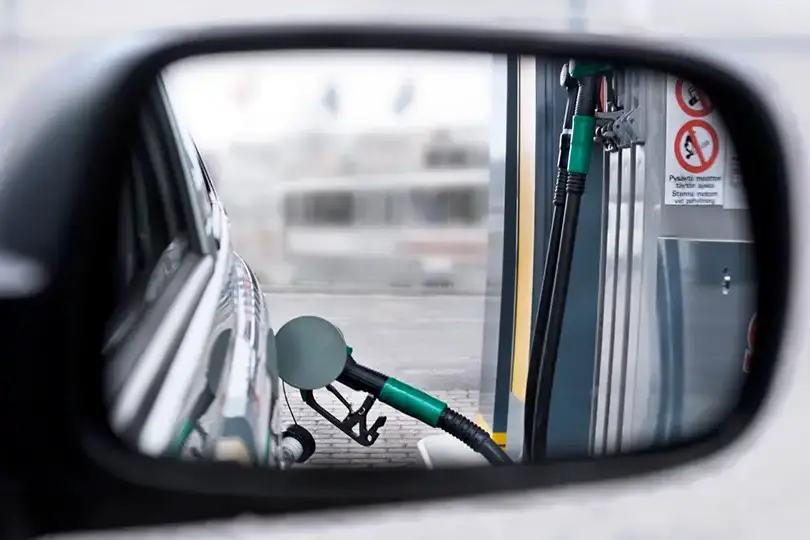
Highways, bridges, and interchanges are aging faster than the transportation budget can keep up. At the same time, the main source of funding is slowly disappearing. The gas tax.
In 2025, California raised gas taxes again. As of July 1, the gas tax reached 61.2 cents per gallon. Diesel rose to 46.6 cents. More increases tied to inflation are expected in 2026. Drivers feel the pressure, yet transportation funding remains unstable.
The reason is simple. More cars are no longer using gasoline.
Why the Gas Tax No Longer Works
For decades, the gas tax made sense. The more you drove, the more you paid. Heavier vehicles burned more fuel and caused more wear. It was a clean and fair system.
But the system was built for a different era.
Electric vehicles pay no gas tax at all. Hybrids pay less. Modern gas cars travel farther on every gallon. The link between road use and road funding is breaking down.
Meanwhile, roads are not getting cheaper. Traffic is heavier. Climate damage is real. Heat, floods, fires, and earthquakes all increase repair costs.
Economists call this a structural gap. The funding model no longer matches reality.
The Road Charge Committee
California extended the work of its Road Charge Committee through 2035 for a reason. The goal is not to rush a new tax, but to rethink how roads are paid for.
The committee is studying a system where drivers pay based on miles driven, not fuel burned. In simple terms, you pay for using the road.
Experts call this a road usage charge or mileage based fee. Similar ideas have been tested in other states and studied at the federal level.
This does not mean a new fee is coming tomorrow. Right now, the focus is research and a possible pilot program, not mandatory payments for everyone.
Why This Debate Is Happening Now
Three forces are pushing this conversation forward.
First, electric vehicles. California leads the nation in EV adoption. Within the next decade, a large share of cars on the road will use little or no gasoline.
Second, inflation. The cost of building and fixing roads is rising faster than fuel tax revenue. Even regular gas tax increases cannot keep up.
Third, fairness. Today, a driver in an older gas car pays more every year, while the owner of a new electric vehicle pays almost nothing. Yet both use the same roads.
How Paying by the Mile Could Work
Many people immediately worry about tracking and surveillance. That fear is understandable, but the reality is more flexible.
The committee is reviewing multiple options. Some models rely on annual odometer readings. Others use voluntary digital tools. GPS is not required in many designs.
In several pilot programs across the country, location data is never collected. Only total miles driven are counted.
Privacy protection is central to the discussion. Without strong safeguards, no system would survive public scrutiny in California.
What About Low Income Drivers
This is one of the most sensitive issues. Many Californians drive long distances because they have no choice. High housing costs push people farther from their jobs.
The committee is studying how a mileage based system would affect low income drivers, rural residents, and people who depend on their cars daily.
Ideas under discussion include:
• discounted rates
• tax credits
• rebates
• income based adjustments
The goal is not to increase the burden, but to share it more fairly.
Cities Versus Rural Areas
Urban residents often have access to public transit. In rural areas, a car is essential.
A pay per mile system could widen that gap if it is not carefully designed. That is why the committee is consulting local governments, community groups, and transportation researchers.
California wants to avoid punishing people simply for where they live.
Why Electric Vehicles Are at the Center of the Debate
There is a real paradox here. Electric vehicles help the environment, but they also weaken the current road funding system.
Today, EV owners pay flat registration fees, but those fees do not replace lost gas tax revenue. As EV adoption grows, the gap will only expand.
Most transportation economists agree. Either the funding system changes, or road maintenance will suffer.
Is This a Tax
Lawmakers are careful with language. A mileage based charge is not the same as a traditional tax.
Taxes are not directly tied to use. A road usage charge is closer to a service fee. You pay for what you use.
That distinction matters legally and politically. It is also why the conversation is moving slowly and cautiously.
Why a Pilot Program Matters
A pilot program allows the state to test ideas without forcing them on everyone.
It helps answer key questions
How do drivers respond
Which technologies work
Where problems appear
Who benefits and who struggles
Without real data, no responsible decision can be made.
That is why the committee’s work extends to 2035. This is a long process, not a quick policy move.
Why This Affects Every Californian
Even if you do not drive much. Even if you own an electric vehicle. Even if you rely on public transportation.
Roads support the entire economy. They shape prices, commute times, safety, and quality of life. The question is not whether we pay for roads. The question is how.
California is not afraid of big experiments. It has reshaped energy, environmental policy, and technology before. Now it is questioning how roads are funded.
Paying by the mile is still just an idea. But the debate itself shows how deeply transportation is changing.
The old rules no longer fit the new reality. Right now, California is deciding what the roads of the future will look like. And who will pay for them.