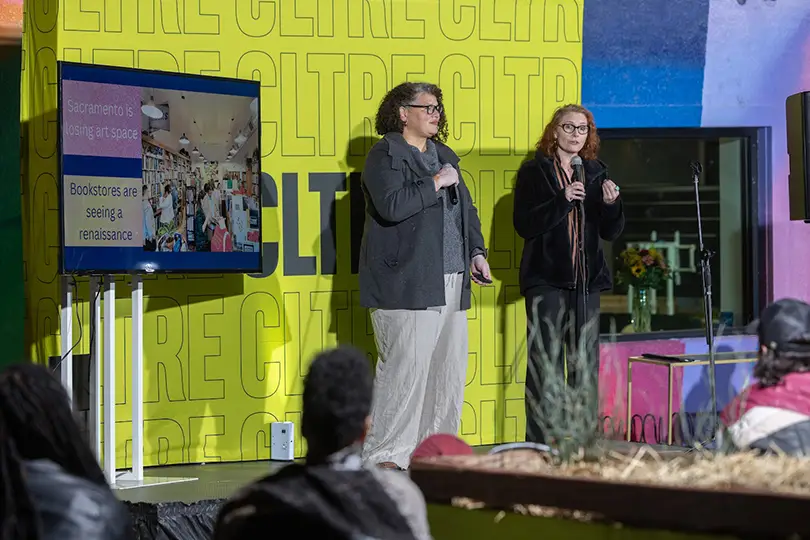
When Miranda Culp, owner of Amatoria Fine Art Books in Sacramento, completed the EveryDay Creative accelerator program, her partner had just left the business. It was a tough time.
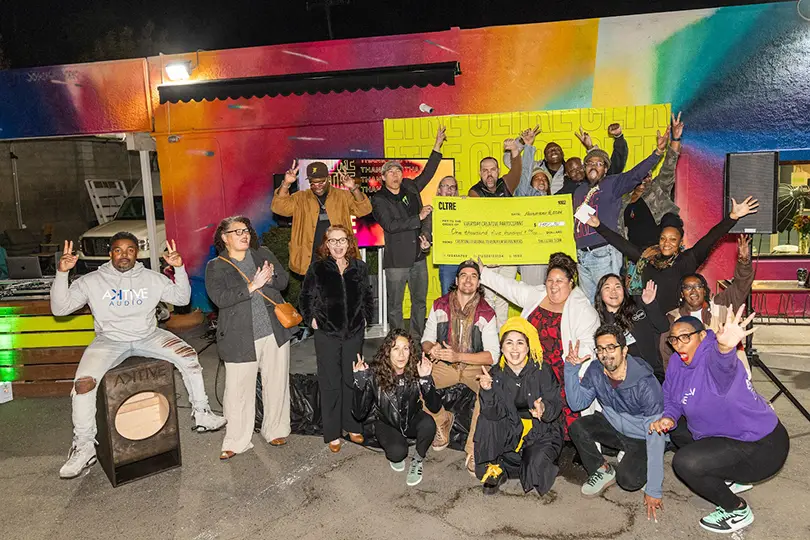
But through the program, Culp gained a clear vision of how to manage her inventory of over 15,000 books, and she was able to use seed funding provided through the program to not only keep her business afloat during the slow summer months, but also to invest in bringing her graphic designer intern aboard as a contracted employee.
The biggest takeaway from the program, though, was learning how to manage her business more effectively.
“Most creative entrepreneurs don’t get business school,” Culp said. “We don’t know what we’re doing. We just have a dream and a real vision and a drive to make that thing a reality. And we get in and we fly by the seat of our pants.” She called the EveryDay Creative program “a bootcamp, if you will, on how to look at all of the different facets of your business.”
The next cohort application for the EveryDay Creative program closes on March 1. It’s the latest cohort in a program run by CLTRE that traces back to 2023, with additional public funds in the following years allowing the program to expand.
Following the money
In June 2024, the Sacramento City Council approved a grant of up to $750,000 for the development of an immersive program for diverse creative entrepreneurs, managed by Sacramento-based CLTRE in partnership with Creative Startups, a New Mexico-based nonprofit.
According to City records, the contract stated that the program would “strengthen and expand the ecosystem of creative entrepreneurs in the creative economy” within a 2-year timeframe, as well as develop a sustainable plan to grant artists access to funds.
Getting a clear picture of this impact is difficult because the program itself is complex. Grant funding began with a 2024-2025 group of cohorts, but the pilot program — not funded by the City — launched in 2023 with a 6-week business accelerator similar to what is still in place.
Roshaun Davis, founder of CLTRE, defines creativity as intellectual property that births innovation, and that widened the scope from just artists or entertainment venues to include service, retail, design and so on. Amatoria Fine Art Books used the program to refine an already successful business model. App makers, chefs and media professionals alike have all benefited from the program.
In a November interview, Davis said that over 60 creative businesses have participated in the program, including the latest fall 2025 cohort, which will complete their program in June 2026.
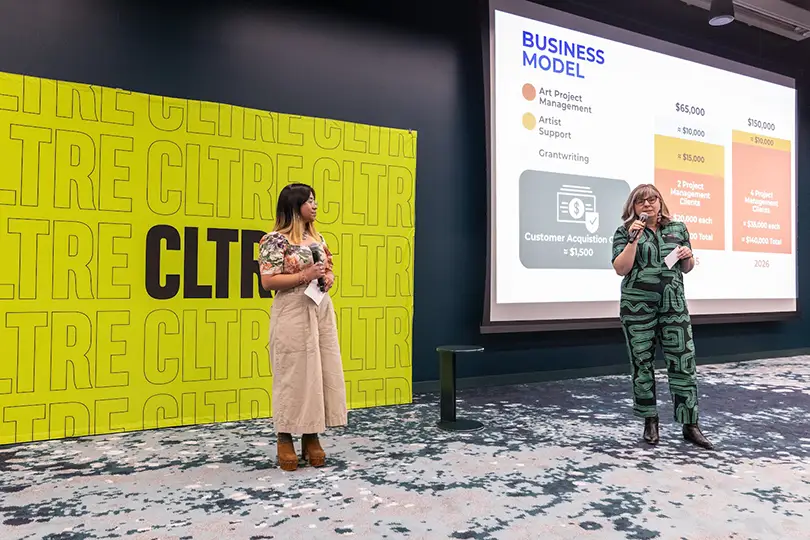
According to a 2025 end-of-year impact report provided by Creative StartUps, the program has “accelerated over 45 companies, with plans to support at least 30 more.” Each completed cohort earned individuals or businesses cold, hard cash — $1,500 for completing the 6-week session and $5,000 for completing the more advanced level of the program.
That injection of cash, which Davis said had totaled over $80,000 by November 2025, is often a direct investment into the next step, whatever that may look like, for each entrepreneur. According to a February 2026 update from the Office of Arts and Culture, $104,500 has been regranted to date, and an additional $160,000 is “expected to be distributed” with the completion of the final accelerator cycle this year.
(Aside from a waivable registration fee, participants pay no fees for the professional development they receive throughout the program.)
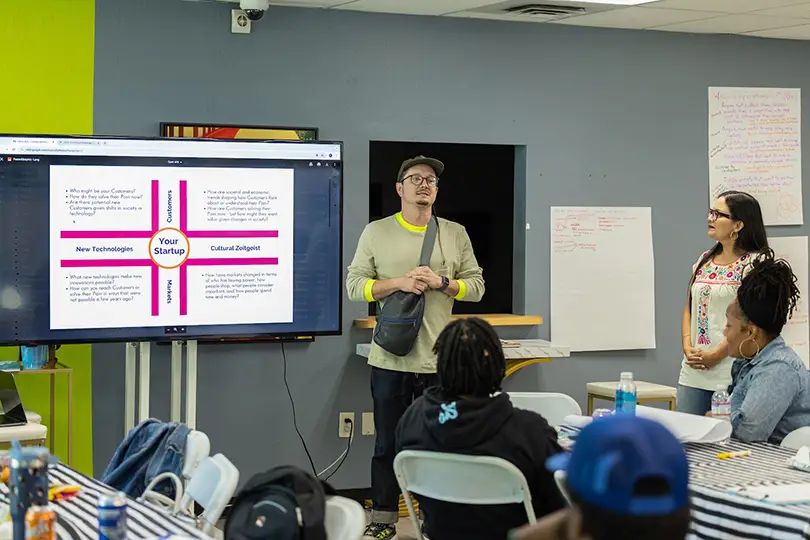
Described as an “eight-month journey dedicated to empowering entrepreneurs within the creative economy,” EveryDay Creative presents as more of a choose-your-own-adventure business accelerator. Comprising two parts — a 6-week “Innovation Challenge” and 12-week “Capital for Creatives Challenge” — the program offers a curriculum, weekly online meetings, in-person workshops and opportunities for mentorship and networking.
Entrepreneurs choose which sessions to attend depending on their business goals, needs and experience level. All program participants are able to receive continued support and attend CLTRE events, alongside new cohorts, throughout their 8-month mentorship period.
The 6-week portion of the program is designed to help participants identify and shape a business model. The 12-week session is a business accelerator designed for those who have a clear vision of their business, have generated at least $40,000 in yearly revenue, and are ready to scale up. Amatoria was one of these, as was Art Tonic and Topstitch Production.
Also among the accelerator cohort were photographer Doug Cupid and videographer Gordon Lim, who announced their new joint venture at the August 2025 Pitch Night. They both started the program individually and decided to merge their creative businesses. Some participants started from scratch; There were pivots, start-overs and new alignments made throughout the course of the program.
What does success look like?
We asked Sacramento-based artist and founder of Art Tonic, Justina Martino about how the Everyday Creative Program changed the way she approached her work.
Martino said it opened her up to new possibilities — and a shared workload. Since she launched her creative consulting business, Art Tonic, in 2018, she has been operating mostly alone. Now, she has a business partner, after entering the program with artist and co-collaborator Julie Bernadeth-Crumb.
Previously, Bernadeth-Crumb had been working with Art Tonic in a limited capacity as a project coordinator, but Martino saw this as a great opportunity to find out whether a partnership would be a better model.
“I felt like it was a good opportunity for [Bernadeth-Crumb] to take some ownership of the business and for us to grow the business together,” Martino said. With a new partner on board, all that was left was figuring out where to go from there.
Martino said that working with one of the instructors from the program showed the duo that the work they are already doing is not just valuable, but marketable.
“What we’ve formed by doing this artist professional development and this community-engaged project management is that we’re actually creating a pipeline of artists … we’re preparing them to take on these larger community-focused projects or public art projects or larger commissions,” Martino said.
As a veteran arts grant-writer, she knows the value of these things goes far beyond community enrichment.
“So that was one of the aha moments … We don’t just have an artist network that we can bring to these larger opportunities. We are also creating a strong artist community,” Martino said. “So that’s something that we can use in our messaging and in our marketing to help us fund the art of professional development and also to help us get these larger projects.”
Messaging was also an important takeaway for Sacramento fashion designer Samuel Rose of Topstitch Production, who said the most impactful piece of the program for him was learning how to talk about his business. Rose started the business with his wife in 2022, and was a cohort in the first session in 2023 (prior to city funding). He said it would have been amazing to receive a $5,000 grant for his business, then in its infant stages, though he’d been working in the industry for years.
“I have never heard of any other program that gives you $5,000 like that,” Rose said.
As a dealer in fine art books, Culp was impressed by the breadth of creative participants. For Culp, the creative economy needs more people with innovative ideas like those she met in the program.
“These people, five years or 10 years from now, even if that specific business fails, if they feel like Sacramento has supported them, if they feel like they have a rich creative community here, they will keep trying,” Culp said. “They will keep trying and they will keep winning and they will keep networking with other creatives. They will keep trying new ideas. That is the whole point, and this is a very hard thing for bureaucrats and city planners and lawmakers to wrap their heads around.”
For Davis, the biggest success story from his time working on this project isn’t when a past cohort member purportedly raised $250,000 by donations from family and friends: It’s the fact that some of the funding came from new friends — ones the cohort made in the program.
Those connections are building “an ecosystem of like-minded individuals,” fueling growth in the city, according to Davis.
Full disclosure: Solving Sacramento is also the recipient of a grant from the City of Sacramento.
This story was funded by the City of Sacramento’s Arts and Creative Economy Journalism Grant to Solving Sacramento. Following our journalism code of ethics and protocols, the city had no editorial influence over this story and no city official reviewed this story before it was published. Our partners include California Groundbreakers, CapRadio, Capitol Weekly, Hmong Daily News, Russian America Media, Sacramento Business Journal, Sacramento News & Review and Sacramento Observer. Sign up for our “Sac Art Pulse” newsletter here
By Marie-Elena Schembri