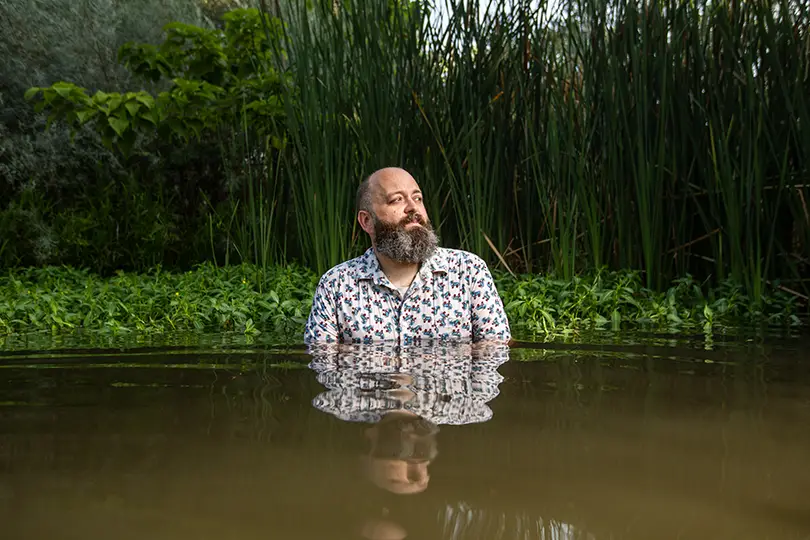
Water seeped into my clothes as I waded into Dry Creek: I was fully awake, dressed smartly but casually while stepping deeper and deeper into the Rio Linda waterway. Nearby, Sacramento photographer Elle Jaye was wrapping her hand in electrical tape after she’d gouged her palm while setting up on the grassy embankment.
She didn’t let the wound stop her from descending into the current to shoot photos.
An hour and a half later, we were both soaked to the chest.
Weeks later, I received 66 striking images—looking friendly in some and mysterious in others. But in every single picture, Elle Jaye showed me a perspective of myself that I wouldn’t have been able to capture without her experience and creativity.
Using a lighting diffuser—which resembles an umbrella—and a variety of lenses, she had led us both waddling in zig zag motions through Dry Creek. Elle Jaye guided my movements until I went from ankle deep to gradually sitting cross legged on the muddy floor of the stream. As she worked, my photographer companion fine-tuned her camera, already knowing she’d only want to make minimal digital edits once dry and warm at home.
While it’s clear users today are finding AI imaging technology more user-friendly and accessible by the minute and, in some cases, more affordable, current bots won’t come up with ideas like plunging into a slough for self-exploration.
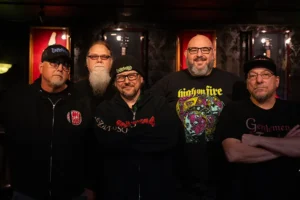
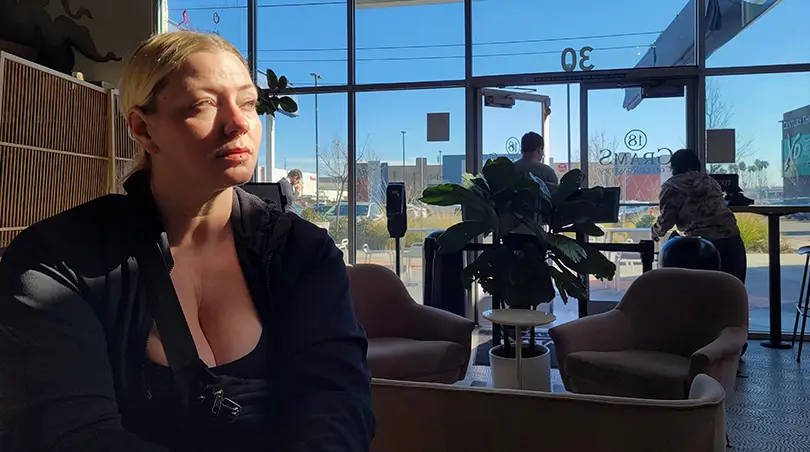
Along those lines, fans of Elle Jaye’s work say that one of her strongest skills is the ability to understand the psychology behind a subject getting photographed. Her way of establishing a connection has yielded widely admired photographs of The Gold Souls, Eli Conley, Drezden and participants in Girls Rock Sacramento.
“People come to me because we get to have a two-hour therapy session,” Elle Jaye observed. “It’s the experience of being there with somebody and saying, ‘I see your vulnerabilities, insecurities, I see your heart in this. We’re going to walk through that to get to that other side.’ And AI can’t do that.”
After graduating from Sacramento State in 2024 with a degree in journalism, freelance photographer Alyssa Branum began working with Comstock’s Magazine and Solving Sacramento. Those experiences, and Branum’s work as visual editor for the State Hornet, ultimately landed her a position as Community Services Specialist and department photographer with the City of Davis. Like Elle Jaye, Branum acknowledges AI tools are available, but approaches implementing any form of AI in her work with skepticism.
“It can help, but it’s not the end all, be all,” she said. “I think that there’s a big difference between using AI as a tool to bypass the work or using it as a tool to make your life easier doing the work. Do you have the skills initially versus just using it because you don’t want to do the work?”
Elle Jaye says she’s seen a shift in her clientele, though the people who have dropped off relied less on her more than 20 years of mastery of photography – and the creative prowess such experience brings – and cared more on what kind of deal she could offer them.
“I don’t see the competition yet: Maybe I should,” Elle Jaye mused. “There are certain customers who were always nickel-and-dime people who were trying to get a discount. Those are the people I’ve seen move away from my customer base.”
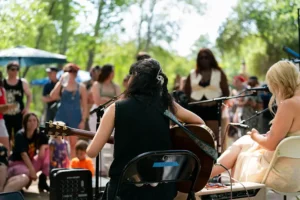
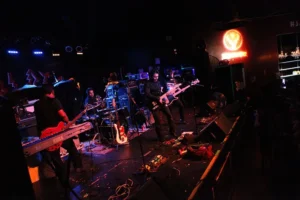
Branum and Elle Jaye think there are certain events and circumstances that may always call for a professional photographer. Elle Jaye doubts that AI will be able to take the kinds of intimate photographs expected at a wedding. Branum notes that live music performances can only be effectively captured with boots on the ground.
“Every year, I try to cover Aftershock,” Branum explained. “I love being able to showcase that to Sacramento, because it grows every year. With how big the music scene is, I think having whatever coverage we can of those types of situations is great.”
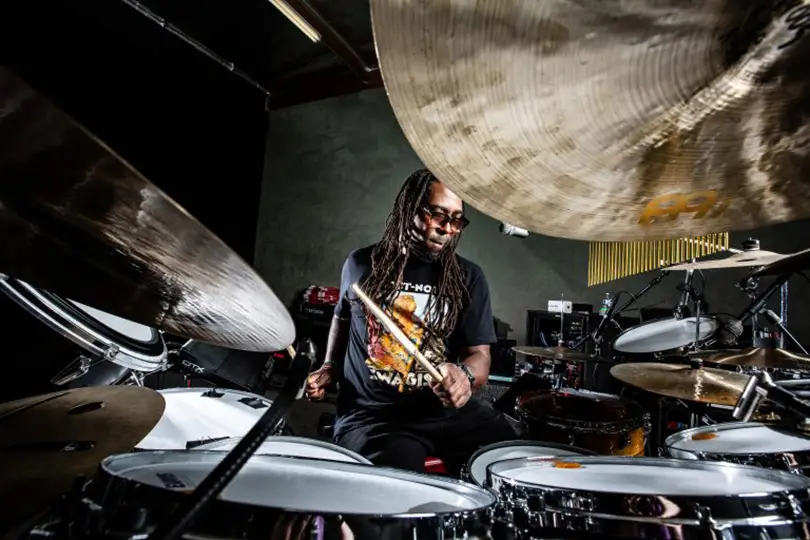
For almost 20 years, Phil Kampel has been in the eye of Sacramento’s live music storm. Throughout that time, he’s been spotted – camera in hand – crouching, ducking and dodging through crowds to get amazing shots. Kampel is known for framing locally iconic images of performers like Katie Knipp, Peter Petty, Jessica Malone and Zenn Vudu.
Kampel’s approach to AI’s presence in the realm of photography is cautious and a tad dismissive. If there’s a hesitancy to use a professional photographer like himself, Kampel thinks it’s less about the increase in AI, specifically, and more about a general increase in tech availability in the form of smart phone cameras.
“People could use AI to improve their photos, but if they’re not artistic to begin with, that’s where I think I separate myself from other people,” Kampel reflected. “They might be able to adjust the skin tones or isolate their subject from the background…which normally you would do with a wide aperture when you’re shooting…For the most part, they probably won’t be able to find the same combination of composition and use of existing light and balance.”
Kampel has noticed a trend that troubles him when it comes to a photo getting altered with AI but having no attribution such an adjustment was made. He said that, over the last 20 years, even without AI, he’s experienced issues with people using his photos without attribution. Those issues get muddier when an image he may have taken gets altered using artificial intelligence.
“If I see something that looks like one of my photos, I’ll generally be able to get into my archives and kind of verify that it actually was one of mine,” Kampel said. “I don’t always feel like I need to be paid for my work, but I do feel like if I let somebody use my photos, I want them to give me credit for having shot that photo. In the long run, that will produce additional business for me.”
Kampel is also bothered by the now well-documented toll that AI data centers have on the environment.
“Bill McKibben was interviewed recently … and he was talking about how many different aspects there are that are affecting global warming,” Kampel pointed out. “And the data processing centers for AI are energy suckers, and they suck water also, so those are things that are really significant, and I think we’re going in the wrong direction.”
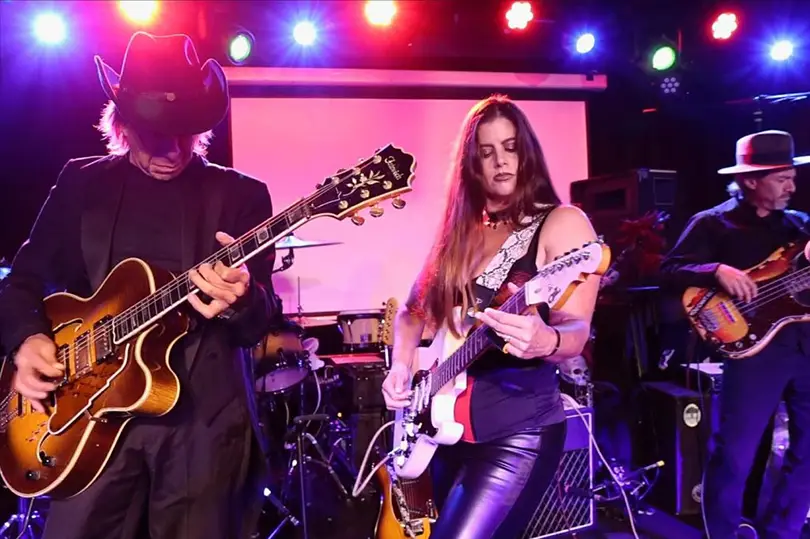
As for Elle Jaye, she is continuing to expand her own collaborative portfolio of musical acts. She doesn’t feel threatened by software-based competition, given that people know what spaces she’s worked in and what accomplishments she’s had.
“Because I’m in the music industry, I have my fingers in lots of different little pockets of social spaces,” she acknowledged. “It may not even necessarily be because I take good pictures. They just want to be adjacent to the people that I’m adjacent to. I’m in a really interesting position, because of where I sit in those circles. AI can’t replace that, or the experience of going into a creek.”
Elle Jaye doesn’t hate AI. Laughing, she recalled submitting her own likeness to an AI prompt and getting back 16 versions of herself – and being delighted by the results. With tools like that in existence, Elle Jaye speaks confidently that there’s plenty of people who might flock to the technology, but there will still be those who prefer a more analog experience.
“You cannot force AI to create something that has to be done in a tactile manner,” Elle Jaye reflected. “While it’s very exciting right now, I think we’re going to see a pendulum swing to people wanting something that’s more authentic, genuine and real because (AI) is going to be everywhere. I think that we as humans want to touch grass.”
This story is part of the Solving Sacramento journalism collaborative. This story was funded by the City of Sacramento’s Arts and Creative Economy Journalism Grant to Solving Sacramento. Following our journalism code of ethics, the city had no editorial influence over this story. Our partners include California Groundbreakers, Capital Public Radio, Hmong Daily News, Outword, Russian America Media, Sacramento Business Journal, Sacramento News & Review and Sacramento Observer. Sign up for our “Sac Art Pulse” newsletter here.