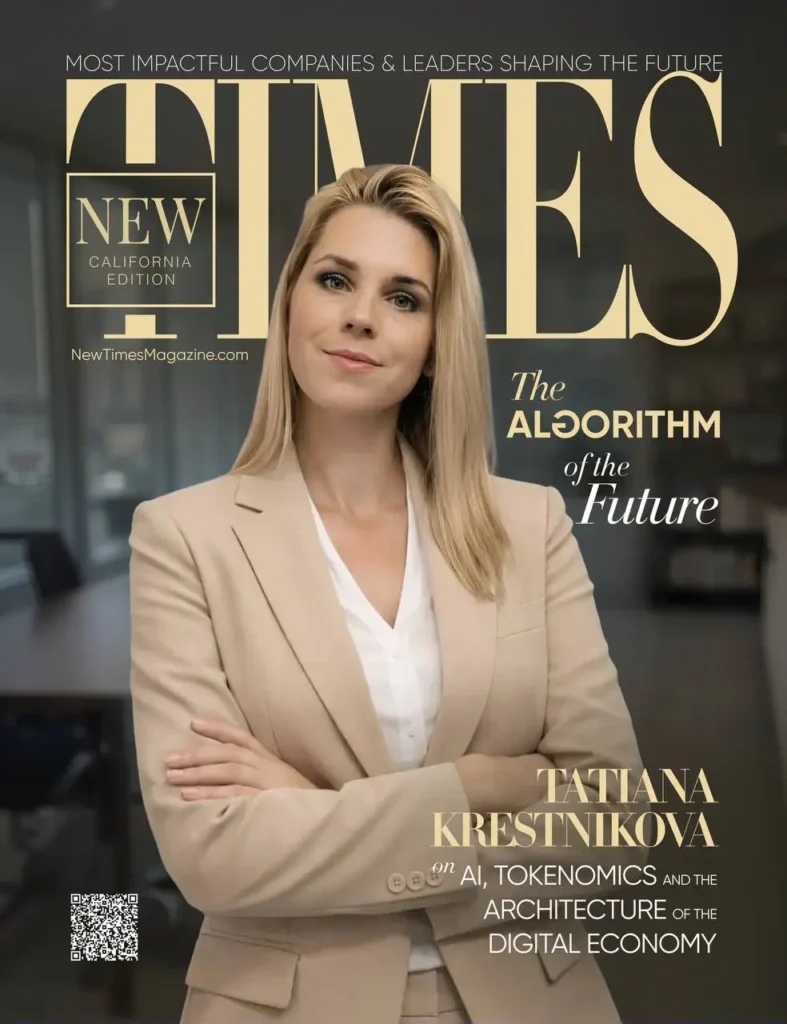
The rapid evolution of blockchain technologies and artificial intelligence is reshaping the foundations of the global financial system. At the intersection of these two powerful forces stands Tatiana Krestnikova, an AI and digital economy researcher whose work focuses on tokenomics, digital asset valuation, decentralized finance risk modeling, and macroeconomic forecasting of tokenized systems.
Through a growing body of research papers and monographs, Krestnikova explores how artificial intelligence can transform the way economists, investors, and institutions understand digital assets. Her work proposes new analytical frameworks capable of integrating blockchain data, macroeconomic indicators, and machine learning models to predict market behavior in tokenized economies.
Her monograph series includes AI Tokenomics: Predictive Systems for Digital Asset Valuation, Adaptive Risk Analytics for Decentralized Finance, and Macro Tokenomics: AI-Based Forecasting for the Global Digital Economy. Her research has also been published in several international journals focusing on engineering, technology, and computational finance.
In this exclusive interview with New Times Magazine, Tatiana Krestnikova shares her insights on the future of digital assets, the role of artificial intelligence in financial forecasting, and why macroeconomic indicators may hold the key to understanding blockchain markets.
What first inspired your interest in the intersection of artificial intelligence and digital finance?
My interest began when I realized that traditional financial models were not designed to analyze blockchain ecosystems. Digital assets behave differently from traditional markets. They are influenced not only by economic indicators but also by network activity, technological adoption, and investor sentiment. Artificial intelligence offers the tools necessary to process these complex multi-layered datasets and uncover patterns that classical models often miss.
How would you explain tokenomics to readers who may not be familiar with the concept?
Tokenomics is essentially the economic architecture of a digital asset. It includes how tokens are issued, distributed, used, and governed within a blockchain ecosystem. Good tokenomics determines whether a digital asset becomes sustainable and valuable over time or collapses due to poor incentives or market instability.
Your research frequently integrates macroeconomic indicators into blockchain forecasting models. Why is this important?
Many early blockchain models treated digital assets as isolated systems. However, the reality is very different. Crypto markets increasingly react to global liquidity cycles, interest rate changes, inflation expectations, and capital flows. Ignoring macroeconomic factors significantly limits predictive accuracy. By integrating macro indicators into forecasting models, we can better understand systemic risks and long-term market dynamics.
One of your research articles focuses on integrating macro indicators into blockchain forecasting systems. What are the key findings from that work?
The main finding is that macroeconomic variables act as predictive drivers rather than external noise. Variables such as global liquidity, inflation dynamics, and monetary policy signals can precede volatility spikes and liquidity contractions in digital asset markets. When these variables are integrated into AI-based models, forecasting performance improves significantly.
What role does artificial intelligence play in evaluating the value of digital assets?
Artificial intelligence enables the creation of multi-source analytical systems. These systems combine blockchain transaction data, market microstructure signals, macroeconomic indicators, and behavioral metrics.
Machine learning models can process this information simultaneously and detect relationships that are extremely difficult to identify using traditional econometric methods.
Your monograph series introduces the concept of macro tokenomics. What does that mean?
Macro tokenomics is the study of digital asset ecosystems within the broader global economic environment. Instead of analyzing tokens purely as technological assets, macro tokenomics examines how monetary policy, global liquidity cycles, and macroeconomic shocks influence tokenized economies.
How do decentralized finance platforms change the risk landscape compared to traditional finance?
Decentralized finance introduces new types of risks. Smart contract vulnerabilities, liquidity fragmentation, algorithmic market mechanisms, and governance structures create unique challenges. At the same time, blockchain transparency provides unprecedented data availability. AI-based risk models can analyze these data streams in real time and provide more adaptive risk assessments.
Many investors view cryptocurrency markets as unpredictable. Do you believe forecasting is truly possible?
Forecasting will never be perfect, but it can become significantly more accurate. The key is integrating diverse data sources. Markets are complex systems, and digital assets are influenced by technology adoption, macroeconomics, liquidity conditions, and behavioral dynamics. Artificial intelligence allows us to combine these signals into unified analytical frameworks.
What future developments in digital finance excite you the most?
I believe the most transformative development will be the emergence of fully tokenized economic infrastructures. We will likely see tokenized financial instruments, decentralized capital markets, and AI-driven risk management systems operating simultaneously. These systems could dramatically increase transparency and efficiency in global finance.
What advice would you give to young researchers who want to work in the field of AI and digital economics?
The most important thing is to think across disciplines. This field sits at the intersection of economics, computer science, mathematics, and data science. Researchers who can bridge these domains will be able to design the analytical frameworks needed for the next generation of financial systems.
Editor’s Note
Tatiana Krestnikova represents a new generation of researchers exploring how emerging technologies will shape the future of the global economy. Her work highlights the growing importance of interdisciplinary approaches that combine artificial intelligence, economics, and blockchain technology.
As digital assets continue to evolve from speculative instruments into structured financial systems, research such as Krestnikova’s may play a crucial role in helping institutions, policymakers, and investors understand the dynamics of the tokenized economy.