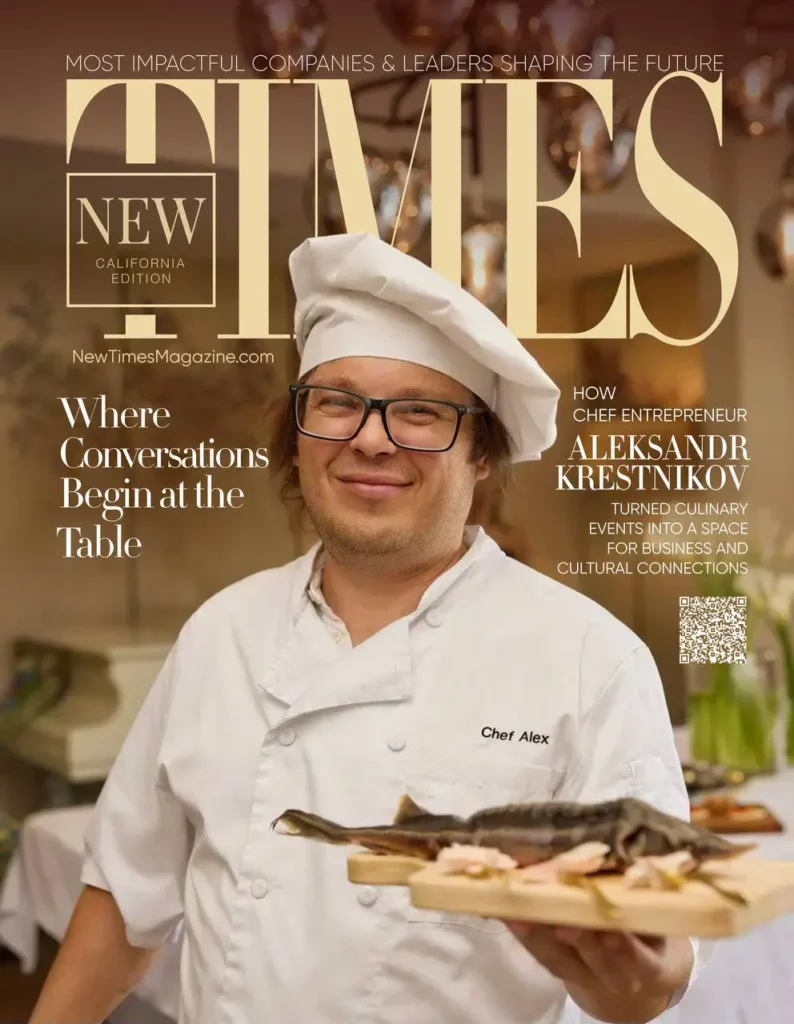
How chef entrepreneur Aleksandr Krestnikov turned culinary events into a space for business and cultural connections in South Florida
On a warm evening in South Florida, a long dinner table slowly fills with people who, just hours earlier, had never met.
A startup founder sits next to a gallery owner. Across the table, two entrepreneurs discuss a possible collaboration between courses. Someone mentions a new project. Someone else shares a story about how they arrived in Miami.
At the center of the evening is chef entrepreneur Aleksandr Krestnikov, moving easily between the kitchen and the table, making sure everything flows naturally: the food, the conversation, and the atmosphere.
It is a scene that has become familiar over the past several years.
As the founder of Chef Alex Catering & Events, operating under MB Party Inc., Krestnikov has organized more than 1,000 culinary events attended by over 20,000 guests across the United States.
But his gatherings rarely function as ordinary catering events. More often, they become informal meeting spaces where entrepreneurs, professionals, and community members connect in ways that feel natural rather than formal.
In a region known for its cultural diversity and entrepreneurial energy, these dinners have quietly evolved into something unusual: a place where food becomes the starting point for conversation.
For Krestnikov, that idea has guided much of his professional life. The dinner table can be one of the most powerful spaces for people to connect.
A Culinary Event That Feels Different
At first glance, Chef Alex Catering & Events operates like a traditional catering company.
The business organizes private dinners, weddings, corporate gatherings, and cultural events throughout the United States. But the atmosphere at many of Krestnikov’s events often feels different from a typical catered function.
Guests arrive expecting an evening centered on food. What they often discover instead is a setting designed to encourage interaction.
At one end of the table, two entrepreneurs might be discussing a new venture. Nearby, creative professionals exchange ideas about future collaborations. Conversations expand naturally as dishes are served.
Food remains the centerpiece, but it becomes the catalyst for something larger.
Krestnikov’s cuisine reflects his own international background. His menus combine Eastern European culinary traditions with contemporary American presentation, a blend that feels especially at home in South Florida, one of the most culturally diverse regions in the United States.
The Idea Behind the Table
The concept behind these gatherings is surprisingly simple.
People often connect more easily over a shared meal than in a formal networking environment. Conversations begin naturally when individuals sit together for an extended dinner.
This philosophy has gradually shaped Krestnikov’s approach to culinary events.
Rather than treating catering as a logistical service, he focuses on creating an environment where guests feel comfortable speaking with people they have just met.
The format encourages interaction rather than rigid structure.
That shift, subtle but intentional, has helped define the atmosphere of his events.
Far From the Ocean
Krestnikov’s path to South Florida began far from the coastline.
He was born in Gorky, now known as Nizhny Novgorod, and spent much of his childhood in rural Russia, where his family operated a vegetable farm.
Life on the farm revolved around seasonal work, fresh ingredients, and shared meals.
Food was never simply a daily necessity. It was an event that brought people together: family members, neighbors, and friends. Long dinners often became the center of social life.
Those early experiences shaped his understanding of what food could represent.
As a teenager, Krestnikov often helped prepare meals and occasionally organized small gatherings himself.
Even then, the part he enjoyed most was not only cooking, but watching how people interacted once they sat down together.
Unlike many professional chefs, he did not follow the traditional route of culinary school. Instead, his skills developed through years of practice, experimentation, and observation.
An Unexpected Professional Detour
Before fully entering the culinary world, Krestnikov spent several years working in a different industry.
From 2007 to 2013, he served as founder and director of Real Estate Property LLC, a company involved in residential and commercial development projects in Russia.
One of the projects focused on a private club style residential complex designed to create not only comfortable housing, but also a shared social environment.
While working on that development, Krestnikov found himself thinking about something beyond architecture.
Where would residents meet each other?
What kinds of spaces encourage conversation?
How could people feel part of a community rather than simply living in the same building?
To help create that atmosphere, he began organizing small culinary gatherings for residents and guests.
The dinners quickly became one of the most memorable aspects of the project.
What began as a small experiment revealed something important: food had the power to transform how people interacted.
Entering the Restaurant Industry
In 2013, Krestnikov formally stepped into the restaurant industry when he became a Brand Chef for the Sushi Master restaurant network.
Sushi Master is one of the largest Pan Asian restaurant chains in Eastern Europe, operating more than 150 locations.
In this role, Krestnikov worked with culinary teams, helped train chefs, and participated in the development of operational systems across the network.
The position provided valuable insight into how large restaurant organizations function, how kitchens operate across multiple locations, how teams are trained, and how consistent standards are maintained.
But the experience also reinforced something he already suspected.
His greatest interest was not simply managing restaurants. It was creating culinary experiences where people gathered together.
A New Beginning in the United States
In 2018, Krestnikov moved to the United States, beginning a new phase of his professional life.
Relocating to a new country often means rebuilding both personal and professional networks from the ground up. Once again, food became the bridge.
In 2019, together with his wife, he launched a community initiative called Miami Barbecue Party.
These gatherings took place in public parks and were open to families from various immigrant communities across South Florida.
The concept was simple: barbecue, children’s activities, music, and conversation.
Attendance ranged from 50 to 200 guests at each event. Over time, the gatherings grew into informal multicultural festivals where people met neighbors, exchanged stories, and formed new friendships.
Although the project was not commercial, it played an important role in connecting Krestnikov to the local community.
Building a Culinary Business
In 2021, those experiences evolved into a full business venture.
Krestnikov founded MB Party Inc., operating as Chef Alex Catering & Events.
The company offers a wide range of services including private dining experiences, weddings, corporate events, and cultural gatherings.
Yet the underlying philosophy remained the same as in his earlier community projects: create an environment where guests feel encouraged to connect with one another.
Over time, Krestnikov’s events began attracting professionals from different industries, entrepreneurs, artists, and community leaders.
Many guests began viewing the gatherings not only as social evenings, but also as opportunities to expand their professional networks.
Dinner as a Networking Platform
One of Krestnikov’s most distinctive initiatives is the Cultural Business Networking Series, also known on social media as Business Banya.
These events bring together entrepreneurs, professionals, and community members for evenings that combine dining with open dialogue.
The format draws inspiration from Eastern European hospitality traditions, where long meals naturally encourage storytelling and discussion.
Over time these gatherings have become a recognizable networking environment within parts of South Florida’s entrepreneurial community.
The atmosphere remains informal, but the conversations often lead to meaningful connections.
Community Through Cuisine
Beyond his commercial work, Krestnikov also participates in community initiatives.
In 2022, he organized a dinner at a local church, preparing the menu and creating an environment where guests could gather and share a meal together.
He has also participated in local culinary festivals such as Gateway Market in Sunny Isles Beach and Aventura, where he introduced visitors to traditional Slavic dishes including pelmeni, pirozhki, and Olivier salad.
For many attendees, these events became their first introduction to Eastern European cuisine.
Staying Connected to the Culinary Profession
Krestnikov is also active in professional culinary organizations.
He is a member of the American Culinary Federation and the International Caterers Association.
Through these organizations he participates in webinars, discussions, and industry activities that allow him to stay connected to developments within the culinary field.
For him, gastronomy is not only a craft, but also a professional discipline that continues to evolve.
More Than a Meal
Today Aleksandr Krestnikov’s work demonstrates how culinary events can extend far beyond food itself.
A dinner table can become a place where entrepreneurs meet, cultural traditions are shared, and new professional relationships begin.
Alongside his work as a chef and event organizer, Krestnikov has also participated in a number of culinary shows and public food events, appearing as a featured chef, guest participant, and judge in a variety of culinary competitions.
These appearances allow him to present his culinary approach to broader audiences interested in gastronomy and food culture.
In a country built on cultural diversity and entrepreneurship, experiences like these show how something as simple as a shared meal can quietly bring people together.
Sometimes meaningful connections begin in unexpected places.
Often, they begin at the dinner table.