There are moments in business that feel loud and dramatic. This is not one of them. And that is exactly why it matters.
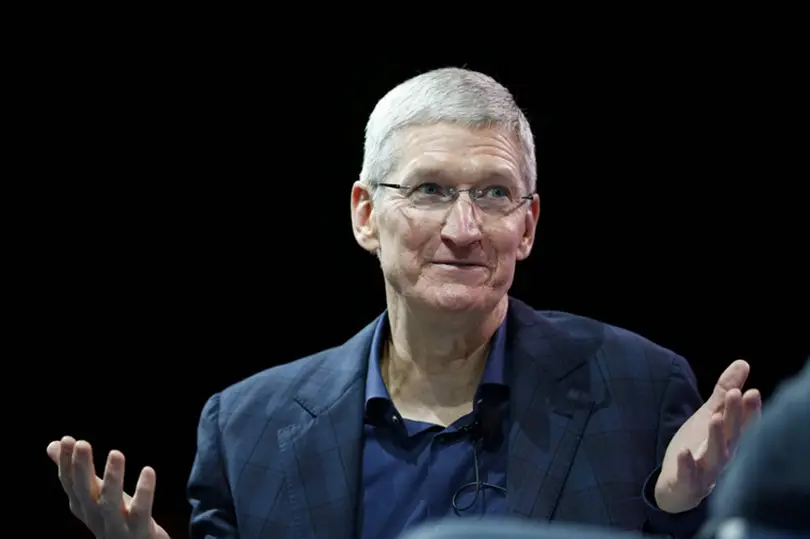
Tim Cook will step down as CEO of Apple on September 1, 2026. No shock waves. No crisis headlines. No urgency. Just a quiet transition at the very top of the most valuable company in the world.
At first glance, it almost feels routine. But nothing about Apple leadership ever is.
When Cook took over after Steve Jobs, the narrative was simple. A visionary had left. An operator had arrived. Many expected Apple to slow down. Some even expected it to fade.
Instead, something different happened.
Cook did not try to replace Jobs. He rebuilt the machine around him. He focused on discipline, consistency, and scale. He treated Apple less like a stage for big reveals and more like a living system that needed balance.
Under his leadership, Apple did not just grow. It became structurally stronger. Supply chains turned into precision networks. Products became part of a tightly integrated ecosystem. Services evolved into predictable revenue engines.
From a scientific perspective, this is what system optimization looks like. When every component is aligned, the whole becomes more resilient. In behavioral economics, it also creates what is known as increasing switching costs. Once users are inside, leaving becomes harder. Not because they are forced to stay, but because everything works together so well.
That is why the iPhone is not just a phone. It is a hub. A gateway. A center of gravity.
Over fifteen years, this approach pushed Apple from roughly 350 billion dollars in market value to more than 4 trillion. That kind of growth is not just about innovation. It is about execution at scale.
And now, at the peak of that system, the leader who built it is stepping away.
This is where the story becomes interesting.
The likely successor is John Ternus, the executive responsible for hardware engineering. The person behind the physical products that millions of people hold every day.
This detail matters more than it seems.
Leadership shapes focus. Focus shapes outcomes. And when a company shifts from an operations driven leader to an engineering driven one, priorities tend to move.
History offers a pattern here. In many successful tech companies, leadership evolves in phases. First comes the visionary who defines the future. Then comes the operator who scales it. Then comes the builder who reimagines what is possible again.
This is not theory for theory’s sake. It reflects real cycles in innovation economics. Stable systems eventually need disruption from within. Otherwise, they become too efficient to evolve.
Apple today is extremely efficient. Which creates a paradox. The better it runs, the harder it becomes to change.
This is the challenge waiting for the next CEO. So what could actually change.
One area is hardware itself. Apple has been exploring new forms of computing that move beyond screens. Spatial computing. Wearables. Devices that blend into everyday life instead of demanding attention.
An engineering leader may push these ideas faster, turning experiments into products.
Another area is artificial intelligence. Apple has been cautious, focusing on privacy and local processing. That approach is consistent with its brand, but the global pace of AI development is accelerating.
The next phase may require Apple to move faster without compromising trust. That balance will define whether it leads or follows.
Then there is the ecosystem.
Apple no longer sells individual products. It sells continuity. Everything connects. Everything syncs. Everything feels like part of a single environment.
The next step could be making that environment even more seamless. Less visible. More intuitive. Technology that fades into the background while becoming more powerful.
If that sounds abstract, it is because the biggest shifts often are.
No one asked for a smartphone before it existed. No one imagined an app economy before it appeared. The most important changes rarely look obvious in advance.
What makes this transition even more unusual is timing.
Companies usually change leadership under pressure. When growth slows. When strategy fails. When something breaks.
Apple is doing the opposite. It is changing at the top while everything works.
From a management science perspective, this is one of the most stable ways to transition power. Resources are strong. Confidence is high. There is room to think long term.
But stability has its own risks.
Highly optimized systems resist change. They reward consistency. They discourage bold moves that could disrupt performance.
The next leader will have to challenge that without damaging what makes Apple strong. That is not easy.
Because Apple is not just a company. In the United States, it is part of cultural identity. It shapes how people communicate, create, and even think about technology. For many, it is woven into daily routines in ways that feel invisible.
That is why this moment will resonate beyond investors and analysts.
It touches users. It raises quiet questions.
Will the products feel different. Will the philosophy shift. Will the experience change in ways people notice or in ways they only feel.
And maybe the deeper question is this.
Can a company that has mastered execution rediscover imagination.
Because that has always been Apple’s real advantage.
Not just making things work. Making them feel inevitable after they arrive.
The official announcement of the new CEO is expected after the next earnings report. The market will react. Analysts will publish forecasts. Opinions will multiply.
But the real story will unfold slowly.
In product decisions. In design choices. In small signals that reveal where attention is going.
In moments like this, it becomes clear that leadership is not only about strategy. It is about perspective.
The way a company sees the world shapes what it builds.
Right now, Apple is standing at a rare point. Strong, stable, and quietly preparing for change.
And that kind of moment does not demand predictions.
It invites attention.
Because if history is any guide, the most important moves are already taking shape long before they are announced.