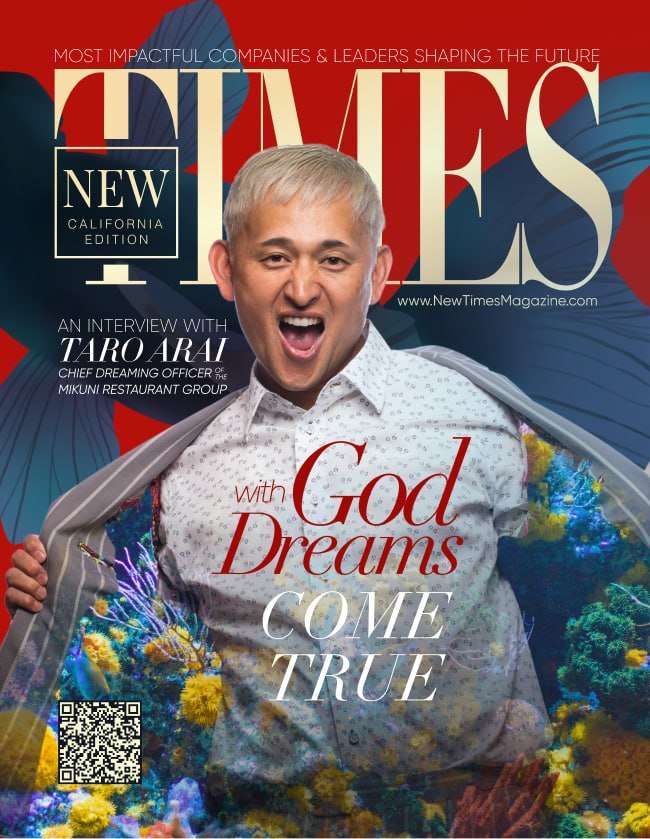
In any Mikuni sushi restaurant, he’s impossible to miss, never tucked away in an office, but right there at the entrance, welcoming guests, serving plates, sharing jokes, and telling stories you’ll remember long after. His smile seems constant, and his warm voice carries sincerity, joy, and an unmistakable charisma.
It’s hard to believe this man is the co owner of one of California’s most recognized Japanese restaurant groups. But Taro Arai is not just a restaurateur, he’s a dreamer with a capital D, a man who officially holds the unusual title of Chief Dreaming Officer.
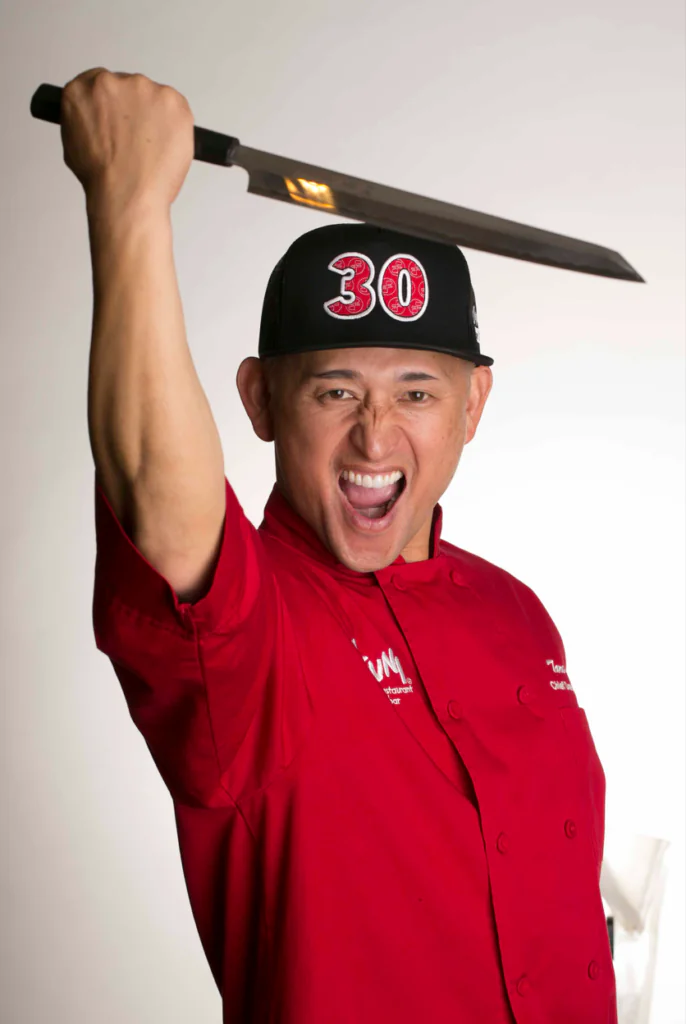
The road to that title was anything but smooth: a childhood in a poor Japanese family, immigrating to America without money, early failures… and faith, a force that changed everything and gave him the strength to keep going. The Arai family story is one of courage, generosity, and an unshakable belief that there is always something greater beyond the horizon.
Today, the name Mikuni Sushi is recognized far beyond California, with a team of over 1,000 employees united by one culture and one mission. Yet for Taro, it’s not just a business, it’s a legacy, a mission, a dream made reality through God’s help.
Founded by the Arai family 40 years ago, these celebrated Japanese cuisine restaurants are beloved by the Slavic community and recognized as annual recipients of the Best Business Awards. They are known not only for their exquisite dishes and exceptional service, but also for their significant contributions to charitable causes in California and beyond.
I always say, “Dreaming is free, so why not dream big?” Sometimes logic, fear, or excessive practicality try to hold us back. But I want Mikuni to remain a place where bold, creative, even daring ideas always have a home.
— Taro Arai
In an exclusive New Times Magazine interview with publisher Sergey Ivannikov, Taro Arai shares insights on a headline-making deal, his journey from poverty to building a restaurant empire, and the way his family turns dreams into reality.
▸Taro, congratulations on your milestone! The recent acquisition of Mikuni by Pan Pacific International Holdings Corporation has made quite a splash.
Thank you, Sergey! Honestly, it still feels unreal to me. The deal closed on April 2, and, amazingly, that was the exact day, 40 years ago, when my family arrived in America.
Pan Pacific International Holdings is a giant with an annual turnover of $25 billion and a network of 650 supermarkets worldwide. The founder is the sixth-richest man in Japan, employing 90,000 people. I never imagined we’d be in their orbit.
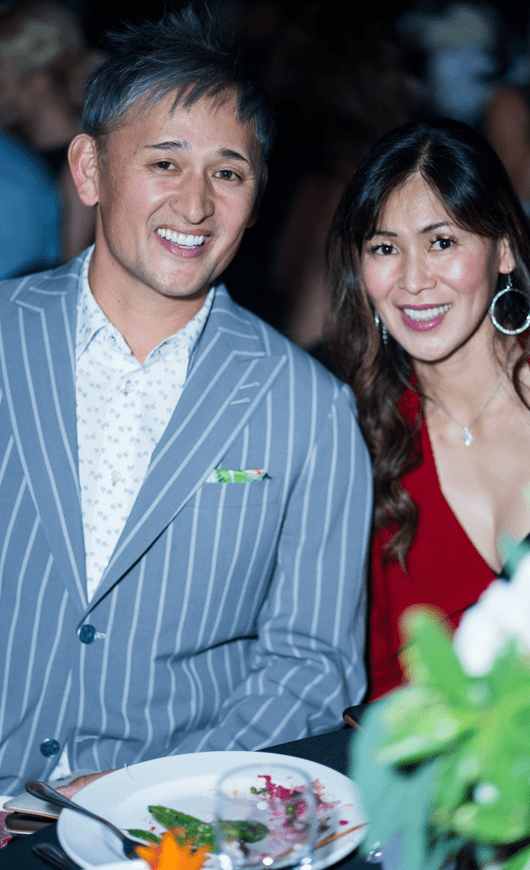
▸What does this mean for your brand going forward?
The greatest wealth here is the opportunity to expand Mikuni’s mission and share our values nationwide.
I had always dreamed of 50 restaurants in 50 years, with 50 family members involved. When we reached ten restaurants, I paused and prayed: “God, show me the way. What should we do next?” Asking costs nothing. And I believe the answer came from above.
“I first met Taro about fifteen years ago right behind the sushi bar in one of Mikuni’s restaurants. He was personally serving guests with the same energy he now puts into building his dream. I asked him to make something special. He smiled and asked, ‘What do you like?’ I said, ‘Green tea.’
A few minutes later, I watched as Taro roasted tea leaves, wrapped them in rice, and created a roll that tasted like fried calamari. That roll never made it to the menu — but for me, it became the embodiment of who Taro is: creative, attentive, and overflowing with heart and imagination.”
— Sergey Ivannikov, Publisher of New Times Magazine
That answer came in the form of meeting our new partner. The founder of PPIH suggested something I had never even considered: “Why stop at fifty? Let’s start with a hundred!” Our expansion plans now follow the paths of loyal customers who fell in love with Mikuni sushi and relocated, from California to the warm shores of Miami and the charming streets of Greenville, South Carolina, to the lush landscapes of Oregon and Washington. The Japanese company envisions opening Japanese restaurants across America, introducing our philosophy to audiences who have never experienced it before.
Now we have it all, resources, support, and new horizons. But there’s one thing we will never give up: the soul of the brand. That same energy, creativity, and love for people that started it all. We will keep doing what we do best: inspiring, delighting, and creating an atmosphere people will want to return to again and again.
▸Tell us, how did the Mikuni story begin? How did you decide to open a sushi restaurant with no money, no connections, and no restaurant experience? Who came up with the idea?
The idea came from my father.
Although he had no business experience, he believed in my mother’s cooking skills, after all, back in Japan, she had fed 100 church members for just one dollar a lunch. When we moved to the U.S. and my father became a pastor, he decided to apply the same approach here, feeding those who came to services. It wasn’t just food; it was a way to create warmth, care, and connection.
To make ends meet, my mother cooked meals for churchgoers, while my father, who had never held a chef’s knife before, began dreaming of his own restaurant, seeing it as a way to support the family financially.
The name Mikuni, meaning “God’s Kingdom” in Japanese, was my mother’s idea. At the time, I didn’t understand why. I thought, “We’re opening a sushi bar, not a church!”
— Taro Arai
The idea seemed crazy: we had no money, no connections, no restaurant experience. But we had faith, in God, in each other, and in the belief that we could create more than just a place serving sushi. We could create a space where people came for the unique atmosphere.
It started gradually: first, we cooked and sold small portions after services. Then we began looking for a small space to rent. Every step was a leap into the unknown, but those risks became the starting point for what the world now knows as Mikuni.
And my father had a dream, God showed him that one day, this restaurant would feed thousands.
▸How did you react to your father’s vision?
Honestly? At first, I didn’t believe it. My dad said God had shown him a great future for Mikuni, and all I saw were empty tables, unpaid bills, and exhaustion. I even suggested we sell the restaurant and go back to Japan.
But my father never got upset. He simply kept believing, calmly, steadily, with that quiet light in his eyes. He’d say, “God didn’t bring us this far to abandon us.”
Over time, I began to see what he saw. I realized it wasn’t about sushi at all. We were creating a place where people felt seen, valued, and loved.
At some point, I stopped just listening to his dream, I truly heard it, and it became my own. I understood it wasn’t just his vision; it was our shared calling.
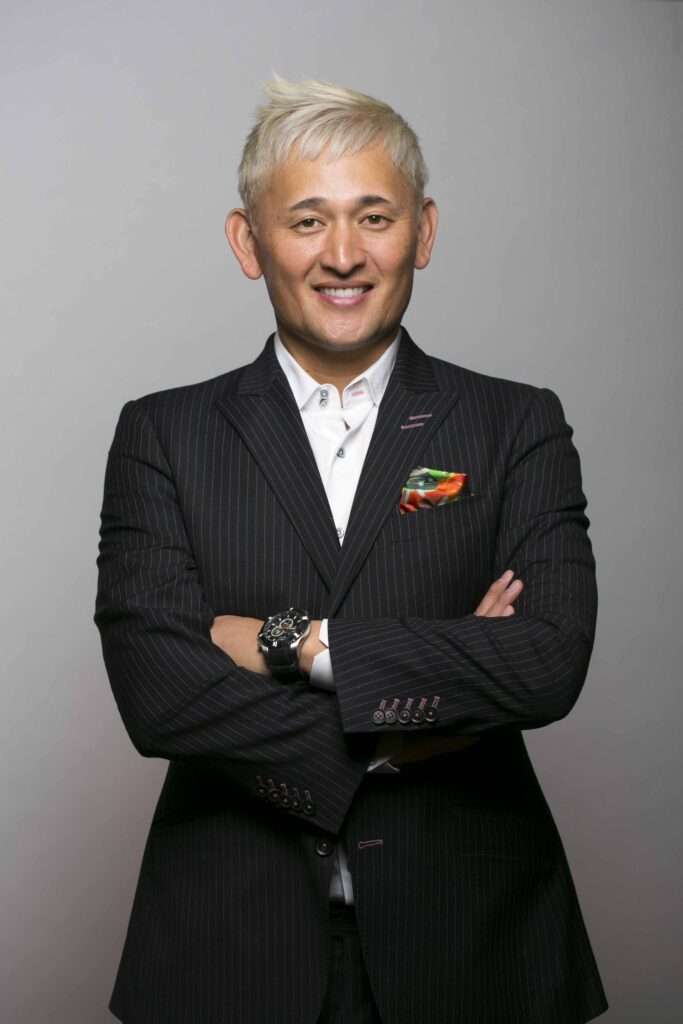
▸What were you like as a child and teenager? What shaped your character in those years?
I was born and raised on Kyushu Island in Japan, and I always felt… different. Even my name seemed to suggest it: “Taro” means “first son,” and “Arai” means “wild.”
As a teenager, I rebelled in every way I could: shaved half my head, created a reverse mohawk… It was my way of telling the world, “I’m here, and I’m different.” Teachers were horrified, and I was always getting into trouble. But I wasn’t a bad kid, I just didn’t fit the mold. I needed to go my own way, even if I didn’t know where it would lead.
“I remember playing golf with Taro’s father, Koki Arai. I said to him, ‘Mr. Koki, you must be an amazing chef to have created the best sushi restaurant in the region!’ He smiled and replied, ‘Actually, I don’t know how to cook…’”
— Sergey Ivannikov, Publisher of New Times Magazine
▸How did your dream of America become a reality?
I knew that if I wasn’t the one to take initiative, nothing would change. At 11, I delivered newspapers morning and evening, in any weather, rain, fog, blazing summer heat. I saved every coin, not for toys or clothes, but for my biggest dream: to one day move my family to the U.S.
And it happened! In 1985, when I was 15, our whole family arrived in America. We knew no one, spoke little English, and had no steady income. But we had faith, as strong as an anchor holding a ship in a storm.
To survive, we took any opportunity: I delivered papers, collected cans, sold furniture. One day, my father came home beaming: “I found a job!”, as a pastor in a Japanese-speaking church… which, as it turned out, had just two members: one was 98, the other 102.
And then, as if confirming we were on the right path, we unexpectedly received green cards immediately, without a long wait. For us, it wasn’t just a document, it was a sign from above that God had opened the door to a new life. We still had little money, but faith, hope, and a strong family made us truly rich, with a wealth that can’t be measured in dollars.
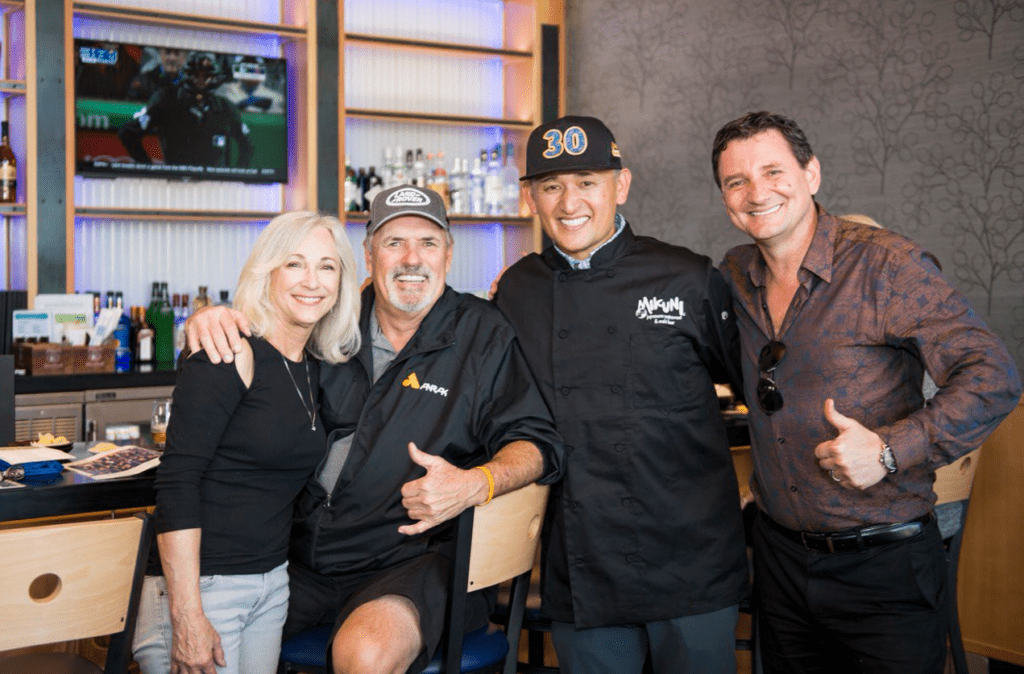
▸Taro, today you proudly call yourself Chief Dreaming Officer. What does that title mean to you?
I love this title! For me, it means everything. Chief Dreaming Officer is about never stopping dreaming. It’s a constant reminder, for me and my whole team, that dreams aren’t a luxury, they’re a necessity.
I always say, “Dreaming is free, so why not dream big?” Sometimes logic, fear, or excessive practicality try to hold us back. But I want Mikuni to remain a place where bold, creative, even daring ideas always have a home.
This title keeps me true to our “why.” Not profit, but purpose. We didn’t start to be the biggest; we started to be the most inspiring.
My father taught me that from childhood. He always said, “True generosity isn’t measured by how much you give, but by the heart with which you give it.”
— Taro Arai
▸Faith plays a big role in your journey. How does it influence your leadership style at Mikuni?
Faith isn’t just part of my journey. It is my journey.
The name Mikuni, meaning “God’s Kingdom” in Japanese, was my mother’s idea. At the time, I didn’t understand why. I thought, “We’re opening a sushi bar, not a church!”
Years later, I realized she saw something much deeper. Everything we have is a blessing from God. Faith carried us through the hardest times, keeping us honest, strong, and grateful.
When I walk into a restaurant, I’m not just thinking about business, I’m thinking about people, about how we can serve them, support them, warm their hearts. Yes, I’m a leader. But first, I’m a servant, to my team, to our guests, to the mission that started it all. Faith reminds me why we began and whom we serve.
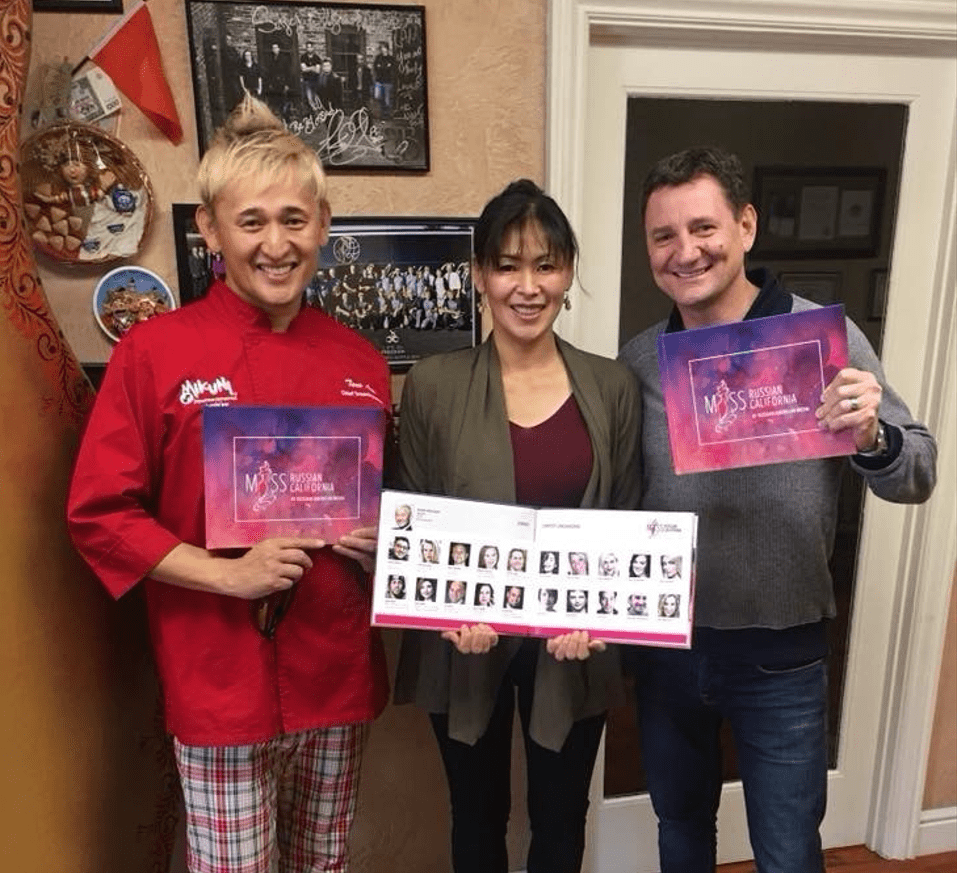
▸You’re known for your generosity and desire to help others. Where does that come from?
My father taught me that from childhood. He always said, “True generosity isn’t measured by how much you give, but by the heart with which you give it.”
Even when we had nothing, we still wanted to help. We knew what it was like to count every dollar and wonder how to make it to the end of the week. I remember times when our restaurant made $450… and we donated $500 back to the church.
So when the opportunity came to give more, we simply couldn’t not do it. That’s how the Mikuni Charitable Foundation was born, a fund supporting good causes both here at home and around the world. For us, charity isn’t a project, it’s part of our nature, our DNA.
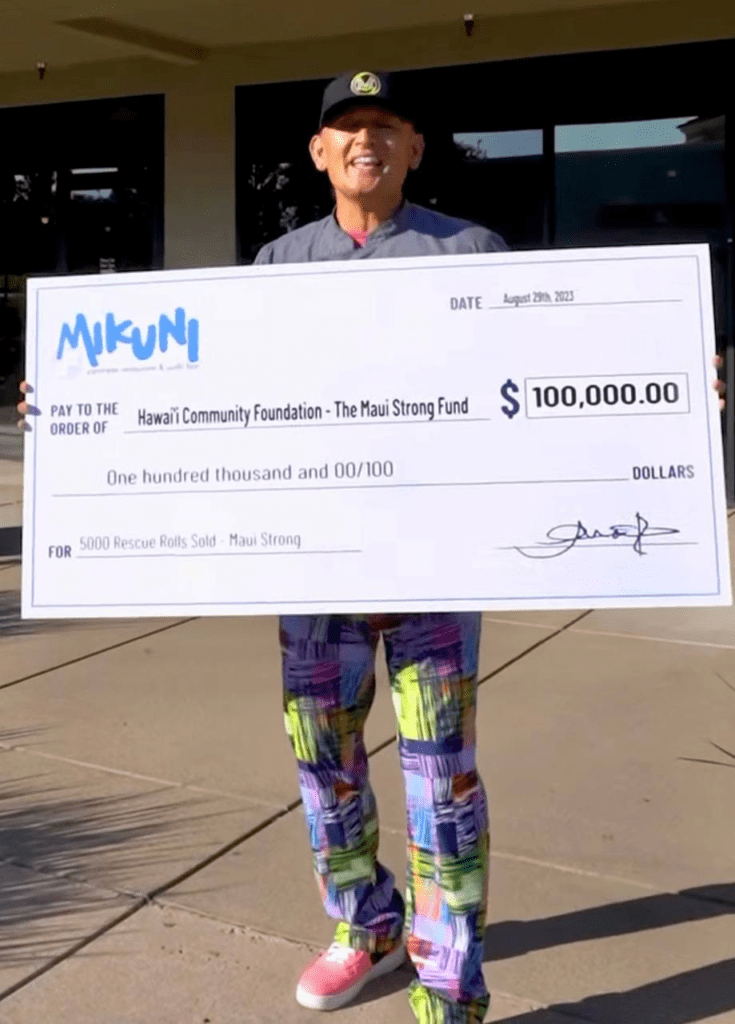
One of my favorite initiatives is the Rescue Roll. Every time someone orders it, 100% of the proceeds go to charity. I love it not just for its flavor, but for the real difference it makes. First introduced to Mikuni’s menu in 2011 to aid victims of the earthquake and tsunami in Japan, it has since raised significant funds for various causes. During the recent campaign for Maui wildfire relief, Mikuni sold over 5,000 rolls and raised $100,000 for the Hawaii Community Foundation Maui Strong Fund.
A single small portion of food can be a sip of hope for someone. And this shows how effective community engagement and smart marketing can bring real results.
For us, charity isn’t about image. It’s about essence. We don’t just want to feed people, we want to warm their hearts.
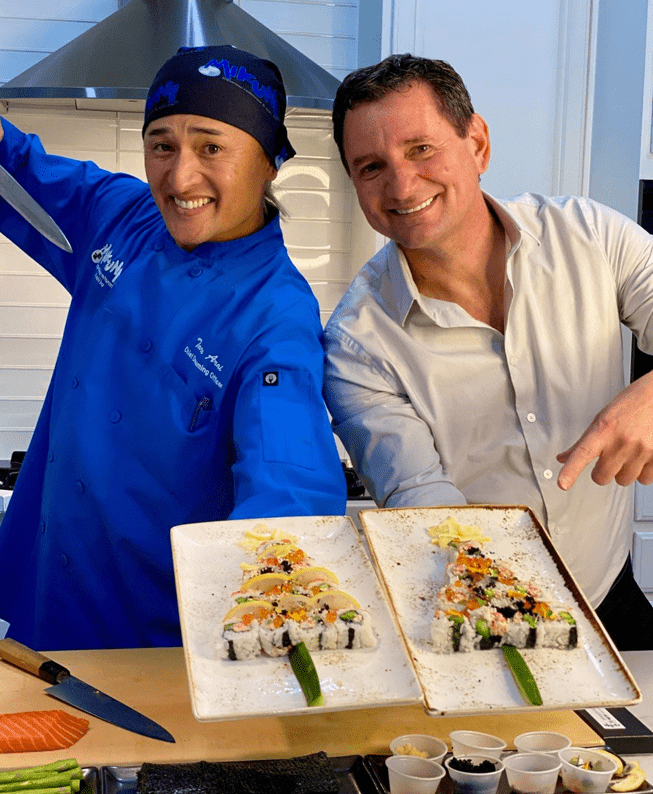
▸Taro, everyone knows how many lives you have touched through your charitable work. Thank you for also supporting our annual Christmas Lights for Underprivileged Children project.
For us, it’s a huge honor. For me, participating in such projects isn’t just about doing good deeds. It’s a way of life. If you can bring even a tiny ray of light into someone’s life, even for a moment, that’s true wealth. It gives meaning to everything else. That’s the legacy we want to leave: not just a restaurant, but a chain of love, kindness, and hope.
One of my favorite initiatives is the Rescue Roll. Every time someone orders it, 100% of the proceeds go to charity. During the campaign for Maui wildfire relief, Mikuni sold over 5,000 rolls and raised $100,000 for the Hawaii Community Foundation Maui Strong Fund.
— Taro Arai
▸What’s next for Mikuni? How do you see the future?
We’re growing! When I shared my dream, to open 50 restaurants in 50 years with 50 family members involved, with the founder of Pan Pacific International Holdings, he smiled and said, “Why only 50? Let’s start with 100!”
But for me, growth isn’t just new dots on the map. It’s about how far our influence can reach, how many hearts we can inspire, how many people can feel part of the Mikuni family.
We don’t want to just be a successful company. We want to be a living example that love, faith, and values can build something that will last for generations, if it’s built on love, faith, and genuine generosity.
Mikuni isn’t just a restaurant chain. It’s a place where every roll is made with heart, where a server’s smile isn’t fake but genuine.
It’s a space people return to not only for the food but for the warmth that lives here.
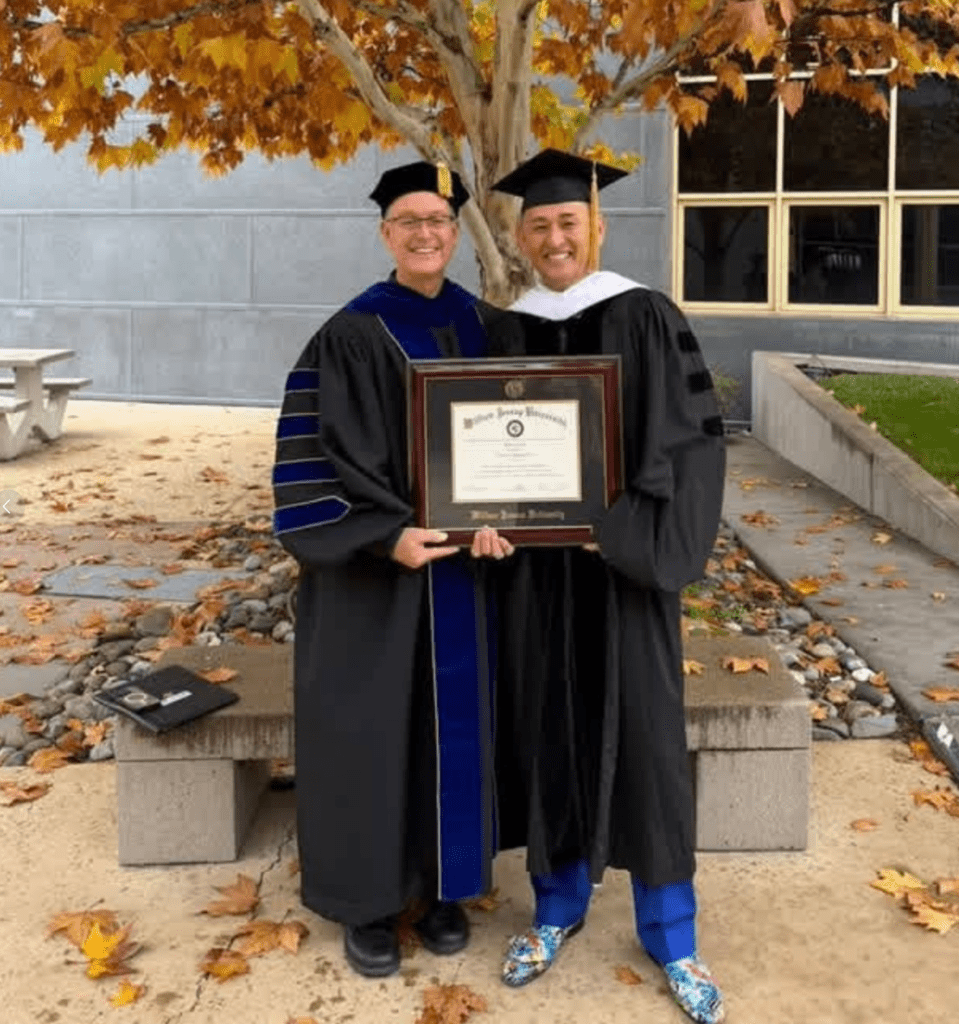
“In December 2025, Taro Arai was awarded an honorary Doctorate Degree from Jessup University, where he was also invited to address graduates during the commencement ceremonies. This recognition reflects not only his success in business, but his lasting impact on the community, his leadership, and the values he has built into the Mikuni brand.”
PUBLISHER’S NOTE
In a world where business too often becomes a race for profit, the story of Taro Arai and his family is a breath of fresh air, a powerful reminder that true success is possible without compromise. Taro Arai is a man who learned not just to dream but to live his dream. And in doing so, he inspires others to dream boldly, too.