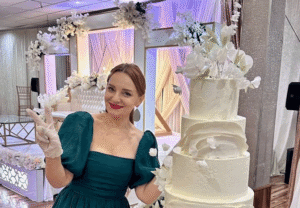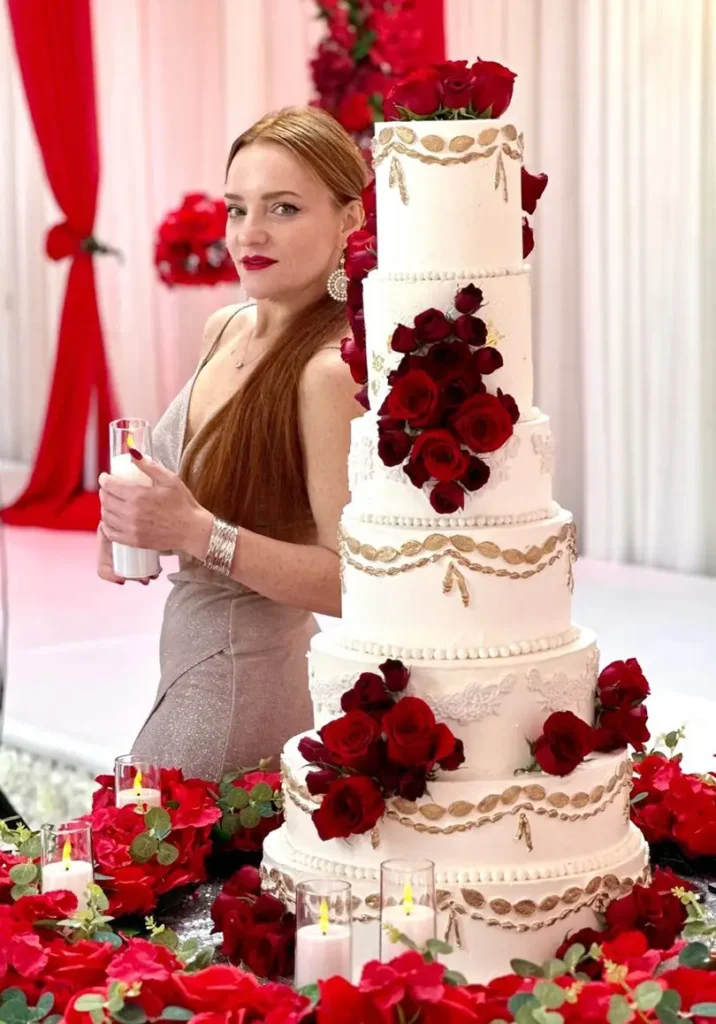
In the room where Olga Khaletskaya creates her culinary masterpieces, white chocolate is laid onto the cream with millimeter precision, like an artist applying the final strokes to a canvas. Olga freezes, her head slightly tilted, a gesture that holds both surgical precision and something of a tailor fitting a last stitch; the room is quiet, and there is a sense that time has stopped… the refrigerator hums somewhere in the background, the light falls so that the cake seems not like weight, but like a shape just pulled from the air.
She adjusts the ribbon, her fingers don’t tremble, but her movement slows, like her breath before an important phrase. The box is still open, in an hour it will leave, and Olga will lose control over how the light falls, whether anyone will see that seam between the white chocolate and the cream. But right now, there are only these hands, the ribbon, the chocolate, and the silence.
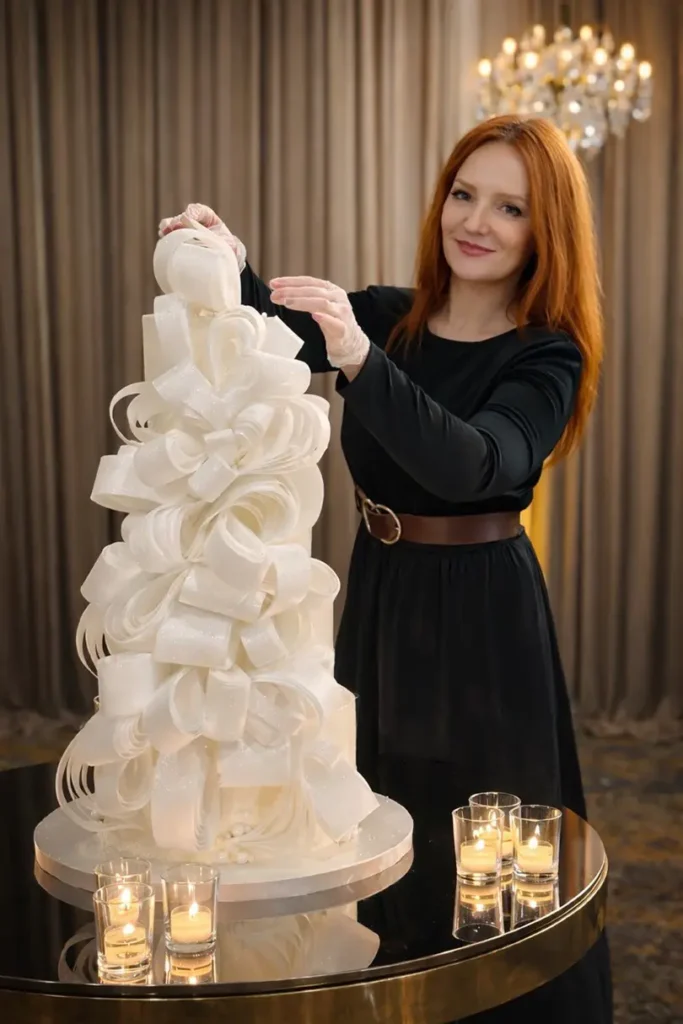
In this silence, where every element matters, Olga Khaletskaya, founder of Sweet Pieces Atelier in Sacramento, California, creates her masterpieces, and for the last two years she has worked here, assembling desserts with the same attentiveness others use when working with fabric or arranging floral compositions. People call her a pastry chef, and formally that is true, but in her work, a cake never exists separately, because it is always part of a composition alongside small desserts, presentation, and the space, where everything is calibrated down to the smallest coincidence, and her materials are not just cream and chocolate, but also textures and light.
Olga laughs when I ask how an obstetrician gynecologist becomes a pastry chef. She says she gets asked about her career change more often than about her cakes. Her diplomas are sitting somewhere in a drawer, but the psychology stayed with her. Not as a tool, but as a habit: hearing not just words, noticing pauses, understanding that sometimes a person says one thing but wants another. In this work, she says, you can’t do without it.
We are talking between orders. Olga holds a cup, and next to her on the table is a tablet with sketches, lines, notes, color layouts. It looks like an architectural project, but she calls it “just rough drafts.”
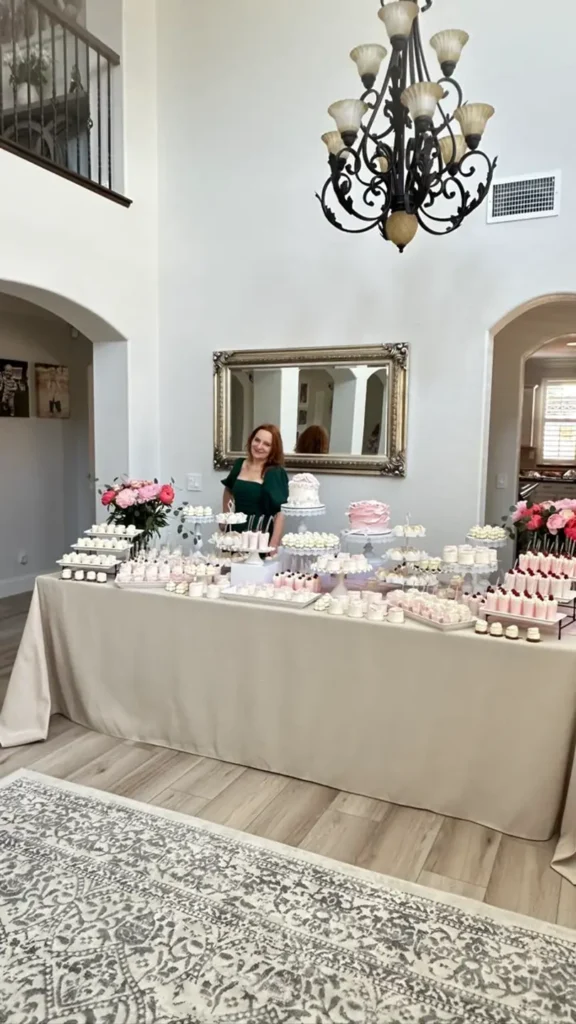
Sweet Pieces Atelier makes custom designer cakes, and this is not about a morning coffee with a croissant, but about an event: a birthday, a wedding, a corporate evening?
Typically, a whole story is built around it: small desserts, table setting, dishes, installation. We don’t just hand over a box, we come and arrange the space so that the dessert area becomes not a separate island, but a natural part of the evening.
Olga, what sets you apart from others?
She pauses, looks off to the side, then her gaze returns. I don’t rush her, because I can see she is just gathering her thoughts, not searching for an answer.
Before America, I lived in Belarus, and for me that always felt like the European approach: to taste, to form, to restraint. But here in California, everything is different: the scale, the generosity, the grandeur. And I became interested in combining them, not transplanting one into the other, but finding where these two lines intersect, in design, in recipes, in flavor. Almost all the recipes are created by us from scratch. I always adjust the sugar balance, because if you make it like everyone else, the flavor comes out flat, bland, overly sweet. So the purees, the confits, the pastes, we make all of that ourselves, without premade bases.
She pushes the tablet aside, clearing the space between us.
If someone needs a gluten free cake, we can do that too. For us, it’s just another task that requires attention, and we solve it without sacrificing taste or beauty.
Since we’re talking about ingredients, what exactly do you use, and why does that matter for the final result, especially when it’s not just about flavor but about stability on large projects?
I only work with organic products and with local suppliers. It matters to me to know where each ingredient came from, because if you don’t control quality from the very beginning, you won’t get the result you envisioned at the end. And in our business, a cake has to be equally good at the tasting and on the table for five hundred guests, and without controlling ingredients, you can’t achieve that. I don’t like food coloring, and I almost never use it. It only appears in decorations and only when it’s truly unavoidable, for example, if a client needs a specific shade of a flower that can’t be made with natural products. But even then, it’s always measured and purposeful, not just to make it “greener” or “redder.” Everything else comes from the natural textures and colors of the ingredients themselves, their own beauty, not an invented one. And I think that’s what people sense when they taste the cake. No one has ever said to me, “Wow, that’s so bright,” but they often say, “Delicious, like homemade,” or “A real taste, not chemicals,” or they just stay quiet and finish every last bite, which is probably the best compliment of all.
Olga, how did you end up in the world of pastry arts? What inspired you?
She smiles, leans back in her chair.
You know, it happened almost by accident. When I started in the United States, I was a florist, making bouquets and designing spaces. And in parallel, I baked for myself, for friends, for family. It wasn’t a business, just something that brought me joy. I posted photos, and one client who knew me from my flowers saw those cakes. She said, “Could you do the same thing, but for my daughter?” I did it. Then a second, then a third. And gradually, floristry took a back seat, and pastry grew into what I do now. I sometimes think it’s the same skill. With flowers and with cakes, I work with form, composition, how it will look in a space. In an industry where everyone talks about taste, I don’t forget about sight. Because a cake is first looked at. And only then tasted.
Is there a fashion in this industry as well?
Absolutely. Like with clothing: there are trends, there are classics, there are things that remain. I am constantly learning, following what is happening in Europe and here in America. But I never do a trend just for the sake of the trend. It has to serve the person’s story.
And where does simple “beautiful” end and complexity begin? Are there projects where it’s no longer just about design?
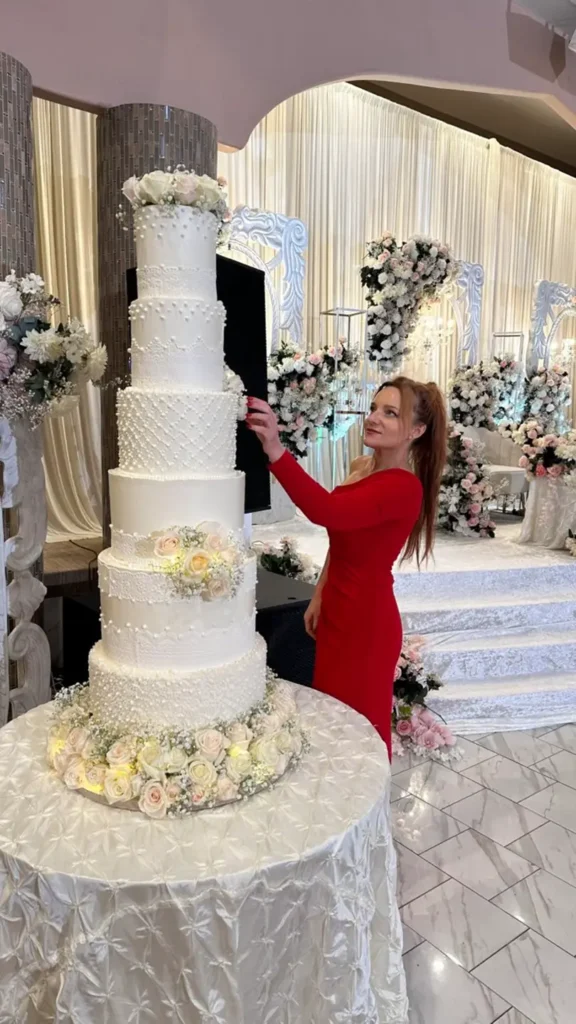
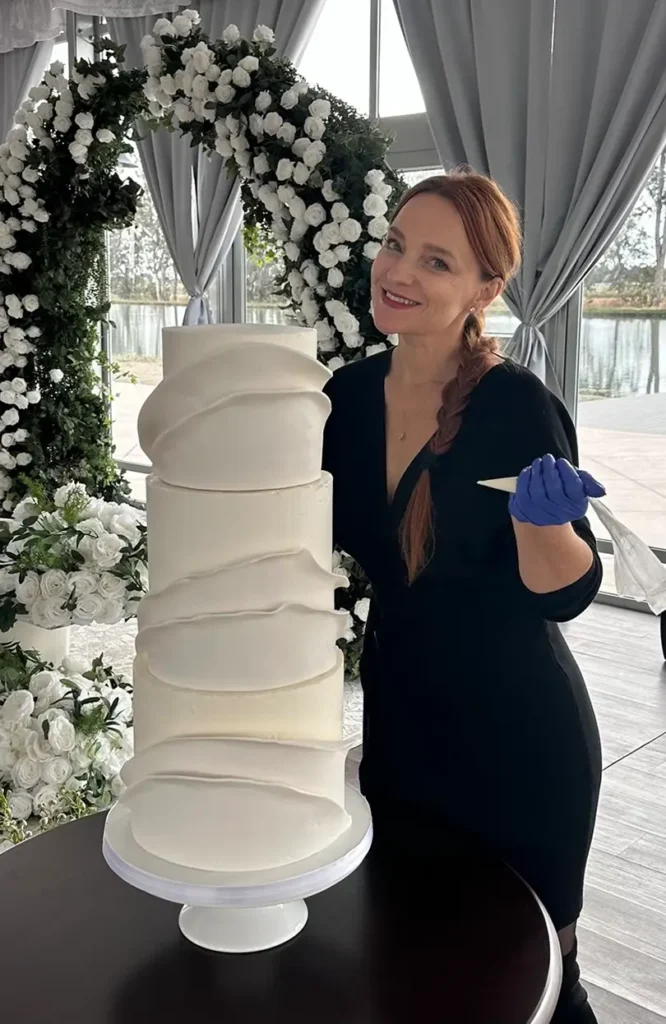
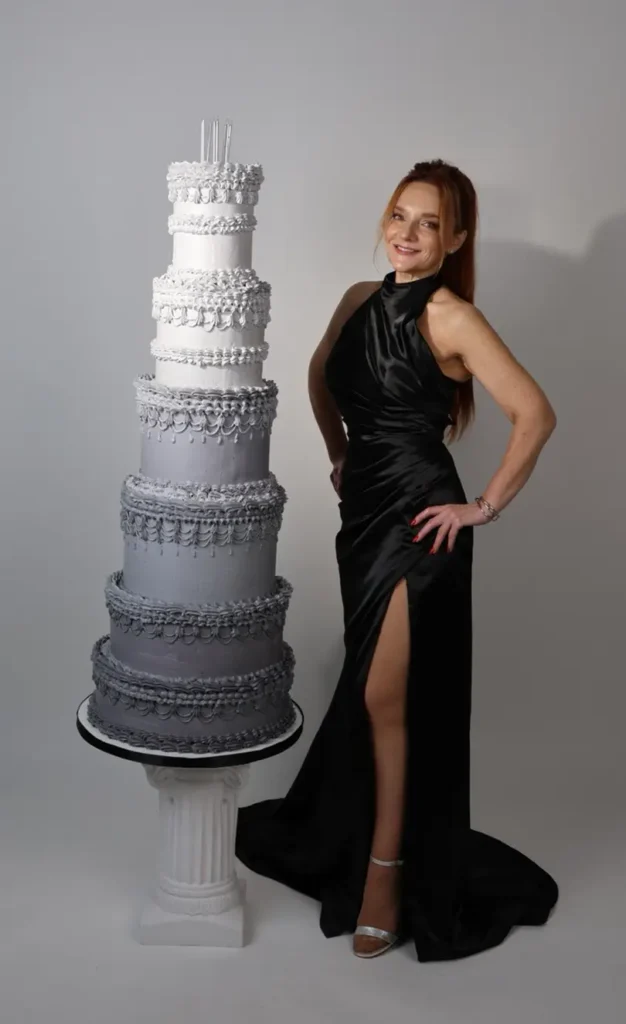
Yes, quite often, because there are works where the cake stops being just a dessert. On the outside, it might look light, almost weightless, but inside, it’s already a structure with calculations, with balance, with support points that no one sees. For example, 3D designs or antigravity cakes, where what matters is not just the shape but how that shape holds up. And at some point, it becomes clear that pastry skills are no longer enough, because you start thinking like an architect. My job is not limited to making the cake beautiful and delicious. What’s much more important is to think through in advance everything that will happen to it afterward: how it will get to the venue, how it will be assembled, how it will behave in the space. And this is especially critical with complex structures and large, multitiered projects. I once made an eight tier cake, over one hundred twenty kilograms, and at that scale, you can’t rely only on visual impact, because everything must be calculated beforehand.
You mentioned that your favorite moment in your work is the client’s eyes when you hand over the cake. What exactly happens in that second, and which client reactions stay with you for a long time?
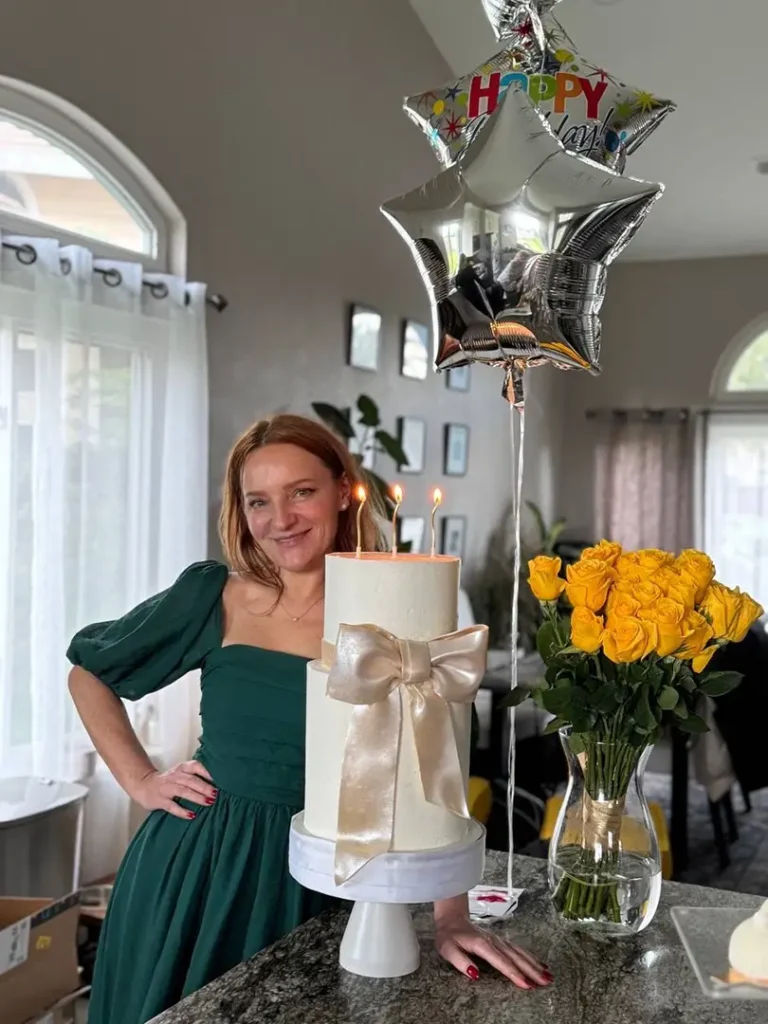
Almost always, it starts with a pause. The person opens the box and at first says nothing, just looks. And in that moment, when words haven’t yet formed but the gaze is already at work, you understand much more than you will later from thanks or compliments. They examine the details, linger on the small touches, as if checking whether this is really for them.
And during that time, I am also no longer looking at the cake but at their reaction, because that is where the main thing happens. Then comes what all of this was for. Some people shift their gaze to me and smile, and in that smile there is so much that words truly aren’t needed. Some quietly say, “This is incredible.” Some just freeze, and I can see them already picturing in their mind that evening, the guests, that exact moment when the cake will be brought out and everyone will gasp. A “wow” happens almost every time, but it doesn’t come first. First comes silence, then the look, then recognition, and only after all of that, the short word that holds everything: surprise, joy, and the understanding that you received more than you expected.
Olga, does psychology help in your work?
She smiles, because the question about psychology comes up in almost every interview, but each time she answers as if she is hearing it for the first time. And this is not an act, just an attitude toward a craft that long ago stopped being theory and became ordinary, everyday practice.
Psychology is probably the most important thing I have. Because a person ordering a cake for a wedding or a child’s birthday is in a special state. This is not just a purchase, but an event of great significance, and sometimes also accompanied by anxiety, uncertainty, a desire to make everything perfect, but without knowing what that “perfect” should look like. Sometimes a client can’t articulate what they want because they’re afraid of making a mistake. In that case, my job is not to offer them something pretty from a catalog, but to hear what they are not saying, to unpack it, and to make it so that in the end they say, “Yes, that’s it.”
She speaks calmly, without condescension, and in her voice you hear the confidence of someone who has found their true calling. And that explains why clients come back to her again and again, because she doesn’t just assemble a cake, she assembles the story that a person wants to tell their guests, and she does it in a way that no one reads too much into it.
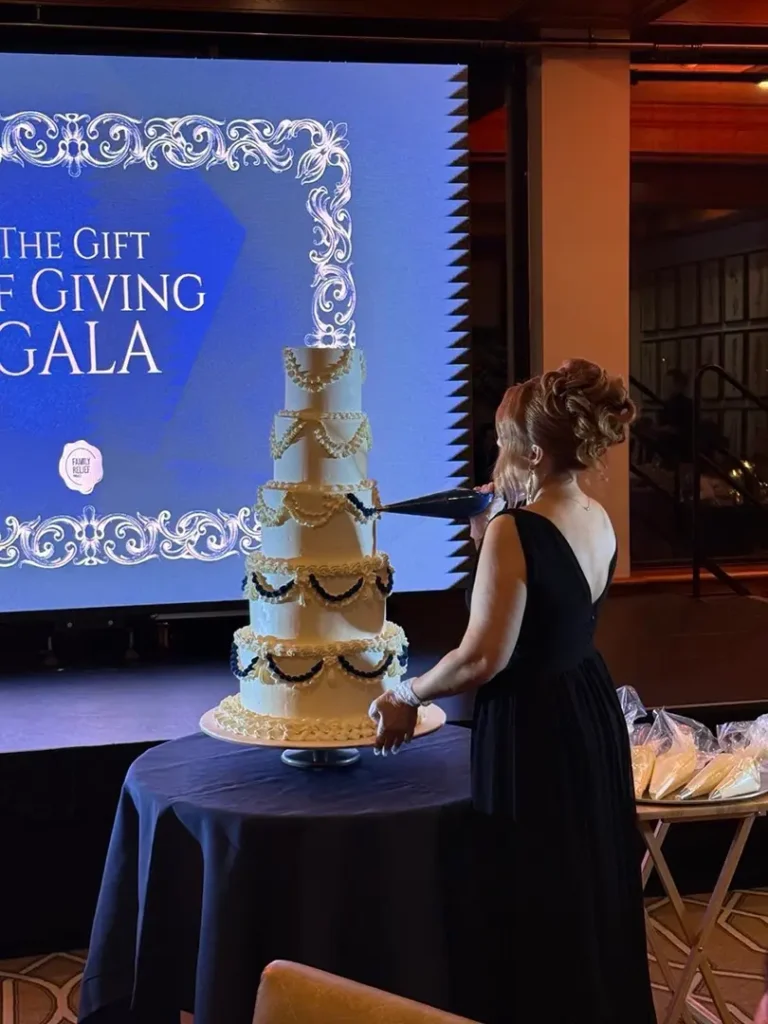
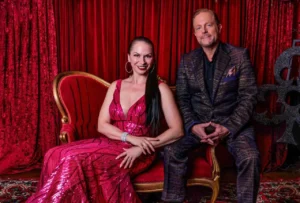
On November 6, Sacramento will host the annual Best Business Awards Ceremony & Gala, featuring Miss California International Grand Finale, an event that will bring together about five hundred VIP guests. What surprise are you preparing for such an evening?
Olga looks at the tablet, where the sketches remain, and smiles. She is not going to reveal anything, and from that smile you can see she holds the intrigue lightly, because she knows that sometimes what matters more than the details is what people will see with their own eyes.
Let it remain a surprise, but I will say this: it will not be a standard approach, because we are preparing a level that I call fashion style. It matters to me that everything I do fits into the evening the way a dress fits, one that doesn’t draw all the attention to itself, but without which the whole look would be incomplete. Five hundred guests is certainly a responsibility, but to me it’s more interesting, because when there are that many people, space opens up to make not just a dessert, but something that becomes part of the evening. I want people to remember the entire evening, and for my work to be what ties it all together. And on November 6, we will simply show what we have made.
She falls silent, and I hear in her voice not an attempt to convince me, but just a calm confidence. She knows she will succeed, and she doesn’t even doubt it, because for her, every cake is not just a piece of paper with an order, but an evening she will live through together with those who have trusted her.
We have been talking for over an hour, and in that time Olga has managed to answer all the questions, check details of some order over the phone, sketch three new designs on her tablet, and not once shown that she is tired or in a hurry. She just sits there, doing all of this in parallel, without rushing. And I look at her and think, this, probably, is that very skill you cannot learn from any time management book.
At some point, I stop taking notes, because I realize words are no longer needed. I just listen, and this is not a journalist’s habit, but ordinary human curiosity, when a person talks about their work as if no one is interrupting them and no one is judging them, just telling the story, and that turns out to be enough to forget about the notebook.
Olga Khaletskaya is not chasing after having her cakes recognized from a distance. What matters more to her is that they are felt. And in Sacramento, where she started from scratch two years ago with no clients and no name, she seems to be succeeding, because behind every dessert is not just a recipe or a technique, but a person who is used to hearing a little more than she is told.
FROM THE EDITOR
For those ready to get to know Sweet Pieces Atelier not only through the pages of the magazine, Olga Khaletskaya is open to collaboration on private events, custom orders, and large scale projects in Sacramento and beyond. Each project begins with a conversation and turns into something far more personal than a standard order.
You can reach her directly on Instagram at @Sweet.Pieces, view her work on the website sweetpiecesatelier.com, or contact the studio by phone at (916) 450-3853 to discuss your event, concept, and availability.