California Is Bringing Big Television Back. And This Is About More Than Hollywood
Hollywood is turning the cameras back on. But the most interesting part of this story is not happening on the red carpet. It is happening behind the scenes.
California has announced support for nine new television projects through its expanded tax credit program. The projects include a continuation of the cult classic Clueless, a reboot of The Rockford Files, a new project starring Viola Davis, and the series Newlyweds with Jamie Lee Curtis. For viewers, it means familiar names returning and new stories arriving. For California, it means much more.
According to the Governor’s Office, the nine projects are expected to bring about $608 million in direct production spending to the state, create approximately 3,000 jobs for actors and production crews, and generate more than 1,000 filming days. Another 25,000 workdays are expected for background performers.
At first glance, this looks like a story about the entertainment industry. In reality, it is a story about the economy of an entire state.
A production set never exists on its own. A crew needs hotels, restaurants, coffee shops, transportation, equipment rentals, costumes, sets, makeup, deliveries, construction services, and dozens of other businesses. So when a new series begins production in California, it is not only actors and camera crews who get work. Money starts moving throughout the local economy.
That is the biggest insight in this story: one television series can create work for people the audience will never see on screen.
A camera operator gets a shift. A driver gets a booking. A restaurant gets a large group of customers. A hotel fills rooms. A local workshop gets an order for set pieces. A makeup artist gets another production job. A small business gets additional revenue.
And then all of it becomes one large economic chain.
Bringing this activity back is especially important for California after several years in which film and television productions have actively competed for better financial conditions in other states and countries. That is one reason the California Film and Television Tax Credit was more than doubled, from $330 million to $750 million.
And the first results are already visible. According to FilmLA, television production days in Los Angeles increased by 34.4% in the second quarter compared with the previous quarter, reaching 1,607 days. Television drama production grew even more sharply, by 55.1%.
There is an interesting paradox here. To bring Hollywood home, California had to make it financially attractive for producers to shoot at home again.
And now the state is betting not only on money, but also on something that cannot be completely moved to another region.
California itself.
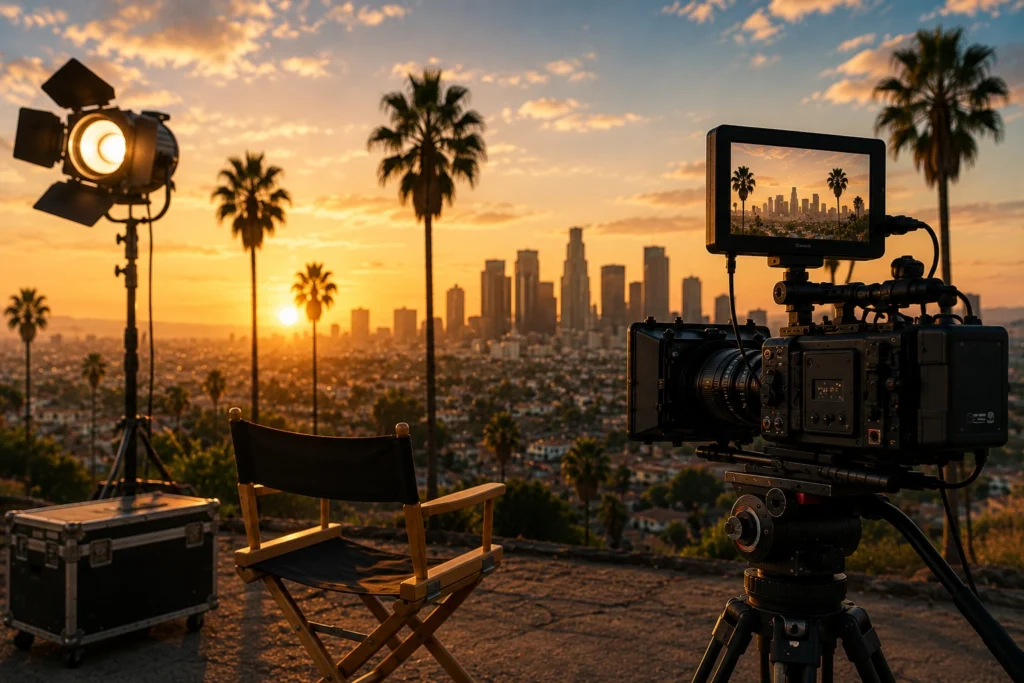
The palm trees, beaches, Malibu, Los Angeles streets, distinctive light, architecture, and decades of film history. All of these things have long been part of the visual language of American television.
That is why the return of Clueless feels especially symbolic. For millions of viewers, it is not simply a title from the past. It represents an entire era connected to Southern California, fashion, and a lifestyle that became recognizable far beyond the United States.
The Rockford Files is also getting a new life. The original story was closely connected to Southern California and Malibu, and the new version will once again use California as part of its world. David Boreanaz will take the lead role.
At the same time, completely new stories are arriving. Viola Davis is connected to the project Ascent, while Jamie Lee Curtis is connected to Newlyweds. The result is an unusual combination of nostalgia and new television. Familiar titles are returning, while new projects and new acting stories are appearing alongside them.
But there is a reason this news may matter even to people who do not follow television at all.
Television has become global. Series are filmed in Canada, the United Kingdom, New York, Georgia, and many other places. For producers, the location of a production is increasingly determined by economics.
That means California is now effectively fighting to remain Hollywood.
And the investment is serious.
According to the state, the first year of the expanded program brought 170 projects and about $6.6 billion in direct production spending. The number of applications increased by 82% compared with the previous year.
If this trend continues, the impact will be felt far beyond Los Angeles.
Because bringing productions back means bringing money back into many different parts of the local economy. And that means the story of nine new television projects is not only a story about celebrities.
It is a story about thousands of people behind the scenes.
People who build sets, handle lighting, prepare locations, drive production crews, maintain equipment, prepare food, and keep an enormous industry running.
The audience will see a beautiful shot and an actor on screen.
But behind that shot could be a dozen local companies and dozens of people for whom that filming day means another day of work.
And that is exactly why the return of big television may be more important than it seems.
California is not simply bringing television series back.
California is bringing production back.
And with it come jobs, contracts, customers, and money for local businesses.
For decades, Hollywood created California’s image for the rest of the world. Now California is trying to reclaim another role: not only the place where Hollywood was created, but the place where Hollywood actively works again.
It is too early to say that the television industry has completely returned. But the numbers already show movement in that direction. New projects, thousands of jobs, and hundreds of millions of dollars speak much louder than promises.
And perhaps the most interesting part is only beginning.
When viewers first see the new version of Clueless or The Rockford Files, they will be thinking about the story, the actors, and the nostalgia. But somewhere beyond the screen, at that very moment, there may be a person working a new shift, a local restaurant serving a production crew, or a small company completing another order.
That is why a major television premiere sometimes begins long before the first frame.
It begins when people in California can once again say: “Camera. Action. Cut.”