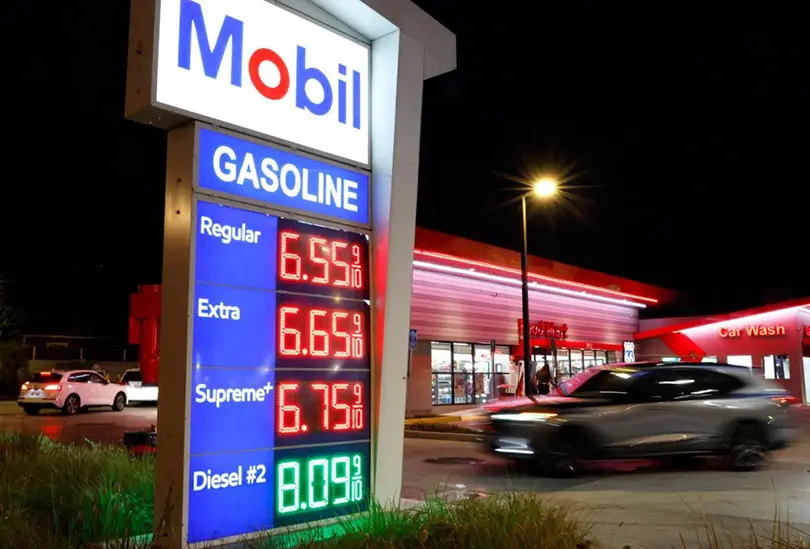
Today in California, gasoline is no longer just a routine expense. It has become a noticeable part of everyday budgeting. The average price of regular fuel is already close to 5.89 dollars per gallon, and in some areas it exceeds 6 dollars. In remote regions, prices can reach nearly 10 dollars per gallon.
These are not isolated cases. They reflect a broader pattern across the state. For example, along the coast near Big Sur, premium gasoline has been priced at 9.99 dollars per gallon. In this case, the limit is not set by demand alone, but also by technical and logistical constraints at the station.
So why is this happening? The answer lies in a combination of several factors that reinforce each other.
First, the global oil market. When geopolitical tensions rise, such as concerns related to Iran, oil supply risks increase. This pushes global oil prices higher, which in turn raises gasoline prices.
Second, taxes. California has some of the highest fuel taxes in the United States. These funds support infrastructure and environmental programs, but they directly increase the price drivers pay at the pump.
Third, environmental regulations. The state enforces stricter fuel standards. Cleaner fuel formulations are more expensive to produce, and fewer refineries are equipped to supply them. This reduces flexibility in the supply chain and adds cost.
Together, these factors create a structural price difference between California and the rest of the country. For comparison, the average gas price across the United States is a little above 4 dollars per gallon. That gap is significant and affects daily life for millions of people.
It is important to understand that fuel prices influence more than just drivers. Higher gas prices increase transportation and logistics costs, which eventually flow into the prices of goods and services. This means that the impact is felt far beyond the gas station.
Economists warn that if global oil prices continue to rise, fuel costs in California could increase further. This suggests that current prices may not represent the upper limit.
At the same time, the contrast within the United States is striking. Some regions still have relatively affordable fuel, while others operate under much higher price levels. In effect, the country is experiencing multiple economic realities at once.
The key takeaway is simple. Gas prices in California are not random. They are the result of global market forces, regional policy decisions, and environmental regulations working together. As long as these conditions remain in place, significant price differences are likely to persist.