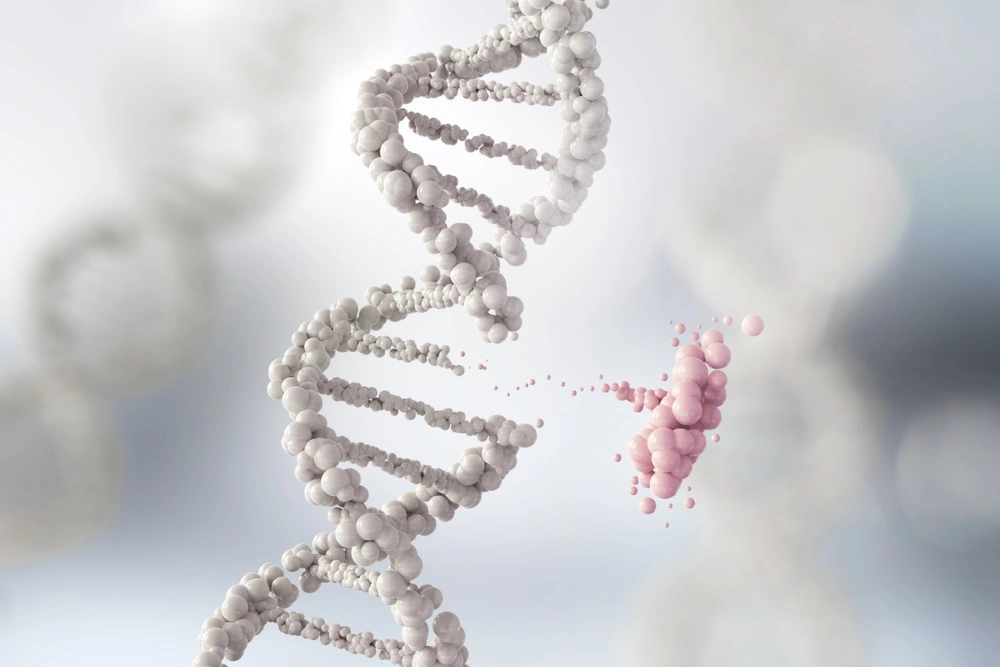
Inside every human cell is a story written long before we are born. It is written in DNA, a code so complex that even the most advanced scientists have spent decades trying to understand it. This code shapes our appearance, influences our health, and sometimes hides risks we never see coming.
Until recently, many of these risks remained locked away. Doctors could detect genetic mutations, but understanding what those mutations actually meant was often unclear. A mutation could look dangerous on paper but never cause illness. Another might quietly lead to serious disease years later.
Now, artificial intelligence is changing that story.
A Breakthrough From New York
Researchers at Mount Sinai Medical Center in New York have developed an AI system that does more than detect genetic mutations. It predicts what kind of disease those mutations are likely to cause.
This is a major leap forward in medical science. Instead of simply flagging something as potentially harmful, the AI connects genetic changes to real world outcomes. Cancer, neurological disorders, developmental conditions, and more.
The goal is simple but powerful. Help doctors understand not just what is different in a patient’s DNA, but what that difference means for their future health.
Why Genetic Data Alone Is Not Enough
Modern DNA sequencing is incredibly advanced. One test can reveal thousands of genetic variations in a single person. But data alone does not equal understanding.
Many genetic mutations are harmless. Others are dangerous only in certain combinations. Some affect the body early in life. Others remain silent for decades. Sorting through this complexity has always been one of the biggest challenges in medicine.
Doctors and researchers have traditionally relied on limited studies, rare case reports, and long trial and error processes. This takes time, and time is something many patients do not have.
Artificial intelligence offers a new approach.
Teaching AI to Understand Disease
The Mount Sinai team trained their AI on nearly half a million genetic variants across more than 6,600 genes. These variants included both disease causing mutations and harmless ones.
The system learned patterns that humans struggle to see. How changes in a gene affect protein structure. How those proteins interact with other systems in the body. How certain mutations consistently lead to specific types of disease.
Instead of guessing, the AI calculates risk based on vast amounts of data. It does not get tired. It does not overlook rare connections. It learns continuously.
Accuracy That Changes Medical Decisions
In laboratory testing, the AI demonstrated high accuracy in predicting disease categories linked to genetic mutations. It successfully distinguished between mutations associated with cancer, neurological disorders, and other serious conditions.
For doctors, this means clearer answers. For patients, it means fewer years of uncertainty.
Rare genetic diseases often take years to diagnose. Some patients see multiple specialists before receiving an explanation. AI has the potential to shorten that journey dramatically.
A Shift Toward Preventive Medicine
Perhaps the most important impact of this technology is what it makes possible. Early detection.
If doctors can identify high risk mutations early, they can monitor patients more closely, adjust lifestyle recommendations, or begin preventive treatments long before symptoms appear.
This shifts medicine away from reacting to disease and toward preventing it.
In the long term, it could reduce healthcare costs, improve outcomes, and save lives.
Personalized Treatment Becomes Real
One size fits all medicine is slowly becoming outdated. Genetic AI brings truly personalized care closer to reality.
Instead of treating symptoms, doctors can target the genetic root of a disease. Instead of broad treatments, patients may receive therapies tailored to their unique DNA.
Researchers believe this technology could significantly speed up the development of gene therapies. Rather than searching blindly through the genome, doctors could focus on specific problem genes identified by AI.
What This Means for the US Healthcare System
In the United States, where healthcare costs are high and misdiagnosis remains a serious issue, AI driven genetic analysis could be transformative.
Earlier diagnoses mean fewer emergency interventions. Better predictions mean more efficient care. Hospitals, insurers, and research institutions are already paying attention.
This is not a distant future concept. It is the beginning of a real shift in how medicine works.
Ethical Questions We Cannot Ignore
With greater power comes greater responsibility. Genetic data is deeply personal. Who owns it. Who can access it. How is it protected.
The Mount Sinai researchers emphasize that privacy and ethical safeguards are central to their work. Still, society must decide how these tools are used and regulated.
Trust will be just as important as technology.
AI Does Not Replace Doctors
Despite its capabilities, this AI is not meant to replace human judgment. Doctors remain essential.
Artificial intelligence provides insights, patterns, and predictions. Humans provide empathy, ethics, and final decisions.
When doctors and AI work together, medicine becomes stronger, faster, and more precise.
A Glimpse of What Comes Next
This breakthrough is not the end of the journey. It is the beginning.
As AI models improve and more genetic data becomes available, predictions will become even more accurate. Treatments will become more targeted. Healthcare will become more proactive.
For the first time, we are learning not just how to read DNA, but how to understand it.
The future of medicine may not begin in a hospital or a laboratory. It begins inside us, written in the language of our genes, finally translated by artificial intelligence.