How Inna Minina Turned a Profession into a Personal Philosophy
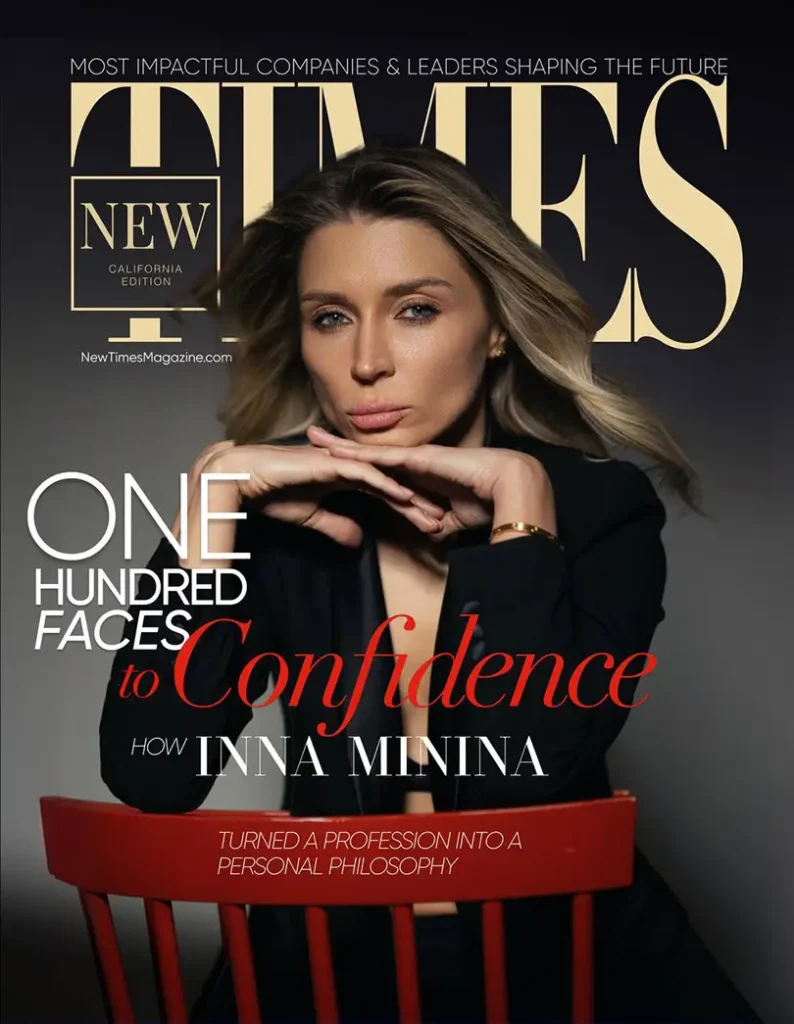
Her journey did not begin with gloss, cameras, or wedding mornings. It began with numbers, strict corporate discipline, and work in a federally scaled oil company. An economist by education, Inna Minina entered the beauty industry not in pursuit of fashion, but in pursuit of meaning.
She does not believe in quick titles or loud statuses. Before calling herself a makeup artist, Inna worked on one hundred different faces, literally counting each one. This principle became not a professional assignment, but an internal code.
Today, Inna Minina is a sought after bridal stylist in the United States, working with brides of different cultures and skin tones, building on site teams, and approaching beauty not as a mask or an effect, but as a state of being.
In this conversation, she reflects on discipline, reinvention, motherhood, divorce, and the quiet precision required to build confidence not only in others, but within oneself.
Inna, you began your career in a corporate oil company. What did you carry from that life into a creative profession?
Discipline and responsibility. In a corporate environment there is no such thing as mood, there is only result. That shapes you. I learned to think systemically, to work for quality, and to complete processes fully. When I entered the beauty industry, that was what distinguished me. I treated it not as a hobby, but as a profession for which I am accountable to my client.
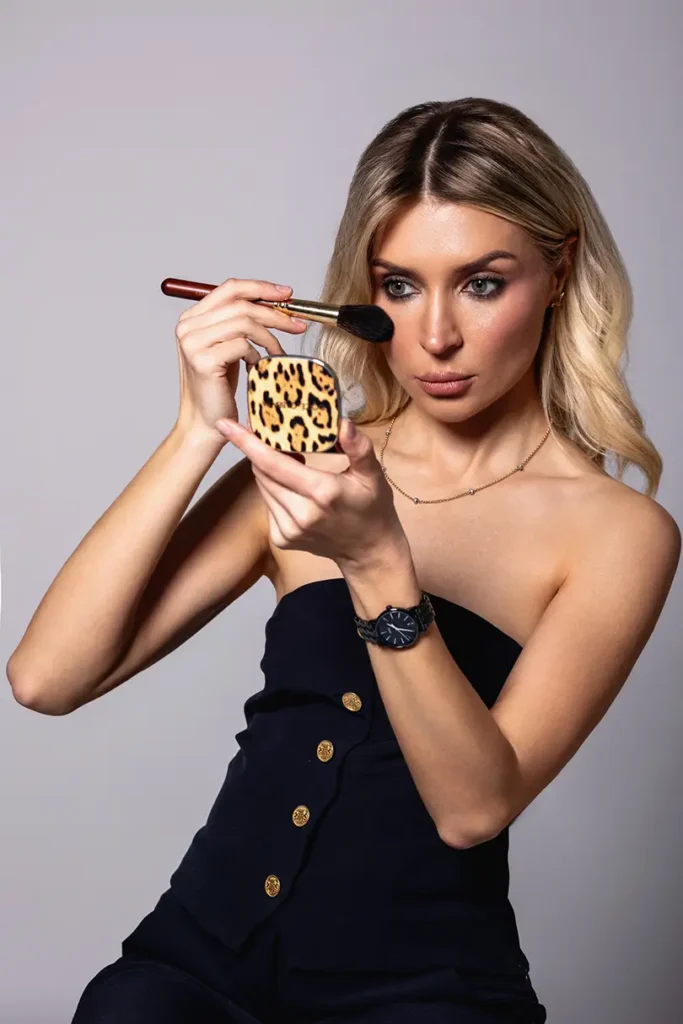
Makeup started as something personal. When did you realize it had become a profession rather than just an interest?
The moment I truly began to see women. I noticed how different every face is and how each carries its own beauty and character. It became important to me not to replicate looks, but to understand the person in front of me.
I learned to see and respect individuality, and that is when I understood this was not simply an interest. It was a profession built on attention, trust, and sensitivity to a woman’s inner world.
You deliberately chose to accept payment only after working on one hundred different faces. Why make it more difficult for yourself?
Because professionalism cannot be imitated. In one school I heard a phrase that stayed with me: a makeup artist is not one hundred makeup applications, but one hundred different faces. I decided to walk that path honestly. I worked on friends, strangers, mothers at playgrounds, and kept count. It was my internal exam. After that, I knew I had earned the right to call myself a professional.
After a break, you returned to the industry consciously. What changed in your approach?
I began to study systematically, not occasionally, but continuously. More than thirty professional programs and trainings in different cities and countries, regular advanced education, deep practice.
Over time, I stopped copying and started shaping my own style, light, clean, not overloaded.
Over the years, I developed my own methodology based on facial and skin diagnostics, understanding proportions, light, and the specific demands of each event. For me, it is not about simply applying makeup, but about enhancing individuality so that the look feels harmonious in real life, in photos, and under any lighting.

You worked in salons, on location, with hair and brows. Why take on such versatility?
Because a client needs a result, not a list of services. A complete look includes makeup, hairstyle, understanding proportions, light, and the context of the event. I wanted to be a specialist who closes the task entirely. That creates confidence for both the client and for me.
You value team work and large scale on site projects. Why?
Team work and large scale projects carry an energy that resonates with me. In those environments, coordination, trust, and shared rhythm are essential. When a team operates as a single organism, the result always exceeds expectations.
You have your own team. What matters most to you in working with people?
Professionalism and calmness.
On a wedding day, there is no room for chaos. A team must move in a unified rhythm, with clear roles and shared responsibility. When everyone understands their task and respects the client’s time and space, a sense of confidence is created, and that confidence is transferred to the bride.
Moving to Kazakhstan became an important stage. What was your strength in a new market?
Difference. At the time, the market favored heavy, overloaded looks, but the demand was already shifting. Women wanted to look like themselves, not like a mask. My style was timely. I quickly became in demand and began working with television, magazines, modeling agencies, and public figures.
You worked with Asian facial types and became a Schwarzkopf influencer. What did that give you professionally?
Flexibility and scale of thinking. You stop working by template and start feeling the face, the skin, the textures. It expands professional vision and removes fear of any type of appearance.
After moving to the United States, you had to rebuild experience working with darker skin tones. Was it difficult?
It was honest. I did not pretend to know everything. I studied, practiced, analyzed. Today, I confidently work with all skin tones. It is not about talent, but about respect for the profession and the willingness to keep evolving.
Today you work in the bridal industry. Why that direction?
Because there it is not about demonstration or effect, but about feeling. A bride needs to remain herself, alive, beautiful, confident.
Many women come to me afraid of looking overdone, unrecognizable, or older than they are. They worry that makeup will emphasize fatigue, age, or imperfections. My task is to remove that tension. Not to change the face, but to return the sense of self.
You are a mother of three and recently went through a divorce. How has that shaped you?
It was a stage of growth. Difficult, but honest. I became stronger, clearer, calmer. Today I consciously choose myself, my work, and my children. Without sacrifice, but with respect for myself and my boundaries. That experience made me deeper and more attentive to the women I work with.
What is beauty for you today, after everything you have lived through?
Beauty is a state. When a woman feels valuable, calm, and confident, it is always visible. My task is not to change her face, but to remind her who she is.
What is the next stage you see for yourself?
Growth, participation in professional competitions, judging, and sharing experience. I love to grow and to pass on knowledge. It is the natural continuation of my path.
Where can you be found today?
In the digital space, I’m on Google, Instagram, TikTok, YouTube, Facebook, Threads, and Pinterest. I also collaborate with print & online publications New Times Magazine and Business Navigator Sacramento.
For me, online platforms are not just a showcase, but a dialogue, an opportunity to connect more closely and share what truly matters.
You can also reach me by phone at (916) 813-9726 or send a DM on Instagram @innaminina_mua.
•••
From the Editorial Team
Inna Minina’s story is a story of a profession built without shortcuts. Behind the lightness of her looks stands structure. Behind her calm stands discipline. Behind her softness stands inner strength. She did not build her career on effect, nor did she search for quick recognition. One hundred different faces were not a symbolic number, but proof of respect for the craft.
Her work is not about changing a woman. It is about carefully returning her confidence. And perhaps that is the highest professional level, when a master works not for impression, but for a woman’s state of being.
Inna Minina has transformed the beauty profession into a philosophy of maturity, responsibility, and inner honesty. It is felt in every image, every glance, every woman who leaves her chair not simply with makeup, but with a renewed sense of herself.