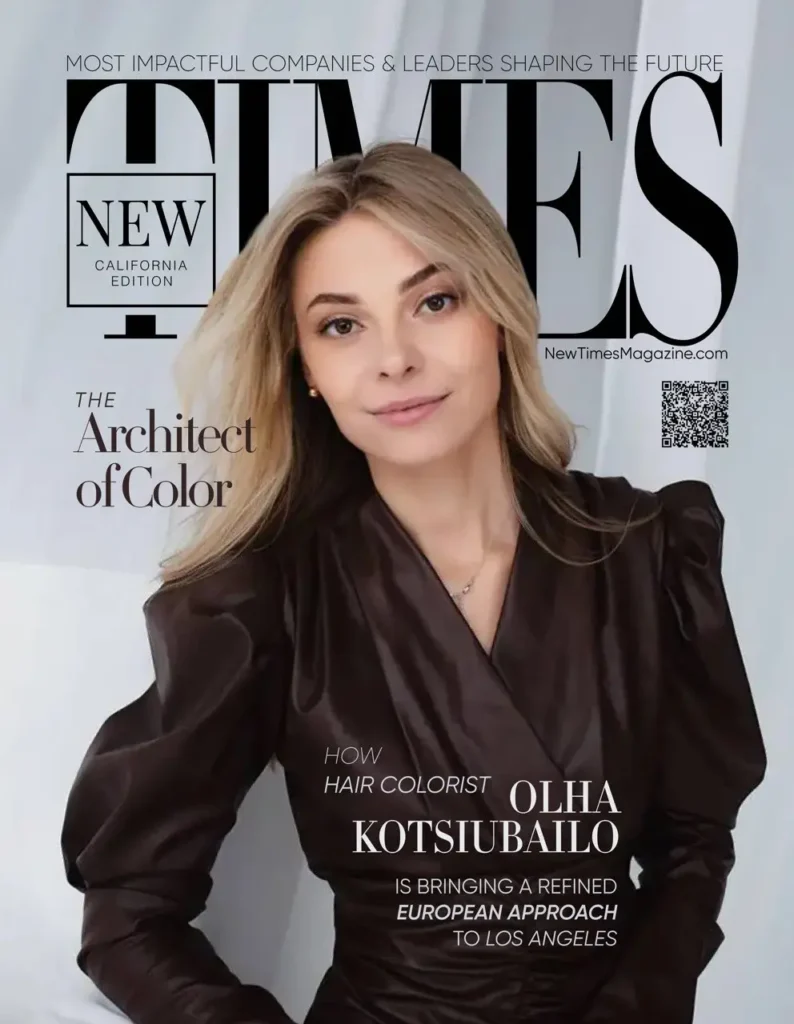
How hair colorist Olha Kotsiubailo is bringing a refined European approach to Los Angeles
Morning arrives early in Los Angeles. Sunlight filters through the windows of Space LA, filling the studio with a soft glow that reflects off mirrors and glass surfaces. There is none of the noise people often associate with busy salons. Instead, the space feels more like a creative studio. Stylists move quietly between stations, carefully mixing tones and studying the natural structure of their clients’ hair before beginning their work.
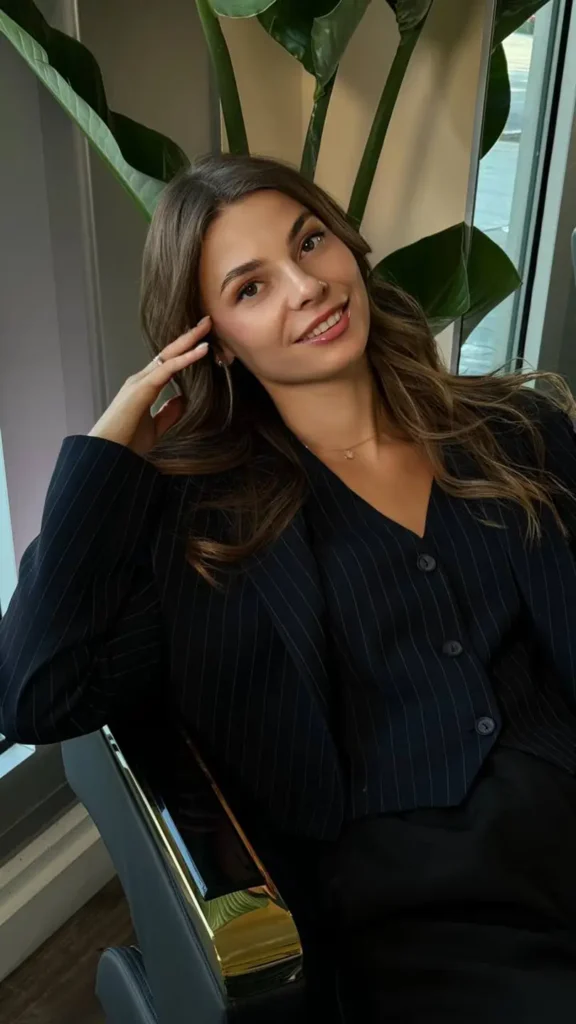
At the center of this environment is Olha Kotsiubailo, the founder of the studio and a colorist whose reputation has steadily grown within the professional beauty industry. Over the past several years, her work has drawn attention among stylists and educators alike not simply because of technical precision, but because of the philosophy behind it.
Kotsiubailo approaches hair color less like a routine service and more like a form of design. Every color decision, she explains, begins with observation: the natural movement of the hair, the undertones of the skin, the way light interacts with each shade.
“Hair color isn’t just about applying pigment,” she says. “It’s about understanding how color lives on the hair over time.”
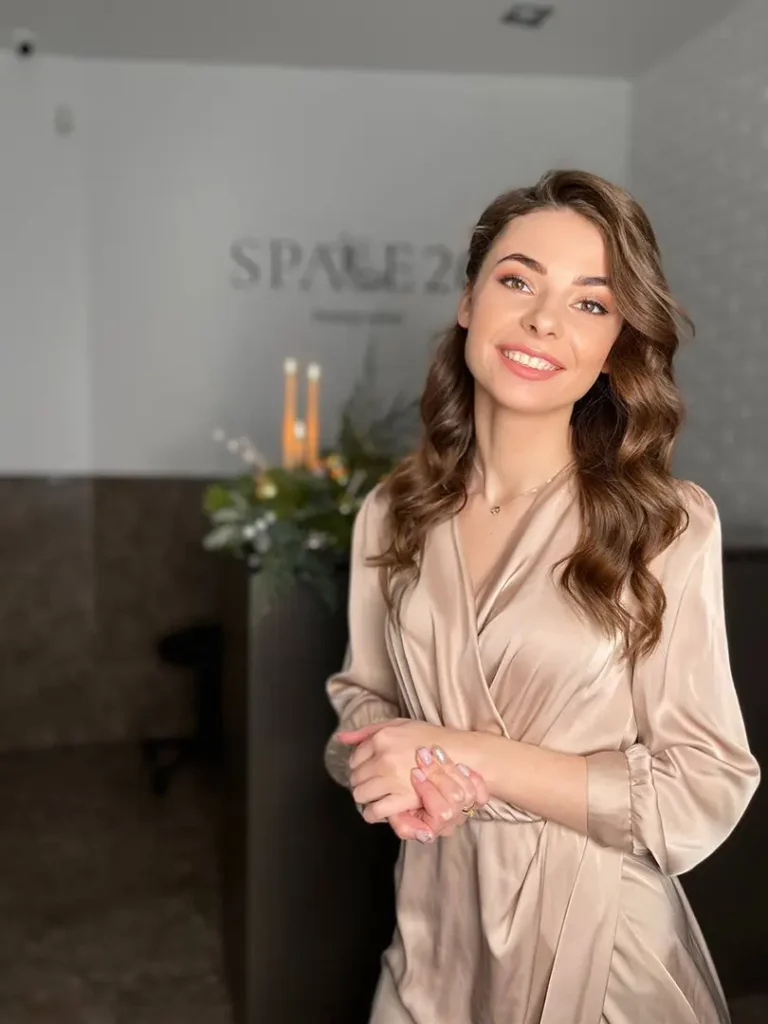
That perspective has become the foundation of her professional identity.
But the story began thousands of miles away, long before the opening of her Los Angeles studio.
Her early professional career took shape in Ukraine, where she founded Space26, a salon in Kyiv that quickly became known for advanced color work and a strong commitment to professional education. From the start, the studio was designed as more than a traditional beauty salon.
“I wanted to build a place where stylists could develop their skills continuously,” Kotsiubailo says. “The beauty industry evolves very quickly. If you stop learning, you fall behind.”
At Space26, education became part of the studio culture. Stylists trained regularly, studied new techniques, and worked with professional color systems designed to protect the integrity of the hair.
During these early years, Kotsiubailo discovered the area of hairdressing that fascinated her most: color.
While many stylists divide their focus between cutting, styling, and coloring, she found herself drawn deeper into the technical and artistic complexities of color work.
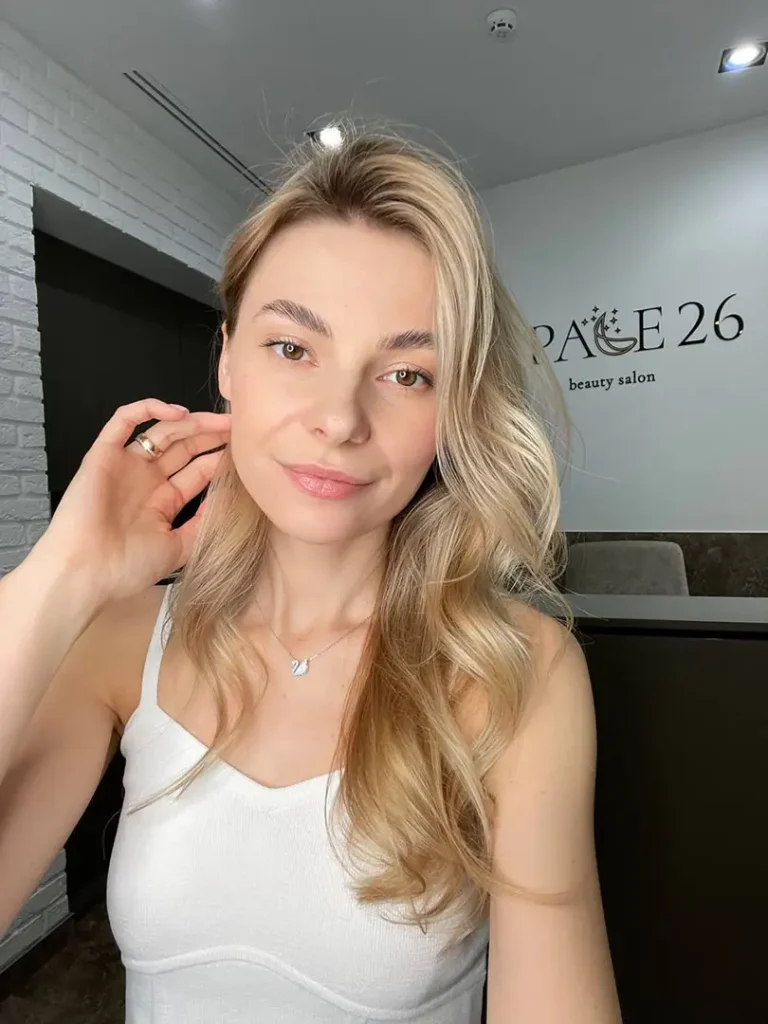
“Color is the most intricate part of the profession,” she explains. “You’re working with chemistry, structure, light, and perception all at once.”
European coloring methods soon became a major influence on her work. Compared with traditional salon routines that rely on frequent touch-ups, the European school emphasizes subtle transitions and long-lasting results.
The philosophy is simple but demanding: the most beautiful color is one that looks natural and evolves gracefully as the hair grows.
Over time, Kotsiubailo began refining this philosophy into her own approach.
Through years of experimentation with tone placement, pigment layering, and lightening techniques, she developed her signature Velour Luxe Technique, a proprietary color system designed to maintain dimension and balance as the hair grows out. The goal was to reduce the need for constant recoloring while preserving the health and integrity of the hair.
For many clients, the difference is noticeable almost immediately.
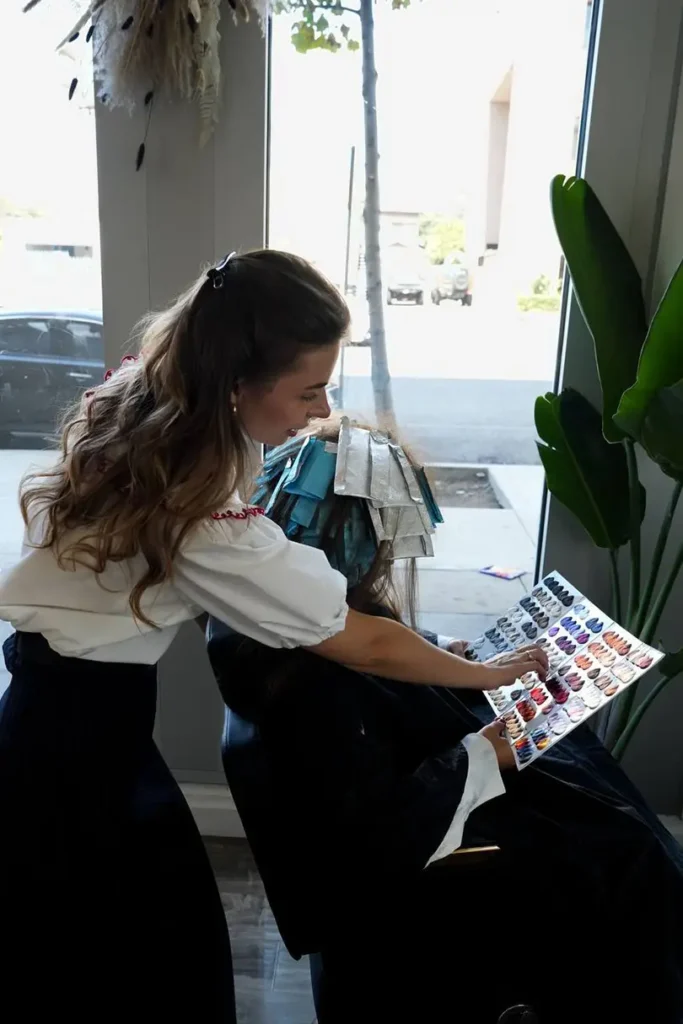
Instead of returning every few weeks for color corrections, they can often maintain their look for months.
“When color is applied thoughtfully, it grows out beautifully,” she says. “The transition becomes part of the design.”
The method quickly became one of the signatures of her work.
As her reputation grew, so did her involvement in the broader professional community. Kotsiubailo began participating in international industry competitions, where stylists present their techniques under the scrutiny of expert judges.
One of the most significant milestones in her career came at the XXXVIII International Championship “Empire of Beauty” in Washington, D.C., where she received three first-place awards in professional color categories: Total Blond, AirTouch, and Contouring.
For professional colorists, competitions like these represent more than recognition.
They are laboratories of innovation places where techniques are tested, refined, and shared among specialists from different countries.
“You see how professionals approach color in completely different ways,” Kotsiubailo explains. “Every stylist brings their own interpretation of the craft.”
The experience deepened her commitment to education and mentorship.
Soon after, she began sharing her expertise through workshops and professional training programs. One notable collaboration took place at Savvy Beauty Academy in California, where she demonstrated advanced European coloring techniques and worked with students exploring new approaches to color placement. Teaching, she says, has become an essential extension of her work.
“When stylists learn how color truly works, the entire industry improves.”
Her professional engagement has also expanded into industry organizations and evaluation roles. Kotsiubailo received certification as a Trainee Judge, reflecting her participation in the process of assessing the work of other stylists in professional competitions. For her, this responsibility carries a deeper meaning.
“When you evaluate another artist’s work, you’re helping define what excellence looks like in the profession.”
Today, that combination of artistry, education, and professional leadership shapes her work in the United States.
In Los Angeles, she founded Space LA, a studio designed to introduce a more refined European coloring approach to a city known for its fast-moving beauty culture.
Los Angeles is one of the world’s most influential beauty capitals. Trends often emerge here before spreading globally. Stylists work in an environment shaped by fashion, film, photography, and social media — an ecosystem where innovation is constant and competition is intense.
For Kotsiubailo, that environment presents a challenge she welcomes.
“Los Angeles pushes you to grow,” she says.
At Space LA, her philosophy remains consistent with the principles she developed earlier in her career: technical precision, careful color placement, and a deep respect for the natural structure of the hair.

Clients often come to the studio seeking something different from conventional salon coloring. They want depth rather than flat color. Subtle transitions rather than dramatic contrasts. Above all, they want results that remain beautiful long after the appointment.
The atmosphere of the studio reflects that philosophy.
Stylists work slowly and deliberately, studying each client’s hair before beginning the process. Color mixtures are customized rather than standardized. The result is hair that appears effortlessly natural.
“When color is done correctly,” Kotsiubailo says, “people notice the person, not the technique.”
Beyond the salon, Olha continues to shape the beauty industry through fashion, education, product innovation, and community engagement. She creates runway hairstyles for Fashion Week shows, collaborates on editorial productions, styles children’s hair for major community festivals, and regularly appears as a speaker and educator, sharing her expertise through masterclasses and professional events.
Her commitment to innovation also led to the development of the SPACELA professional product collection, including the SPACELA Detangling Brush, professional coloring bowls and brushes, and the SPACELA Tote Bag, all created as part of the salon’s distinctive visual identity and commercial branding system in Los Angeles, California.
One of Olha Kotsiubailo’s most notable projects is the SPACELA Detangling Brush, a professional tool created not as a commercial product, but as a practical solution inspired by years of hands-on experience working with hair. Its development involved multiple stages, from the initial sketches and technical designs to close collaboration with the manufacturer and extensive testing before entering production.
Every detail was carefully considered. Various brush shapes, bristle configurations, materials, and handle ergonomics were tested to achieve the ideal balance of comfort, durability, and gentle detangling without causing damage to the hair. Olha also placed a strong emphasis on sustainability by replacing single-use plastic packaging with reusable fabric pouches and introducing a brush return program that allows used brushes to be recycled and repurposed.
This comprehensive approach, combining innovation, functionality, quality control, and environmental responsibility, has become the foundation of the SPACELA brand philosophy, reflecting Olha’s commitment to creating professional tools that meet the highest standards of the modern beauty industry.
Today, her work extends far beyond hairstyling. Through her signature Velour Luxe Technique, educational programs, public speaking, runway collaborations, and original product development, Olha continues to influence the next generation of beauty professionals while building a brand recognized for innovation, artistry, and healthy hair.
Yet despite the recognition, she describes her work in remarkably simple terms. “At the end of the day,” she says, “it’s about the person sitting in your chair.” Success, in her view, is not measured only by awards or titles. It is measured by the moment when a client sees their reflection after the process is complete.
Sometimes the transformation is subtle: a healthier shine, a softer tone, a color that feels more natural than before.
Other times the effect is more profound. Confidence changes posture. Expression softens. The way someone carries themselves shifts almost immediately.
“That moment is why we do this work,” she says.
The beauty industry often focuses on trends – the latest shades, techniques, or styles. But Kotsiubailo believes the deeper purpose of the profession lies elsewhere.