Beaches in Newport Beach, California were temporarily closed after a rare but concerning incident. Off the coast of West Newport Beach, a great white shark measuring about 2.4 meters was spotted near a surfer. The predator stayed close and circled the person in open water. The situation looked tense, but it ended without an attack or injuries.
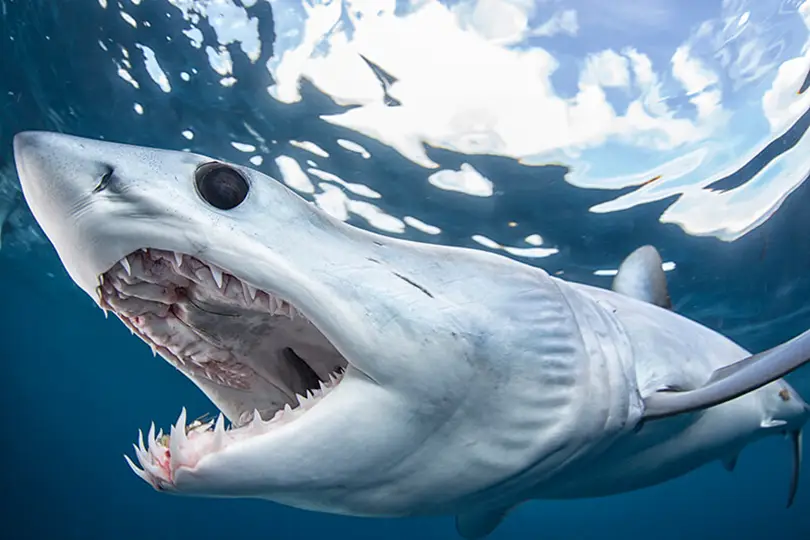
Local authorities responded quickly and followed safety protocols. The water was cleared for about one mile in both directions from the sighting. Beaches were closed, lifeguards increased patrols, a helicopter was deployed for aerial monitoring, and patrol boats were sent into the area. Warning signs were placed along the shore.
At first glance, this may seem like an emergency. But in a broader context, it is not an anomaly, but part of the natural interaction between humans and the ocean.
The great white shark is one of the most studied marine predators. Long-term research shows a clear and reassuring fact: shark attacks on humans are extremely rare. In most cases, sharks do not see humans as prey.
So why do such stories attract so much attention.
It comes down to human perception. The brain reacts strongly to rare and visually striking events. A shark near a surfer creates a powerful mental image, which can make the risk feel higher than it actually is. This is known as the availability effect.
There are also real-world factors that help explain why such encounters are reported more often today.
First, climate change. Rising ocean temperatures influence marine migration patterns. Sharks follow their food sources, such as fish and seals, which are increasingly moving closer to shore.
Second, population recovery. Conservation efforts have helped restore shark populations in some regions. This is positive for ecosystems, but it also increases the likelihood of encounters with humans.
Third, technology. Today, more events are recorded and shared than ever before. Cameras, drones, smartphones, and monitoring systems capture incidents that previously might have gone unnoticed. We are not necessarily encountering sharks more often. We are simply more aware of them.
It is also important to understand shark behavior. In most situations like this, a great white shark is not hunting humans. Circling behavior is often exploratory. The shark is assessing its surroundings rather than preparing to attack. That explains why, in this case, the shark stayed nearby but did not act aggressively.
Still, caution is important.
Water safety experts recommend staying closer to shore, swimming in groups, avoiding murky water with low visibility, staying away from fishing areas, and minimizing sudden splashes that may attract attention. These guidelines are based on observation and data, not fear.
Incidents like this sit at the intersection of science, public safety, and media perception. One real event becomes a widely shared story that shapes how people view the ocean.
At the same time, the ocean has not suddenly become more dangerous. It remains a complex and dynamic system where humans are visitors. Sharks are not entering our environment. We are entering theirs.
From a scientific perspective, each sighting contributes valuable data. Researchers analyze movement patterns, water temperature, prey distribution, and behavior. This helps improve prediction models and enhances safety.
From a practical standpoint, closing beaches is not a sign of panic. It is an example of an effective safety system. Rapid response, coordination between agencies, and public warnings help reduce risk to a minimum.
The overall picture is more balanced than headlines suggest.
Yes, a shark was close to a human.
Yes, the situation required attention.
But it remained within a controlled and non-threatening scenario.
The ocean continues to be a place of power, beauty, and risk. The goal is not to avoid it entirely, but to understand how to interact with it safely.
Safety begins not with the absence of danger, but with the right response to it.