How Svitlana Riaba Is Bringing Chemistry, Technical Discipline, and Professional Education Into the Modern Nail Industry
For many clients, a manicure or pedicure is primarily an aesthetic service. For Svitlana Riaba, it is a technically demanding process shaped by material chemistry, mechanical forces, the condition of the natural nail, and the practitioner’s ability to make informed professional decisions.
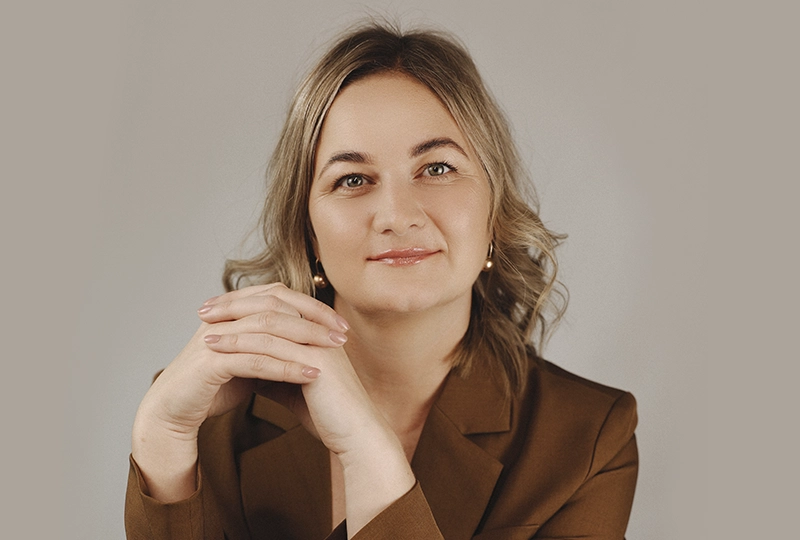
Svitlana Riaba is a pedicure and nail specialist, international competition winner and judge, educator, methodology author, and founder of V’IRELIA BEAUTY LLC and Riaba Nail Precision Academy. Her professional work is built around a central conviction: nail services should not be reduced to a memorized sequence of movements or the decorative application of color. They should be approached as a structured discipline requiring analysis, technical accuracy, material knowledge, and clearly defined limits of professional responsibility. That perspective can be traced directly to her academic and teaching background in chemistry and physics.
“My education in chemistry shaped my professional approach very deeply,” Svitlana explains. “I became accustomed to looking beyond the visible result and asking why a particular process occurs.”
In nail services, that question has practical consequences. A practitioner works with cosmetic formulations, adhesion, light-initiated polymerization, natural keratin structures, and artificial materials exposed to repeated mechanical stress. Every stage of the procedure can affect the durability, appearance, and integrity of the final result. Riaba’s experience teaching chemistry and physics also influenced how she later developed professional training programs. Teaching required her to organize information, identify cause-and-effect relationships, and make complex subjects understandable. She now applies the same principles when explaining nail structure, product behavior, equipment parameters, and the relationship between technique and outcome.
For Svitlana Riaba, professional precision begins before a tool or product touches the nail. Riaba’s interest in developing a more systematic method emerged gradually through years of professional practice. She observed that two clients could receive apparently identical services using the same products but experience very different results. One might retain a coating without difficulty, while another could develop lifting or premature breakdown. The conventional response is often to replace the base product, reinforce the nail with additional material, or try another brand. Riaba concluded that this trial-and-error approach frequently addresses the symptom rather than identifying the cause.
She began examining the entire service as an interconnected process: the initial condition of the nail plate, preparation technique, product compatibility, nail length, structural architecture, stress distribution, the client’s occupation, and everyday exposure to water, household chemicals, and physical pressure.
“It became clear to me that there should not be one universal algorithm or one technique for everyone,” Svitlana says.
A client who works extensively with their hands may require a different nail length, architecture, or material system than someone whose daily routine creates little mechanical stress. A technically impressive structure may still be an unsuitable choice if it does not correspond to the client’s lifestyle. That distinction is central to Riaba’s work. A successful service is not merely one that looks attractive immediately after completion. It must also be functional for the individual receiving it.
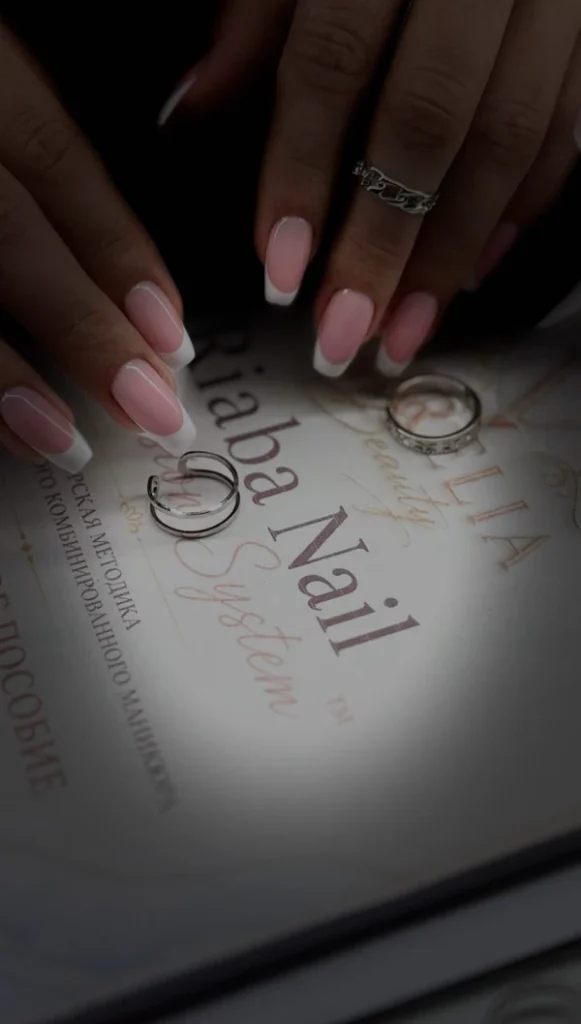
Before performing a service, Svitlana evaluates the color, thickness, structure, and integrity of the nail plate. She also considers visible separation, trauma, inflammation, changes in surrounding skin, and other irregularities. When she observes signs that may require medical assessment, she does not attempt to conceal them beneath decorative material.
“The responsibility of a nail specialist includes understanding the boundaries of professional competence,” she emphasizes.
This is an important distinction. Nail professionals are not medical practitioners and should not diagnose disease. Their responsibility is to recognize when a cosmetic procedure may be inappropriate and when a client should be referred to a qualified medical professional. Riaba transformed her accumulated observations into the Riaba Nail Precision System™, a methodology designed to make professional procedures more structured, controlled, and reproducible. She had observed that many technicians performed certain movements from habit rather than through deliberate reasoning. They repeatedly returned to areas that had already been treated, frequently changed the direction of an electric file, or made unnecessary movements. These patterns could increase service time and make the level of mechanical exposure more difficult to control.
Riaba’s system organizes nail assessment, treatment sequence, working direction, equipment parameters, product selection, and structural architecture into a unified decision-making framework. One of its defining technical principles is sequential work in a consistent direction. In her electric-file technique, treatment proceeds systematically from right to left without constant switching between directions. She uses approximately 24,000 revolutions per minute as a working reference in appropriate circumstances, while stressing that speed must always be adjusted according to the bit, the condition of the working area, and the specific procedure.
The methodology cannot be reduced to one movement or machine setting. Its purpose is to teach the practitioner how to evaluate the complete situation and determine why a particular technique, product, or structural solution should be selected. That analytical approach becomes especially relevant in difficult cases, including recurring product lifting. Instead of automatically changing products, Riaba reviews the client’s nail condition, preparation process, lifestyle, nail length, architecture, stress distribution, and the compatibility of the selected material system.
In many cases, improvement comes not from substituting one product but from correcting the sequence and logic of the entire procedure. These experiences reinforced Riaba’s belief that the industry needs diagnostic thinking within the legitimate scope of nail practice: not medical diagnosis, but a disciplined method of identifying technical causes and selecting an appropriate professional response.
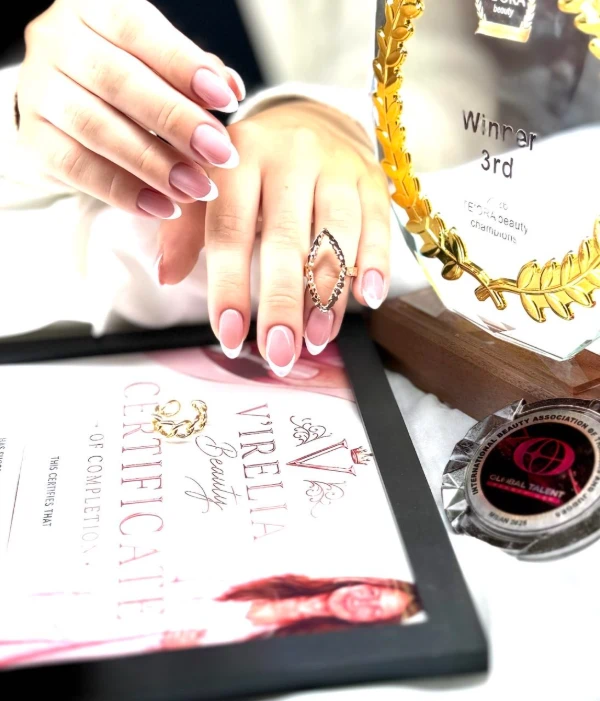
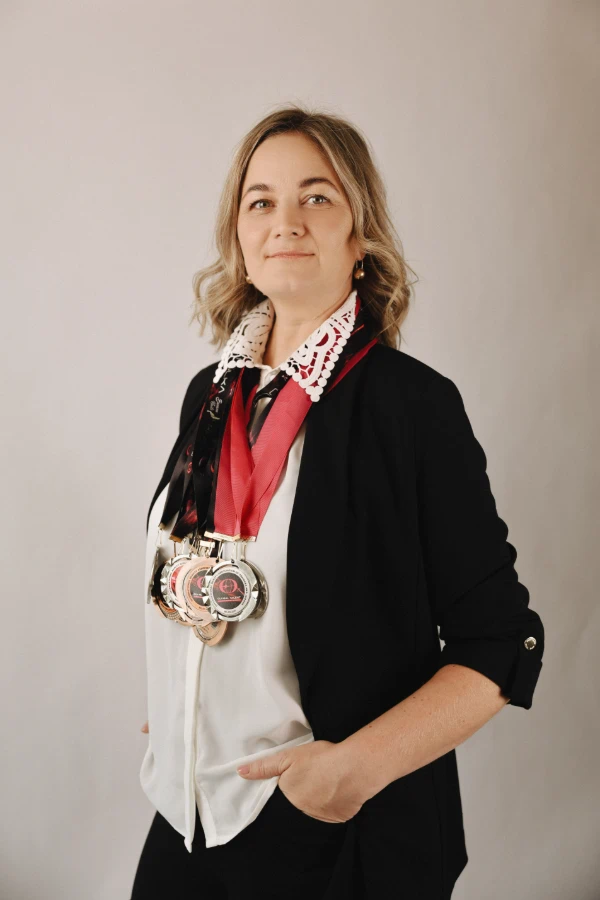
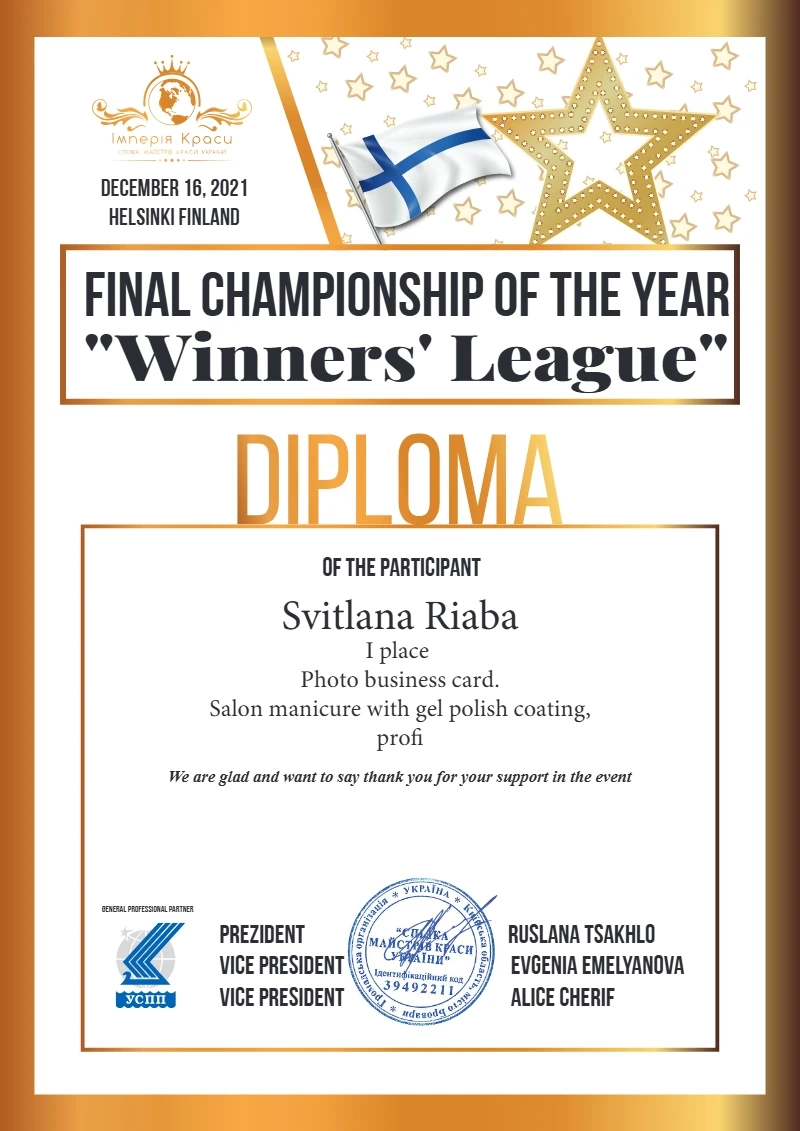
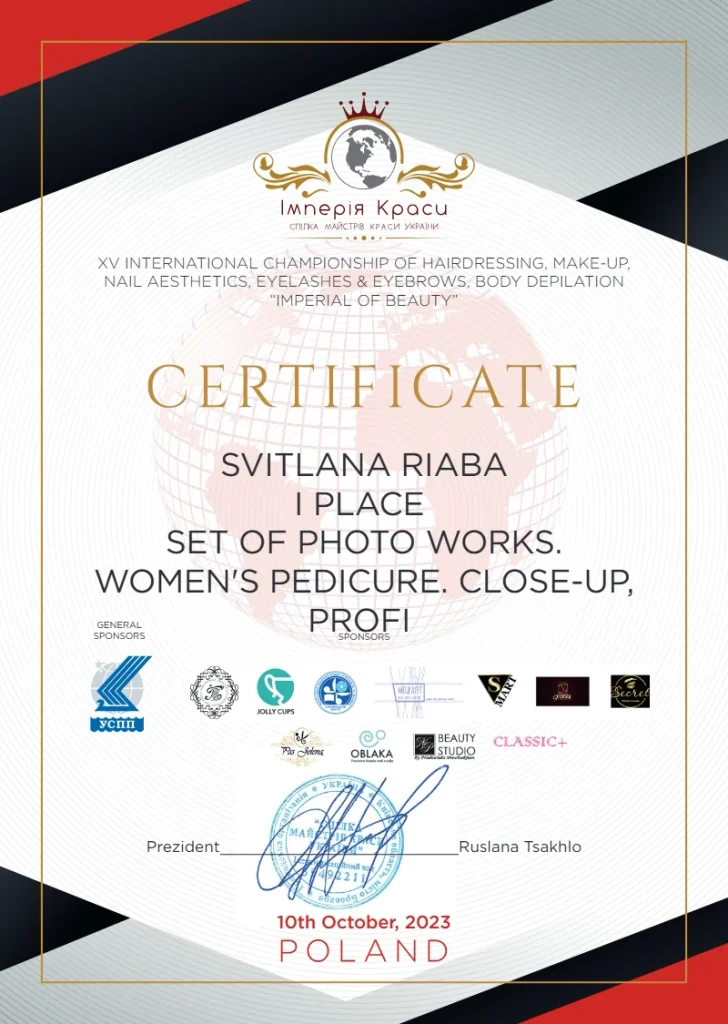
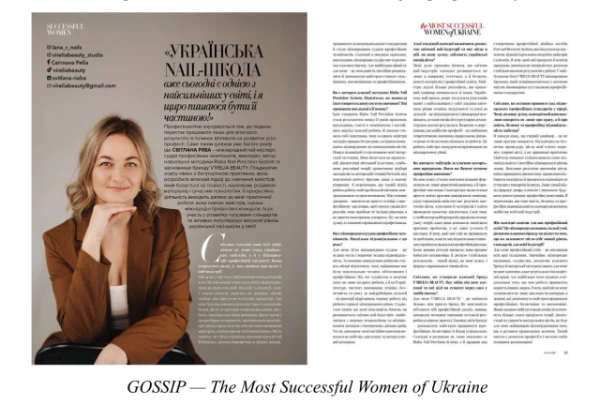
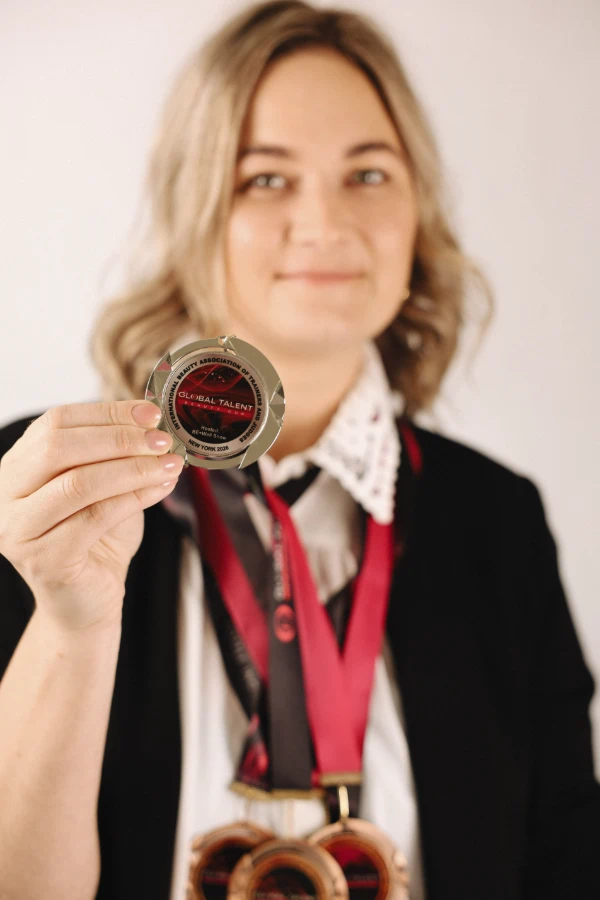
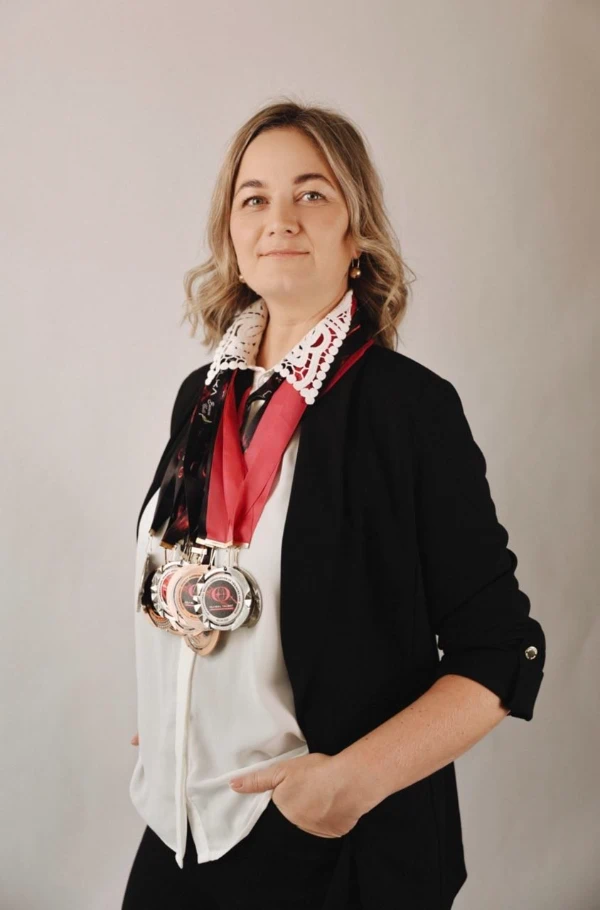
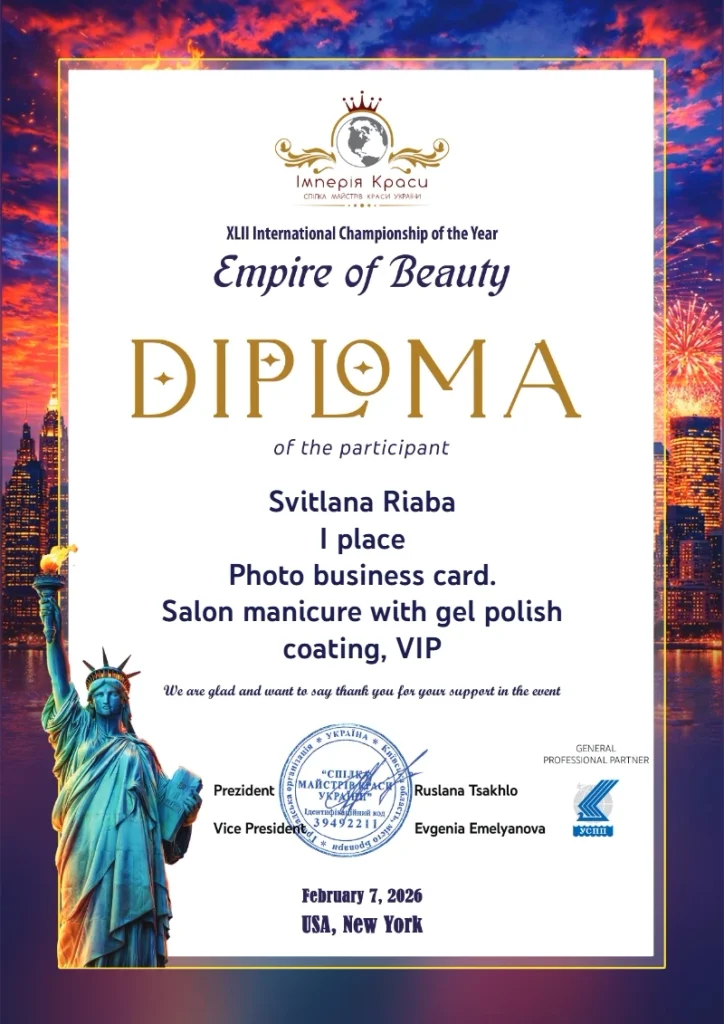
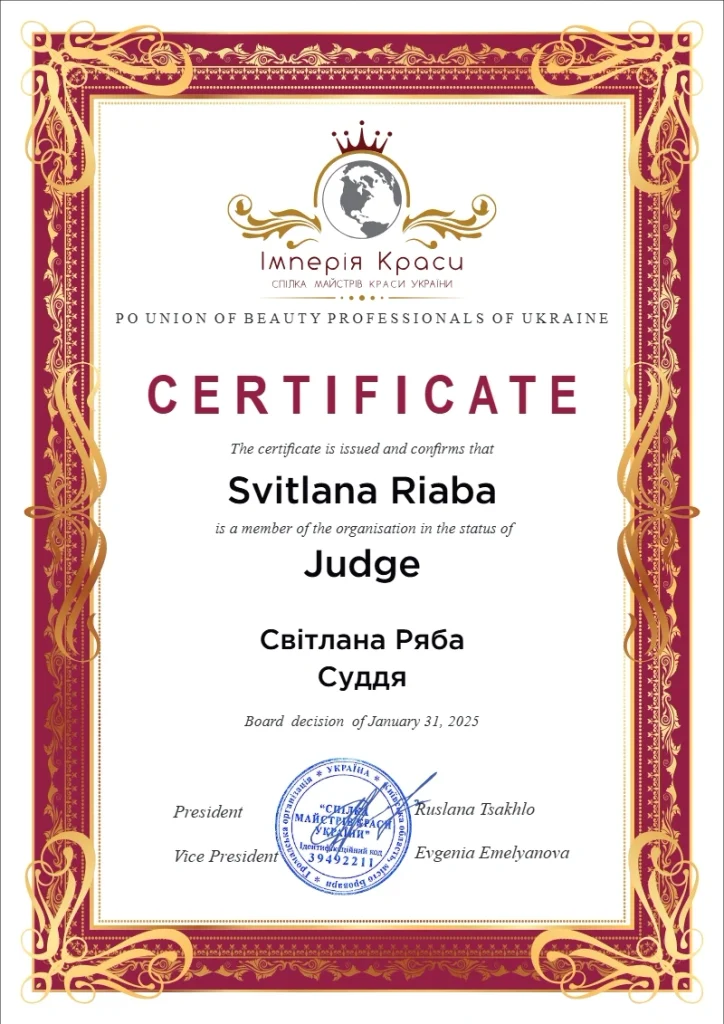
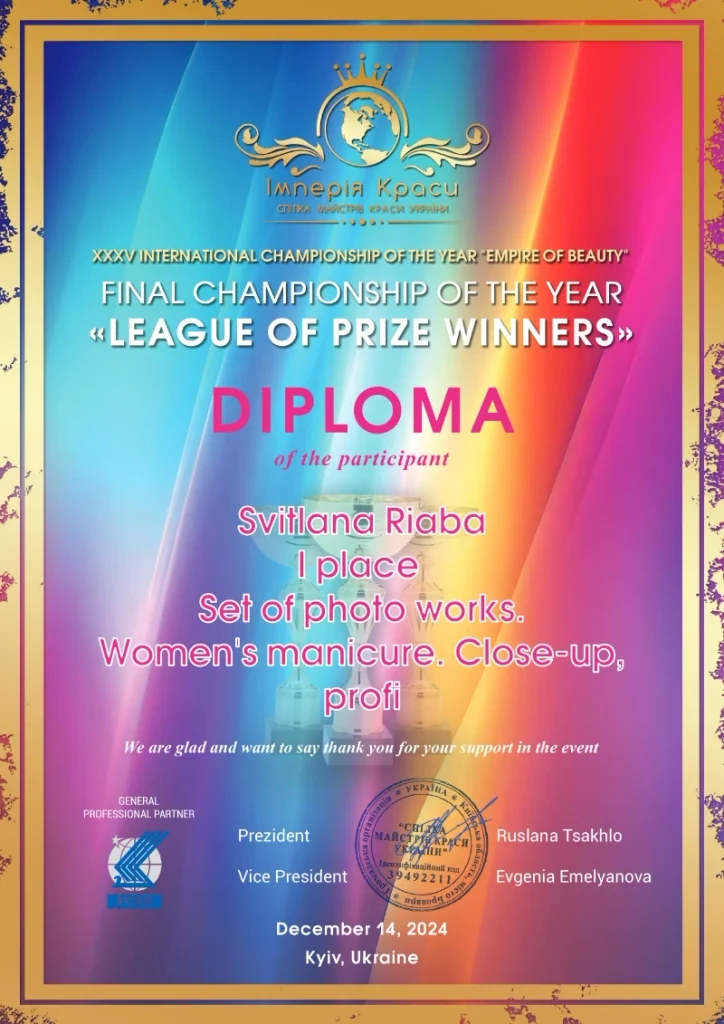
Svitlana Riaba has tested her technical principles in international competitions across Europe and the United States, where she has repeatedly earned winning and prize placements. Unlike ordinary salon practice, competitions require specialists to perform under strict criteria, time limitations, and direct comparison with highly trained professionals. The work is evaluated in detail rather than judged only by its overall visual appeal.
“Every victory confirmed that my technical principles could work not only in daily salon practice but also at the international professional level,” Svitlana says.
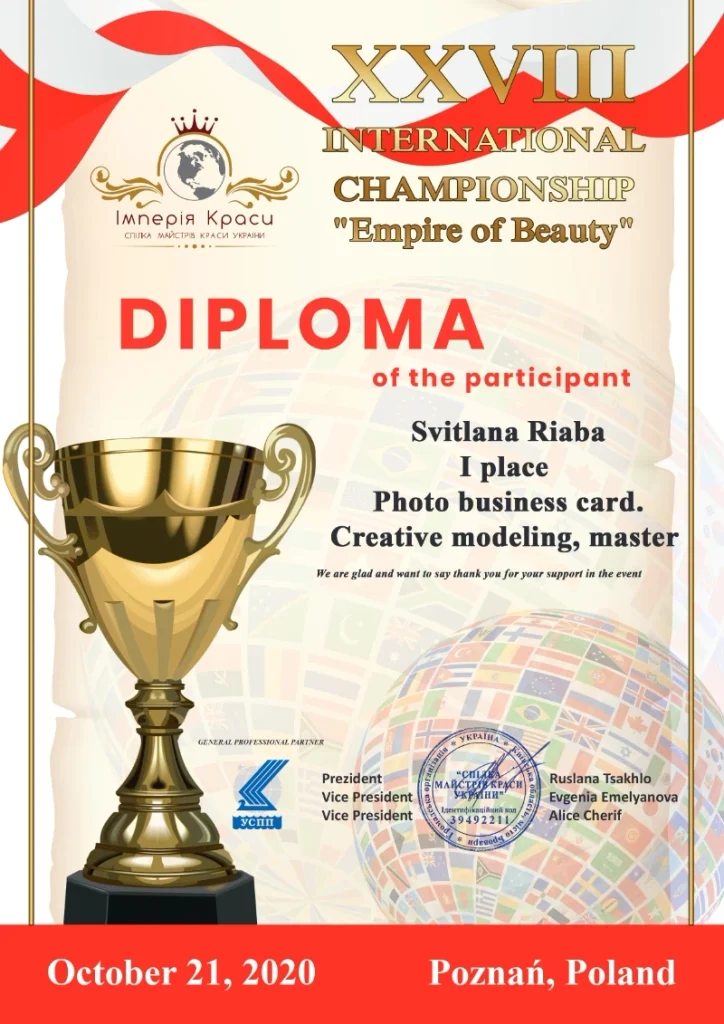
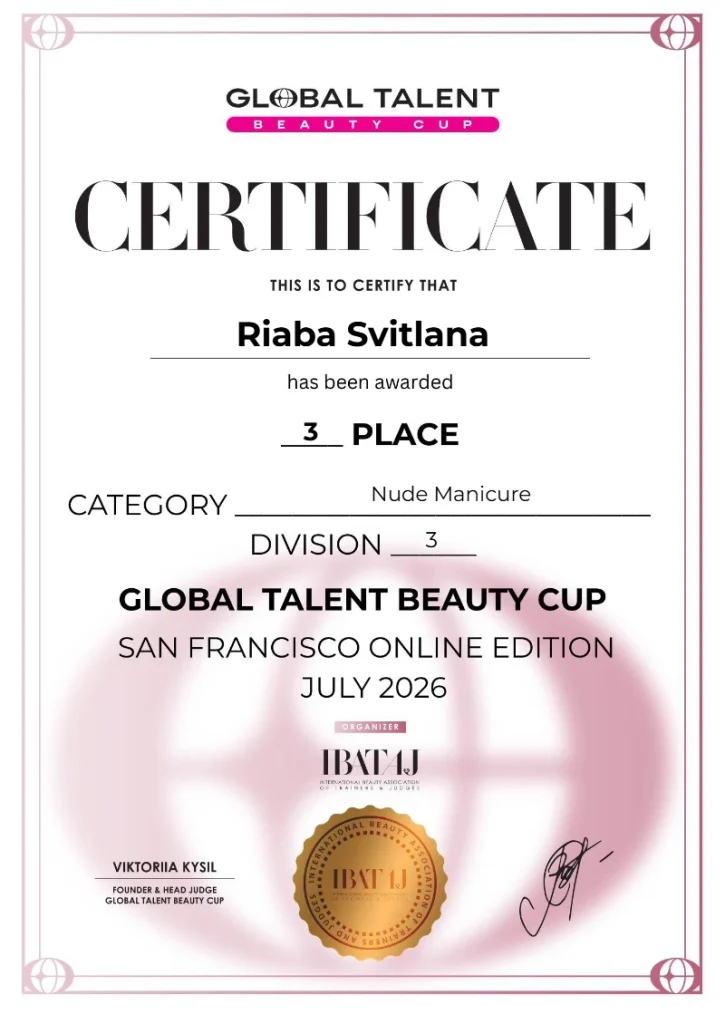
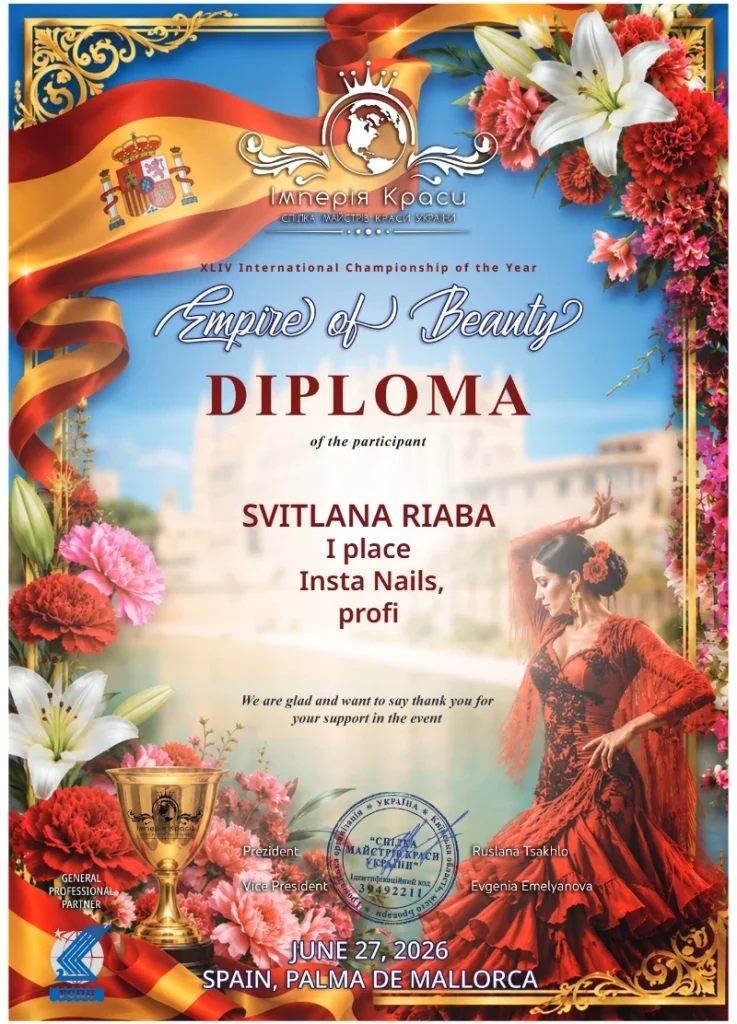
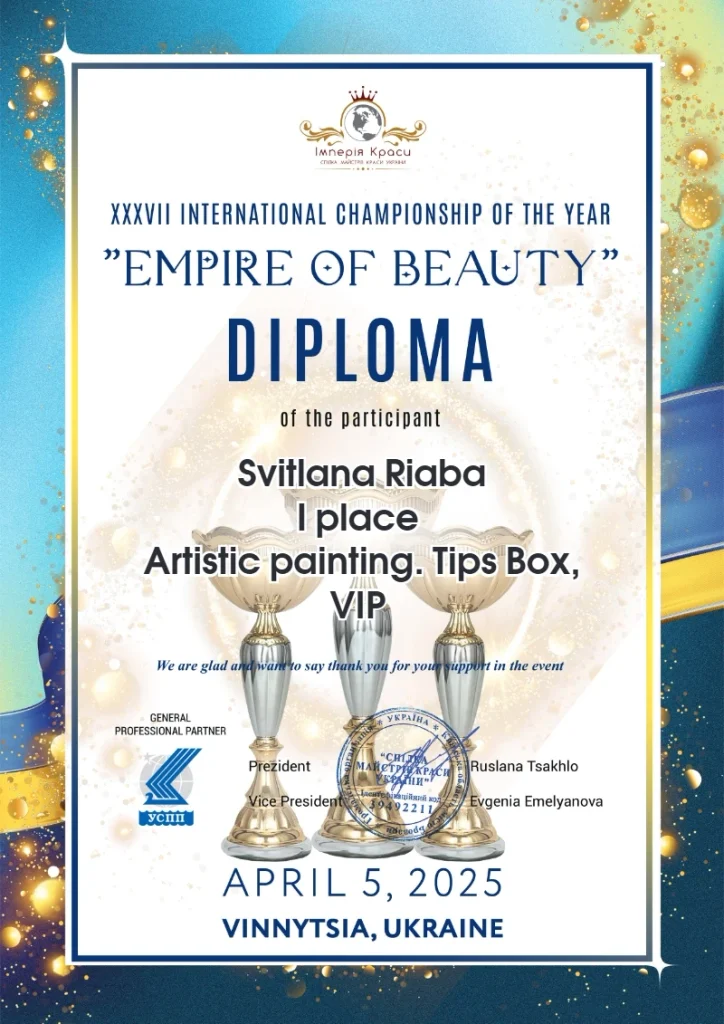
The value of those achievements extends beyond the awards themselves. Competition provided an external measure of her precision and gave her experience interpreting formal standards across different professional environments. Her progression from competitor to international judge occurred gradually. She first learned to understand competitions from the participant’s perspective, including their technical requirements, scoring criteria, and the seemingly small errors that could result in lost points. She then completed judging experience and began receiving invitations to evaluate the work of other professionals.
Judging, she says, requires more than professional seniority or a distinctive personal style. A qualified judge must separate subjective preferences from established criteria and be able to explain the basis for every evaluation. A dramatic design or visually striking photograph may create a powerful first impression, but it does not necessarily represent technically superior work. Riaba evaluates cleanliness of execution, symmetry, architecture, form, lateral parallels, material thickness, surface quality, precision of lines, work around the cuticle area, and compliance with the requirements of the specific competition category. Decorative impact cannot compensate for structural or technical deficiencies.
Svitlana’s experience in Europe and the United States has also allowed her to compare different systems of professional preparation. She does not characterize one system as inherently superior. Instead, she sees each as the product of distinct regulatory structures and professional traditions. The European training approaches with which she is familiar often place considerable emphasis on technical detail, complex electric-file techniques, and structural architecture. In the United States, professional licensing, sanitation, workplace safety, and compliance with state-specific regulations play a particularly important role.
Riaba argues that the strongest professional model would combine these priorities: advanced technical precision supported by a clearly defined culture of safety, licensing compliance, and professional accountability. This combined approach reflects a broader theme in her work. Technical skill should not exist separately from responsible decision-making. A practitioner must understand both how to perform a procedure and why it is appropriate in a particular situation.
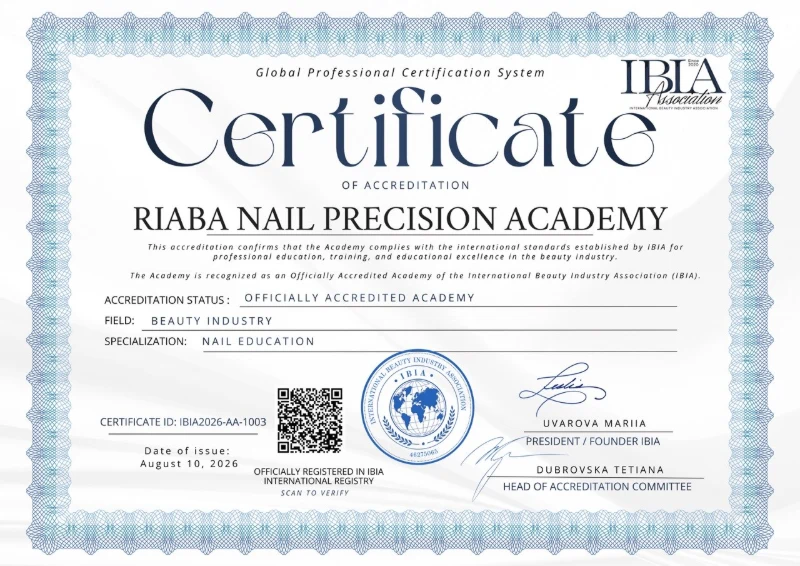
Svitlana Riaba established Riaba Nail Precision Academy to transfer this approach to other specialists. The Academy was not created simply to demonstrate a collection of movements. Its purpose is to teach a system of professional reasoning. Students in conventional training may learn to reproduce a procedure correctly when conditions match the demonstration. Problems arise when the nail condition, product behavior, or service requirements differ from the example. A memorized sequence offers limited guidance in an unfamiliar situation.


“A student may remember every step but still not understand why the instructor selected that particular technique or material,” Riaba explains. “When a nonstandard situation appears, the prepared formula stops working.”
Her educational model therefore combines theory, structured modules, demonstration videos, and testing. Students are expected not only to repeat an action but also to understand its purpose and explain the reasoning behind their choices. Riaba does not evaluate educational results solely through polished final photographs. She examines whether students understand the procedural sequence, can assess the initial condition of the nails, select an appropriate technique, and justify their decisions independently. Online Academy programs include assessments following the instructional modules. Students who complete a program receive individually numbered certificates with QR codes intended to verify their origin.
Riaba is careful not to turn isolated student experiences into sweeping promotional claims. In her view, meaningful professional growth occurs when a student stops mechanically copying an instructor and begins analyzing the process independently. Riaba’s research and professional observations also examine the psychology of client relationships and premium-level service. Her conclusion is direct: premium service is not defined by expensive interiors or a high price. Clients value predictability, trust, personal attention, professional competence, and confidence that the specialist understands their needs. Technical skill and service psychology cannot be fully separated. Excellent communication cannot compensate for weak technical work, while technical perfection alone may not retain a client who feels ignored or misunderstood.

A genuinely premium experience develops when competence, consistency, individualized decision-making, and communication function together. This is particularly relevant in a field where client loyalty is often built over years. The practitioner is not simply producing an immediate visual transformation. The practitioner is managing expectations, explaining appropriate choices, recognizing limitations, and delivering a result that fits the client’s practical needs.
Riaba founded V’IRELIA BEAUTY LLC as the next stage in the development of her professional platform. She did not want to create a cosmetic brand built primarily around packaging or generalized beauty claims. Her objective was to connect product development with a structured protocol for professional and at-home care. The company’s initial direction, the V’IRELIA Forward Recovery System™, is conceived as a three-step regimen. Nail Recovery Elixir is intended for care of the nail plate. Cuticle Lipid Elixir addresses the cuticle and surrounding area. Overnight Recovery Balm completes the regimen with intensive overnight skin care. The system reflects Riaba’s position that the natural nail and surrounding tissues should not be viewed merely as a surface for decorative coating. It also extends the professional service beyond the salon by giving clients an organized home-care sequence between appointments. Riaba does not claim that the American market lacks products containing comparable individual ingredients. The intended distinction lies in how the products are organized and connected with a broader professional methodology.
“My goal is for the specialist or client to understand not only which product to use, but in what sequence, for which area, and why it belongs in the system,” she explains.
Her methods and product concepts are based primarily on years of professional practice, observation of different nail types, analysis of recurring problems, and evaluation of how materials behave in real working conditions. Her chemistry background supports her examination of cosmetic ingredients and material properties, while professional and scientific literature informs her understanding of nail structure and product safety. At the same time, Riaba draws a firm line between professional observation and clinical research. She does not present practical experience as medical or clinical evidence.
That restraint strengthens the credibility of her work. In an industry crowded with exaggerated promises, responsible innovation requires acknowledging what has been professionally observed, what has been scientifically established, and what still requires further testing. Svitlana identifies her principal contribution not as a single tool or isolated technique, but as the integration of areas that frequently remain disconnected within the nail industry: technical skill, material chemistry, assessment of the natural nail, procedural ergonomics, professional education, structural architecture, and systematic home care.
The Riaba Nail Precision System™ provides the technical framework. Riaba Nail Precision Academy serves as the educational platform. V’IRELIA BEAUTY LLC and the Forward Recovery System™ extend the concept into organized care between professional services. This integrated model reflects her broader definition of innovation. Innovation does not always require inventing a new instrument. It can also mean creating a system that changes how professionals evaluate conditions and make decisions.
Riaba ultimately wants to challenge the limited perception of nail technicians as practitioners whose role consists only of shaping nails and applying color. A modern nail professional, she argues, should understand material properties, fundamental chemical processes, mechanical stress, nail architecture, safe working practices, and the boundaries of nonmedical professional competence. Just as importantly, the specialist should be able to explain the reasoning behind a chosen procedure. The legacy Riaba seeks to build is a culture of conscious practice. She wants future professionals to rely less on the statement “this is how I was taught” and ask more demanding questions: Why am I performing this step? What is happening to the material and the natural nail? Is this choice appropriate for this client? Can the same result be achieved with greater precision, control, and consistency?
Those questions define the professional standard Riaba is working to advance. Her career demonstrates how scientific thinking, competitive achievement, education, product development, and responsible service can be brought together within one coherent professional system.
•••
Svitlana Riaba is a U.S.-licensed nail technician and pedicure specialist, international competition judge, educator, methodology author, and founder of V’IRELIA BEAUTY LLC and Riaba Nail Precision Academy. With a degree in chemistry and prior experience teaching chemistry and physics in Ukraine, she brings more than a decade of professional practice to the nail industry. Riaba is the creator of the Riaba Nail Precision System™ and developer of the V’IRELIA Forward Recovery System™. Her work encompasses international judging, professional education, research and publication, original methodology development, and the creation of advanced nail-care products and professional standards.
Website: riabanailacademy.com
Instagram: @lana_r_nails
Online Booking: dikidi.net/2118601