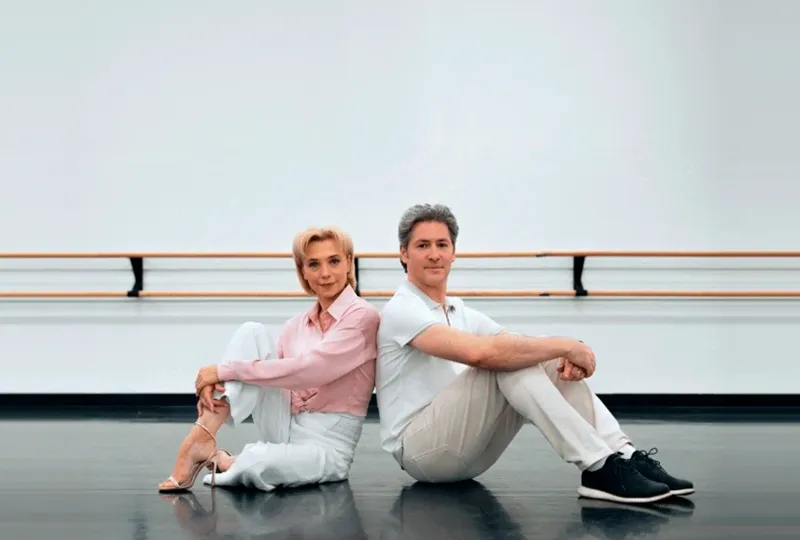
Arsen and Oksana Serobian on Classical Ballet, the Vaganova Method, and Building the Universal Conservatory of Ballet in Northern California
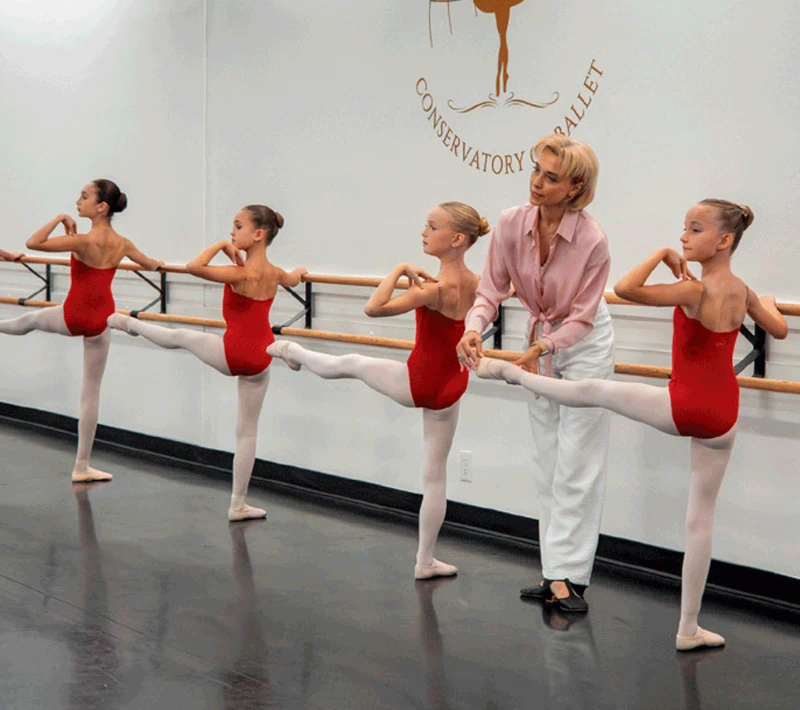
For Arsen and Oksana Serobian, ballet is not simply performance. It is an educational system, an artistic language, and a responsibility passed from one generation to the next. Their careers were shaped by the traditions of Russian classical ballet and years of professional experience as dancers, educators, performers, and cultural leaders. Oksana began studying ballet at age eight at the School of Classical Ballet in Moscow, where the guiding principle was, “The Traditions of the Bolshoi Theatre to Children.” Her teacher, Gennady Ledyakh, an Honored Artist of Russia and former artist of the Bolshoi Theatre, connected her directly to a tradition that she would eventually dedicate her own career to preserving. Arsen’s professional foundation was also formed through the Russian classical tradition, including training at the Bolshoi Ballet Academy in Moscow, before his career expanded into acting, film, media, education, and the promotion of dance through Dance Channel TV.
Today, they are bringing that experience to Northern California through the Universal Conservatory of Ballet, known as UCB. Their goal is more ambitious than operating another dance studio. They are building a structured conservatory where classical technique, musicality, artistry, physical understanding, discipline, performance, and individual development are treated as parts of one educational process.
In 2026, Arsen and Oksana expanded their work beyond the conservatory as the official choreographers for the Miss California International Grand Finale 2027, creating choreography and preparing all finalists for the November 6 stage production in Sacramento. Their work with the finalists brings the same principles that define their approach to ballet education into a different performance environment: discipline, posture, musicality, stage presence, confidence, and an understanding of movement as a form of communication. Publisher of New Times Magazine Sergey Ivannikov spoke with Arsen and Oksana Serobian about their journey from Moscow’s classical ballet tradition to California, the philosophy behind UCB, what serious ballet education requires, their work with the Miss California International finalists, and their vision for developing the next generation of dancers and performers in Sacramento and Roseville.
Arsen and Oksana, before we talk about Universal Conservatory of Ballet today, tell us about your individual journeys in ballet. How did each of you enter this world, and what ultimately made ballet your profession rather than simply an interest?
Arsen: Ballet became part of my life at a very young age, and my professional foundation was shaped through the Russian classical tradition and my training at the Bolshoi Ballet Academy in Moscow. When you grow up in that environment, ballet is not approached simply as an extracurricular activity. It becomes a discipline and a way of understanding your body, music, performance, and even yourself. My career eventually expanded beyond performing. I studied acting at the American Academy of Dramatic Arts and later became involved in film, media, and the promotion of dance through Dance Channel TV. But ballet remained the foundation underneath everything. Over the years, I realized that I wanted to take what I had learned as a dancer, performer, producer, and educator and pass it to another generation.
A responsibility passed from one generation to the next.
Oksana: I entered the world of ballet when I was eight years old. I studied at the School of Classical Ballet in Moscow, where our motto was, “The Traditions of the Bolshoi Theatre to Children.” Those words have stayed with me throughout my entire life. My teacher was Gennady Ledyakh, an Honored Artist of Russia and a former artist of the Bolshoi Theatre. I was very fortunate because I did not simply learn ballet technique from him. I received a tradition and a way of understanding ballet that had been passed directly from one generation to another. We were surrounded by artists and teachers connected with the great traditions of Russian ballet. Leading artists from Moscow theatres attended our performances, and many came to our school to teach and give master classes. Ballet was never simply something I did after school. I grew up inside this world. Later I became a professional dancer, and eventually I discovered that teaching was just as important to me as performing. I returned to work at the same college where I had studied, and over the years my students graduated and went on to professional careers in leading theatres in Moscow, throughout Russia, and internationally. At some point, I understood that this was what I wanted to dedicate my life to: not only performing ballet, but preserving the knowledge I had received and passing it to the next generation. In many ways, I am still carrying the same idea I grew up with, “The Traditions of the Bolshoi Theatre to Children.”
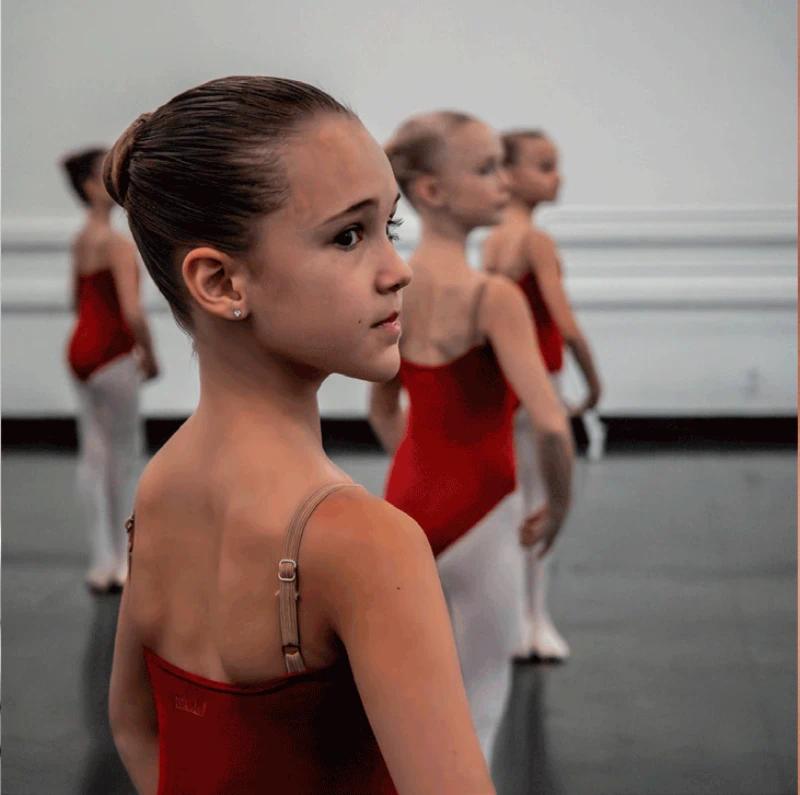
Universal Conservatory of Ballet presents itself as more than a traditional dance studio. What was the original vision behind creating UCB, and what did you believe was missing from ballet education in the Sacramento region?
Arsen: When we created Universal Conservatory of Ballet, we knew from the beginning that we did not want to create simply another dance studio. We wanted to create a school where children could receive a complete and structured ballet education. In the system in which we were educated, becoming a dancer was never only about taking ballet class. Classical ballet was the foundation, but a dancer’s education included many disciplines that developed the student physically, technically, musically, and artistically. That became the vision for UCB. Our program includes classical ballet, character and folk dance, historical dance, contemporary dance, acting, stretching, and physical preparation. Each subject gives the child something different, but together they create a more complete dancer and artist.
The Traditions of the Bolshoi Theatre to Children.
Oksana: When we came to the Sacramento region, we saw many talented and motivated children. What we felt we could bring was the educational structure we knew from our own background, a consistent system where training is not built around one performance, one competition, or one variation, but around the long term development of the student. Every year builds on the year before it, and every class has a purpose. Some students may choose ballet as a profession and others may choose a completely different path, but in either case, we want the education they receive here to be serious, meaningful, and something that stays with them for life.
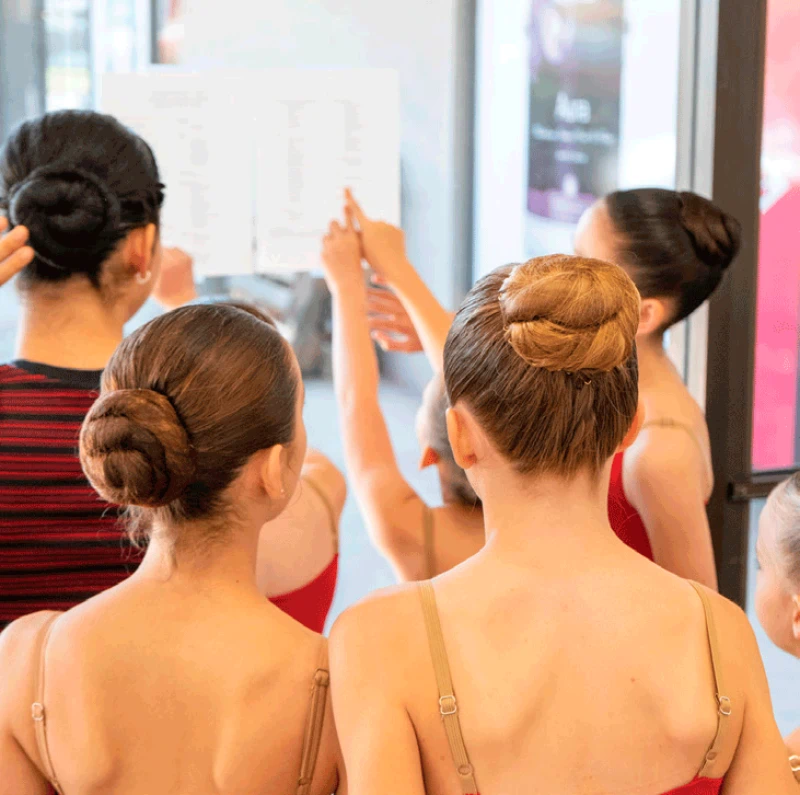
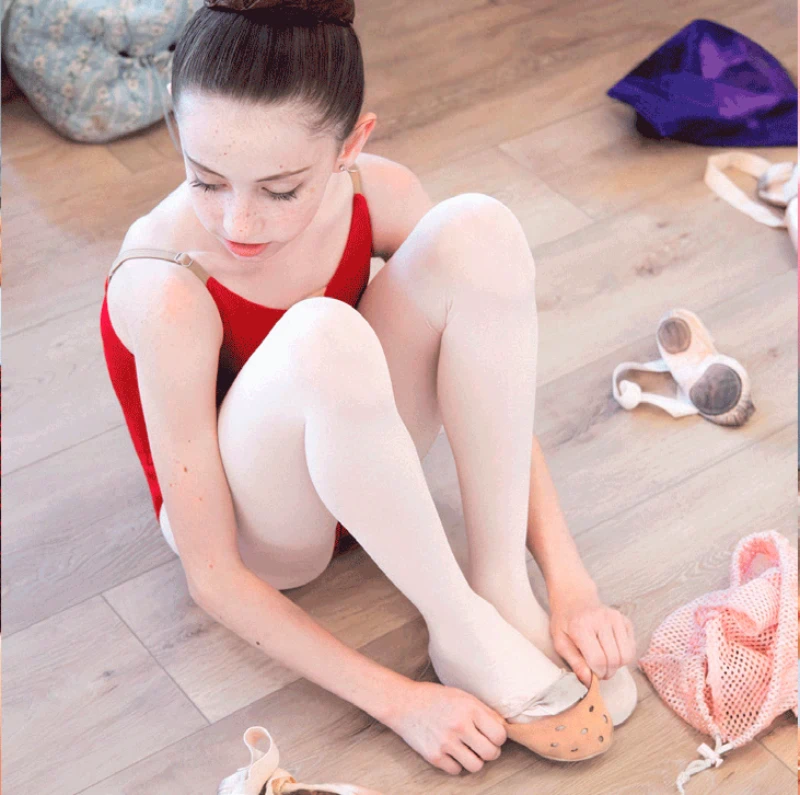
The Vaganova method is central to UCB’s training philosophy. For parents and readers who may not have a ballet background, what makes this methodology distinctive, and why did you choose it as the foundation of your curriculum?
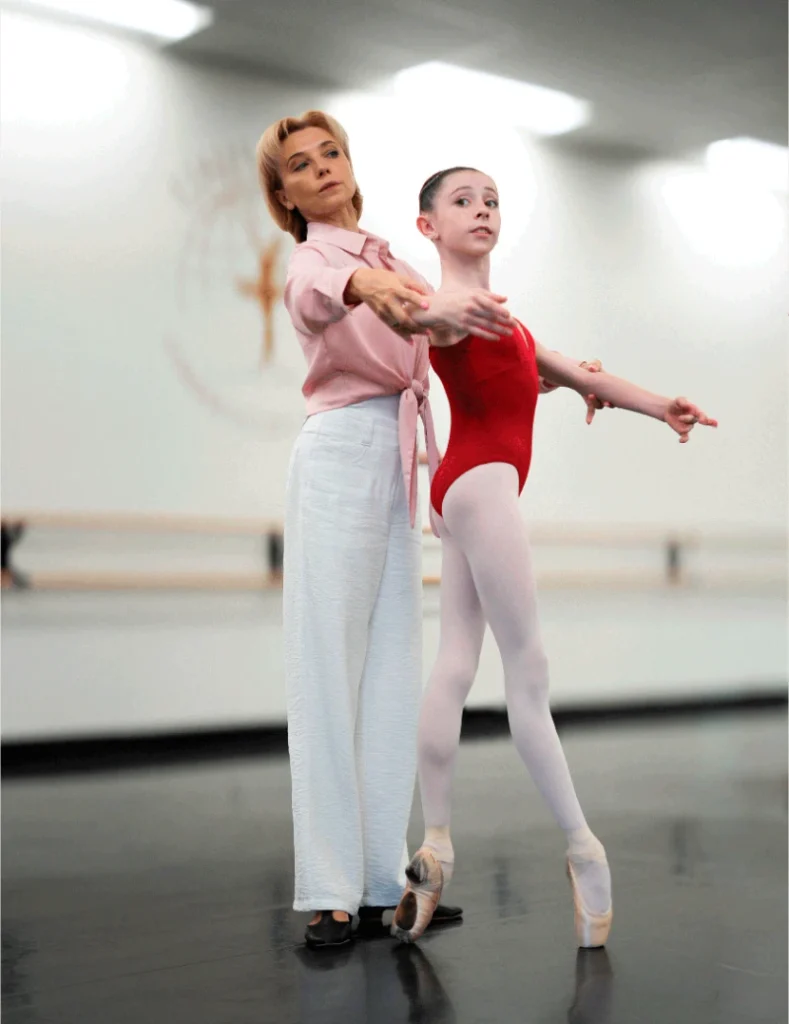
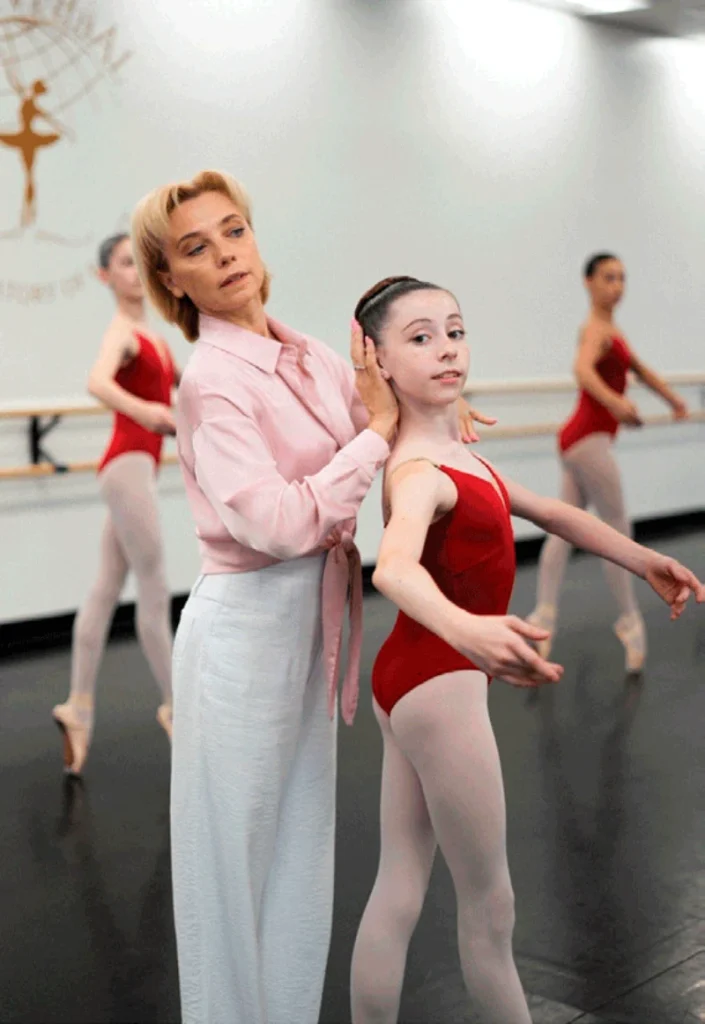
Arsen: The Vaganova Method is not simply a collection of ballet exercises. It is a complete and carefully structured system of education. A child develops progressively, year by year, and there is a reason for what is introduced at each stage. One element prepares the body for the next. This is important because ballet is not just about the legs or how high you can lift them. The entire body has to work together, including the legs, arms, head, back, coordination, musicality, and artistry. This is also very personal to us because of the way we were taught. Our teachers did not simply demonstrate a movement and ask us to repeat it. They explained where the movement came from, what part of the body should be working, what we should feel, and why it needed to be done in a particular way. Today, we teach children in the same way. We do not want students simply to copy the teacher and somehow make the movement happen. We want them to understand it. If we give a correction, we want the student to know what that correction means and how to apply it again tomorrow, even when the teacher is not standing next to them. That is one of the greatest strengths of the Vaganova Method. It develops not only the dancer’s body but also the dancer’s understanding of technique.
Classical ballet is built on discipline, repetition, and exacting standards. How do you maintain those standards while creating an environment in which young dancers remain confident, curious, and passionate about their training?
Oksana: Ballet requires discipline. There is no shortcut. Children have to repeat movements many times, listen carefully, accept corrections, and understand that sometimes it can take weeks, months, or even years to achieve something. We are demanding teachers because if we teach a child something, we believe it should be taught correctly from the beginning. But being demanding does not mean making a child afraid of making mistakes. A correction should give the student information. We do not want a child simply to hear, “No, that’s wrong.” We want the student to understand why it was wrong and what can be done differently.
It develops not only the dancer’s body but also the dancer’s understanding of technique.
When children understand the correction, they become involved in their own learning. It is also extremely important to see each child individually because children develop differently. What may be easy for one student can be a major achievement for another. Confidence does not come from telling a child that everything is perfect. It comes from helping that child recognize that serious work is producing results. When students make that connection, they become excited, begin asking questions, and take responsibility for their own development. That is the atmosphere we want at UCB: serious training, discipline, and high standards, combined with respect for the child and a genuine love for the art form.
Ballet can be physically and psychologically demanding. How has the culture of professional ballet education changed from the environment in which your own generation was trained, and which traditions do you believe should be preserved or reconsidered?
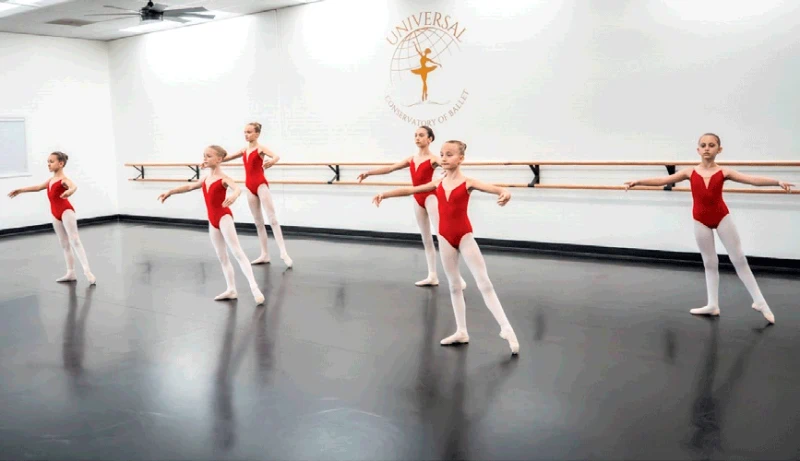
Arsen: Our generation was trained in an environment where discipline was extremely strong and expectations were very clear. There is tremendous value in that. We believe ballet still requires discipline. It requires respect for the teacher, respect for the studio, punctuality, consistency, concentration, and the ability to work through difficulty. If we remove all discomfort from training, we also remove part of the process that develops resilience. But discipline does not require fear. Some traditions deserve to be preserved because they produce excellence. Others should evolve as our understanding of physical development, injury prevention, communication, and education improves. The goal should not be to make ballet easier. The goal should be to teach it better.
Your philosophy describes ballet as a “language of awareness,” where dancers understand not only how to move, but why. What does that idea mean in practical terms inside the studio?
Oksana: We do not want students simply copying shapes. A dancer needs to understand what creates the movement, where the weight is placed, which muscles are supporting the position, where the energy is traveling, how the upper and lower body coordinate, how the head and eyes complete the line, and how the movement relates to the music. That is awareness.
A dancer needs to understand not only how to move, but why.
If students only memorize combinations, they remain dependent on the teacher. When they understand the mechanics and purpose of movement, they gradually become capable of correcting themselves. That is an important transition from a student who follows instructions to an intelligent dancer who understands their own instrument.
There are many dance schools and extracurricular programs available to families. What, in your view, separates serious conservatory training from simply taking ballet classes?
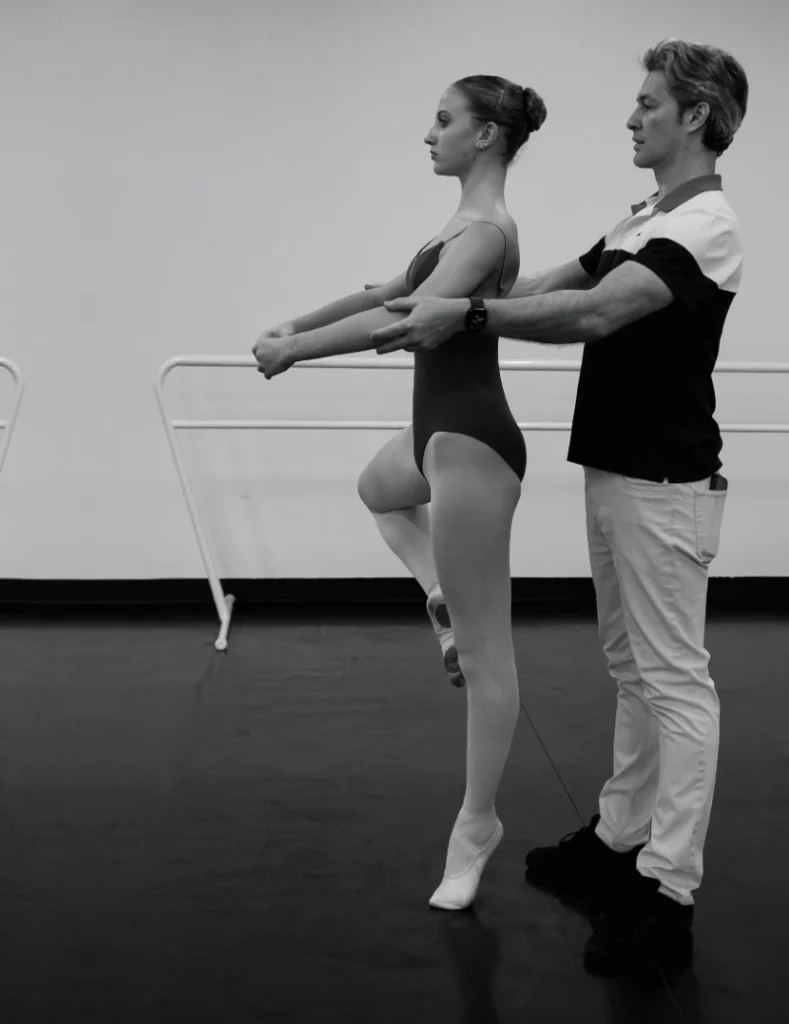
Arsen: The difference is not necessarily how many hours someone dances. The difference is whether there is a coherent educational process behind those hours. In conservatory training, today’s class is connected to yesterday’s class and to what the student will need next year. There is a curriculum. There is progression. Teachers communicate. Students are evaluated. Weaknesses are addressed rather than avoided, while strengths are developed without allowing them to hide weaknesses. Performances, repertoire, conditioning, flexibility, pointe work, and other elements should support the student’s overall development rather than exist as unrelated activities. Taking more classes does not automatically create better training. Purposeful training does.
What do you look for when a new student walks into your studio? Is natural physical ability the most important factor, or are qualities such as discipline, musicality, intelligence, resilience, and work ethic ultimately more significant?
Oksana: Physical ability matters in ballet, particularly at the highest professional level, and it would be misleading to pretend otherwise. But physical potential is only one part of the picture. We notice musicality, coordination, the ability to absorb a correction, focus, curiosity, discipline, how quickly the student understands something, and whether that student can reproduce a correction without being reminded repeatedly. We also pay enormous attention to work ethic. A naturally gifted student who does not know how to work can eventually be overtaken by a student who is intelligent, disciplined, consistent, and hungry to improve. Talent may open a door. What a dancer does after that determines much more.
UCB emphasizes individuality alongside classical discipline. Classical ballet has very precise rules, so how do you teach students to develop an individual artistic identity without compromising technical standards?
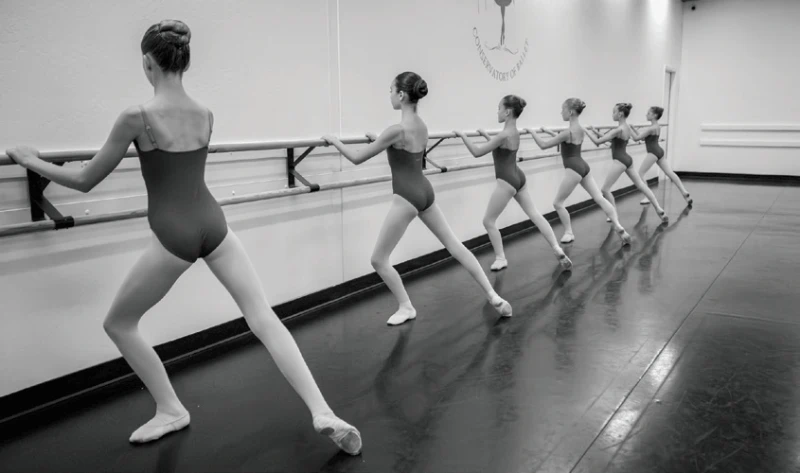
Arsen: Technique gives a dancer freedom. Before you can turn a sentence into poetry, you have to understand the language. Ballet is similar. We first give students the vocabulary: placement, coordination, line, musicality, épaulement, dynamics, and control. But two dancers performing exactly the same choreography should not necessarily look emotionally identical. Eventually, artistry appears in how a dancer listens to the music, uses the eyes and head, breathes through a phrase, communicates intention, and understands the character or atmosphere of a variation. The classical rules create the structure. Individuality gives that structure life.
What are some of the most common misconceptions parents have about serious ballet training, particularly when their child begins progressing from recreational classes toward preprofessional study?
Oksana: One misconception is that more classes automatically mean more progress. Another is that progress should always be visible immediately. Ballet development is not linear. Sometimes a teacher spends months correcting placement or strengthening a student’s foundation, and externally the change may not appear dramatic. Then suddenly several things begin improving at once because the foundation is finally there. Parents can also naturally focus on roles, levels, pointe shoes, competitions, or which student is doing what. Those things can feel very important in the moment, but our job is to look further ahead. A twelve year old getting a particular role is much less important than what kind of dancer that child is becoming at sixteen or eighteen.
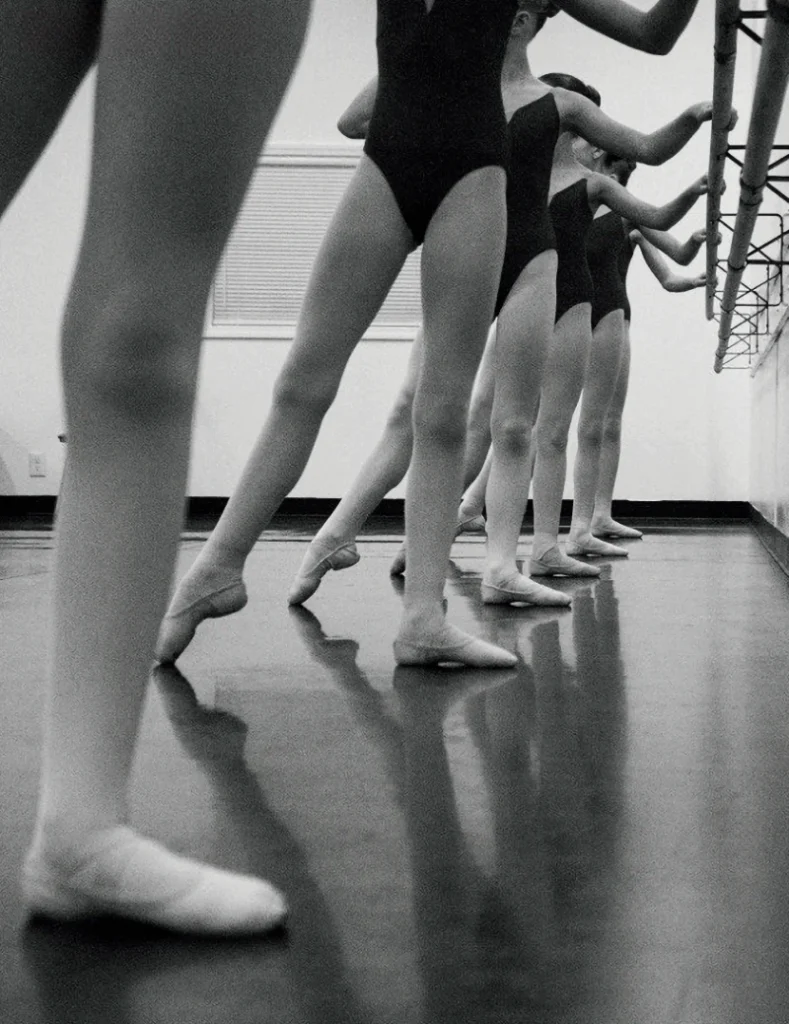
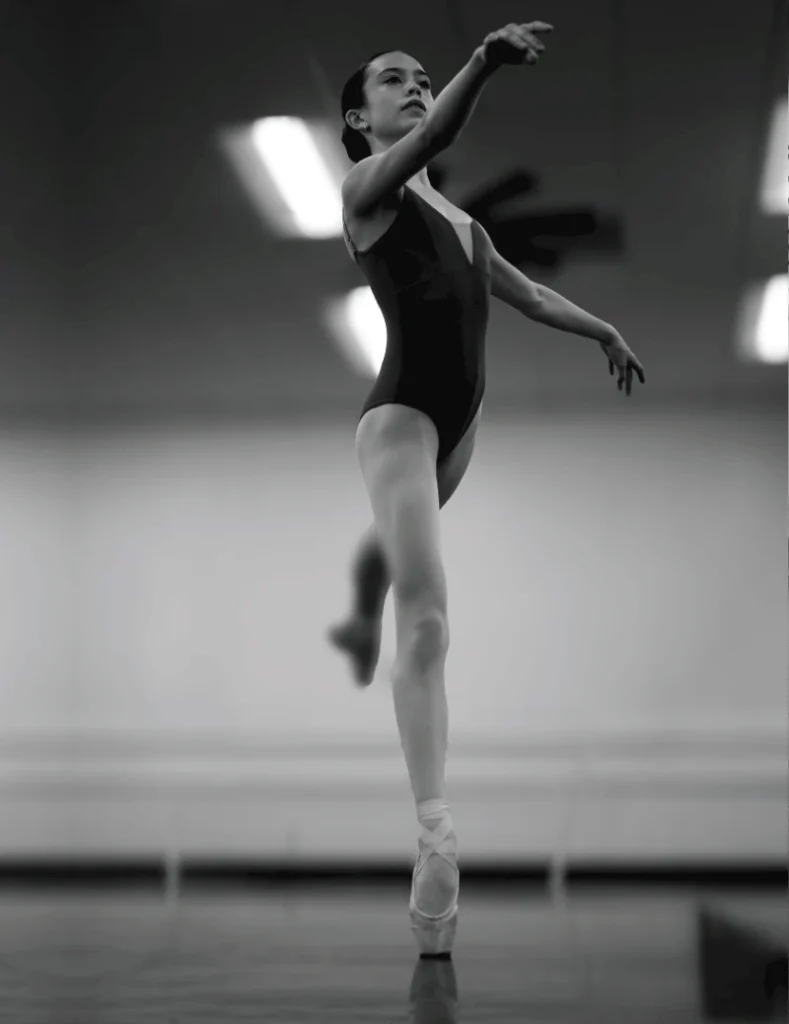
Technique can be measured, but artistry is much harder to define. When you watch a dancer perform, what transforms technically correct movement into something that actually makes an audience feel something?
Arsen: Truth. You can immediately recognize when a dancer is simply demonstrating steps and when the dancer is communicating something. Artistry does not mean making exaggerated faces or adding unnecessary gestures. It comes from understanding music, movement, and intention so deeply that they become connected. The strongest dancers make difficult choreography appear inevitable. You stop thinking about the technique even though tremendous technique is supporting everything you see. When an audience forgets to analyze the steps and simply experiences the performance, something special has happened.
Failure and correction are unavoidable parts of ballet training. How do you teach young dancers to respond when they do not receive the role they wanted, struggle with a technique, lose an audition, or encounter another professional setback?
Oksana: We teach them that disappointment is real, but it cannot become an identity. Every professional dancer has experienced rejection. You will not receive every role. You will not be accepted into every program. Sometimes another dancer will be chosen even when you worked extremely hard. The important question is what you do next. Can you return to the studio the following day and work intelligently? Can you learn from the experience? Can you support another dancer without allowing jealousy to consume your own progress? Those lessons extend far beyond ballet. Resilience is not pretending that disappointment does not hurt. It is learning how to continue moving forward after it does.
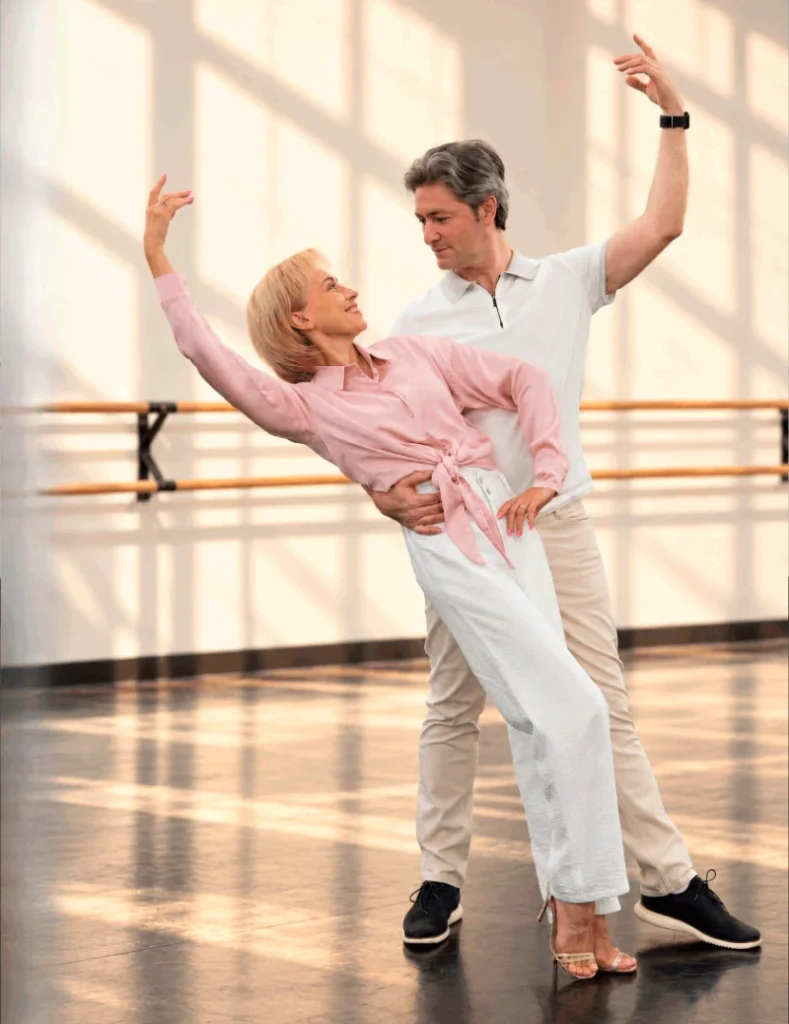
Performance experience is an important part of developing a dancer. How do productions, auditions, competitions, and opportunities to work alongside accomplished professionals contribute to a student’s development beyond what can be taught in daily classes?
Oksana: Class teaches you how to dance. Performance teaches you how to become a performer. Onstage, students have to manage nerves, spacing, timing, costumes, lights, other dancers, unexpected situations, and the energy of an audience. They learn responsibility because a production depends on everyone. Auditions teach another important skill: entering a room where nobody knows you and communicating who you are very quickly. Competitions can also be useful when approached correctly. For us, the purpose is not simply collecting awards. Preparing a variation forces students to work on detail, consistency, stamina, and performance quality. Working with accomplished professional artists is especially valuable because young dancers begin to understand the level of detail and professionalism expected outside their own school.
UCB offers several pathways, including full year training, intensive programs, preprofessional development, and online education. How do these programs fit together, and how do you determine the appropriate path for an individual dancer?
Arsen: Not every dancer needs the same program. Our younger and beginning students need a strong foundation and a healthy introduction to classical ballet. Students who become more serious can progress into increasingly structured conservatory training. Advanced students who are considering professional careers need significantly greater intensity, individual coaching, repertoire, conditioning, and preparation for auditions and outside opportunities. Our intensives allow students to experience concentrated training and also give us an opportunity to work with dancers who may not study with us throughout the year. Online education extends part of our educational philosophy beyond our physical location. It can support dancers who do not have immediate access to this type of instruction and provide additional educational resources. The pathway should be determined by the student’s age, level, goals, physical development, and commitment, not simply by ambition.
You are building UCB in the Sacramento and Roseville area rather than in one of America’s traditional ballet centers. Do you see an opportunity to establish Northern California as a stronger destination for high level classical ballet education?
Arsen: Absolutely. There is no reason a serious dancer should have to assume that excellent training can exist only in a handful of major cities. Northern California has talented young dancers, educated families, strong communities, and access to an extraordinary cultural region. Sacramento and Roseville are also growing tremendously. Our ambition is to build something here that eventually attracts dancers rather than sending every serious dancer somewhere else. That takes time. Reputation in ballet cannot simply be advertised into existence. It has to be demonstrated through the quality of the training and, ultimately, through the dancers the school produces.
Running a conservatory requires you to be artists, educators, mentors, and business leaders at the same time. What has building UCB taught you about leadership that your careers as dancers alone could not have taught you?
Arsen: As dancers, much of your responsibility is personal: prepare yourself, rehearse, perform, stay healthy, and continue improving. Running a conservatory changes the scale of that responsibility. Now every decision affects students, parents, teachers, and the future of the organization. You have to think about curriculum and artistry, but also schedules, facilities, finances, communication, partnerships, and long term planning. We have learned that leadership sometimes means making decisions that are not immediately popular because you believe they are necessary for the long term quality of the program. It has also reinforced something very important: culture begins with leadership. If we expect professionalism, respect, hard work, and accountability from our students, we have to demonstrate those qualities ourselves.
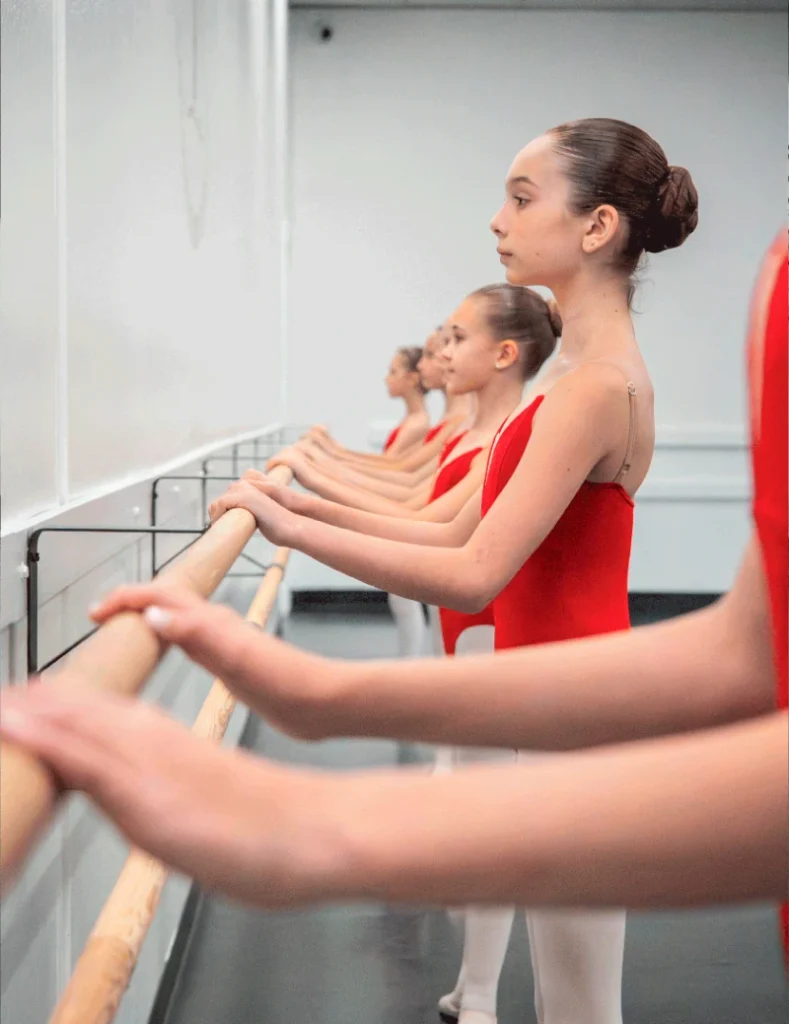
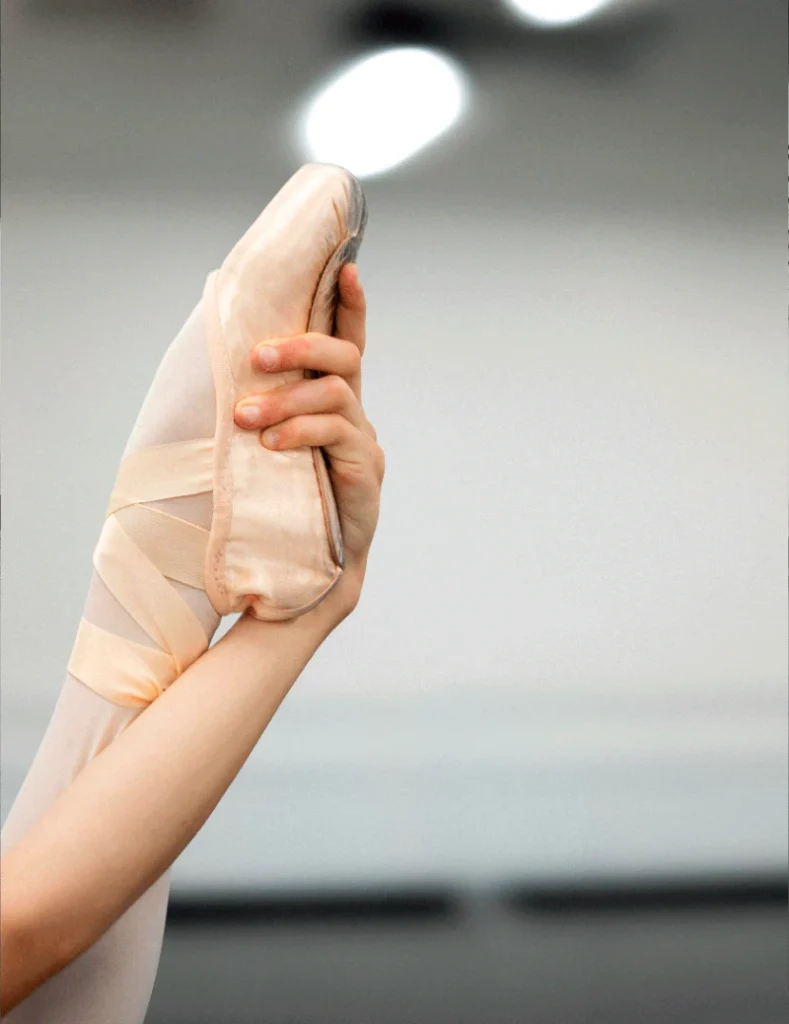
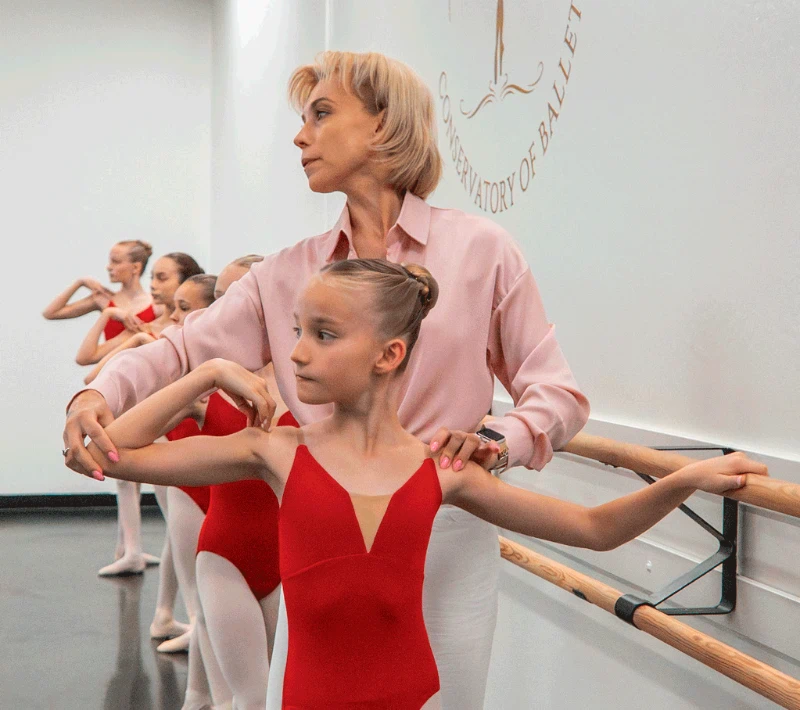
UCB is also developing partnerships and relationships beyond the school itself. How important are collaborations with professional dancers, cultural organizations, media, and community institutions to the future you envision for the conservatory?
Arsen: They are extremely important because a conservatory should not become an isolated world. Students need exposure to different artists, choreographers, teachers, and professional environments. Partnerships can create opportunities that one school alone cannot provide. Our relationships with professional artists, educational organizations, and companies such as Nikolay also help connect students to the broader ballet community. Arsen’s background with Dance Channel TV has shaped how we think about media as well. Ballet education should preserve tradition, but the way we communicate ballet to the public must continue evolving. We want UCB to participate in the cultural life of our community while simultaneously creating connections nationally and internationally.
When a student eventually leaves Universal Conservatory of Ballet, whether that student pursues a professional dance career or an entirely different profession, what qualities do you want that person to carry forward from their years of ballet training?
Oksana: We want them to know how to work. We want them to understand discipline without needing someone constantly standing over them. We want them to know how to receive criticism without collapsing, how to pursue excellence without expecting immediate gratification, and how to respect the people working beside them. We want them to develop confidence that comes from preparation rather than simply being told to feel confident. And we want them to remain curious. Whether they become professional dancers, doctors, entrepreneurs, teachers, artists, or anything else, those qualities remain valuable. If ballet has taught them how to approach difficult things with intelligence, patience, and courage, then their training has accomplished something meaningful regardless of their eventual profession.
Ultimately, we will judge our success by our dancers, not only by where they are accepted or what companies they join, but by the kind of artists and people they become.
Looking five years ahead, what do you want Universal Conservatory of Ballet to become, and what would make you look back and say that the vision you started with has truly succeeded?
Oksana: We want UCB to become recognized as a serious center for classical ballet education in Northern California, one with a strong identity, exceptional faculty, professional relationships, and students capable of moving successfully into major schools, universities, trainee programs, and professional companies. We want to expand the opportunities available to our students through more professional collaborations, productions, visiting artists, educational partnerships, and connections to the international ballet community. But success cannot be measured only by the size of the school. If five years from now we have hundreds of students but have lost the individual attention and educational standards that caused us to create UCB, that would not represent our original vision. We want to grow without becoming impersonal. Ultimately, we will judge our success by our dancers, not only by where they are accepted or what companies they join, but by the kind of artists and people they become. If UCB becomes a place known for producing intelligent, disciplined, expressive, and beautifully trained dancers, and if families know that serious ballet education of that level exists here in our own community, then we will feel that the vision has become a reality.
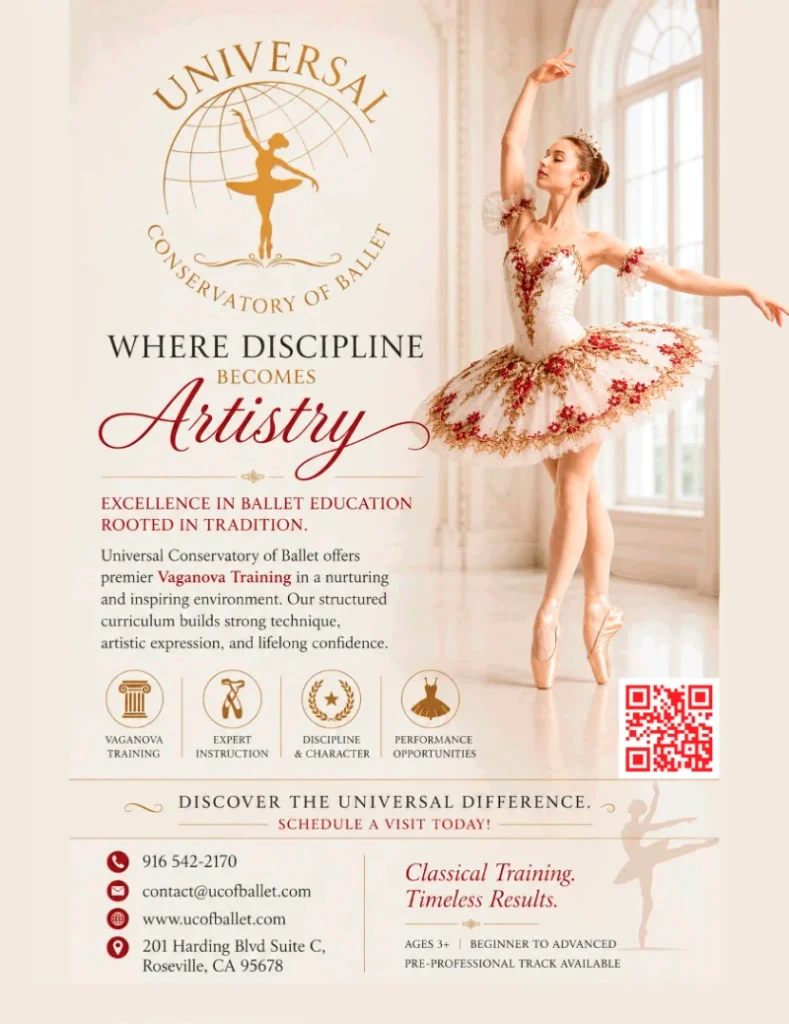
At what point can you recognize that a young dancer may have the potential for professional ballet, and how do you approach that conversation with the student and the family?
Arsen: You can sometimes recognize unusual potential quite early, but potential and professional readiness are very different things. A young dancer may have exceptional proportions, flexibility, musicality, coordination, stage presence, or natural movement quality, but children develop at different rates. Bodies change, personalities mature, and motivation changes. We try not to place a professional label on a child too early. As students become more advanced, the conversation becomes more concrete. We look at technique, physical development, consistency, work habits, performance quality, emotional maturity, and, importantly, whether the student actually wants this life. Then we can begin discussing realistic pathways with the family, including summer programs, competitions, auditions, professional schools, universities, trainee programs, or companies. Our responsibility is to be ambitious for our students while also being truthful with them.
Universal Conservatory of Ballet
201 Harding Blvd, Suite C
Roseville, CA 95678
Phone: (916) 542-2170
Website: www.ucofballet.com
Photo Credit: @sony.lux.photography