The first stain on the ceiling rarely appears at a convenient time. Rain is pouring outside, contractors are booked, and the homeowner is trying to figure out how water got somewhere it has never been before. In fall, some of those problems can still be found and fixed without the pressure of an approaching storm.
In an October 21, 2026 announcement, Placer County urged residents to prepare early for a potentially very strong El Niño. The county’s official information page says the National Weather Service’s seasonal outlook favors above-average precipitation this winter. Officials also emphasize that dangerous impacts are not guaranteed.
For people in Sacramento, Roseville, Lincoln and neighboring communities, that is a good reason to inspect the house, walk the property and review insurance documents. A seasonal outlook cannot tell you which street will flood or exactly when the heaviest storm will arrive. You can, however, check your gutters and understand your insurance coverage right now.
1️⃣ Follow the Water All the Way Off Your Roof
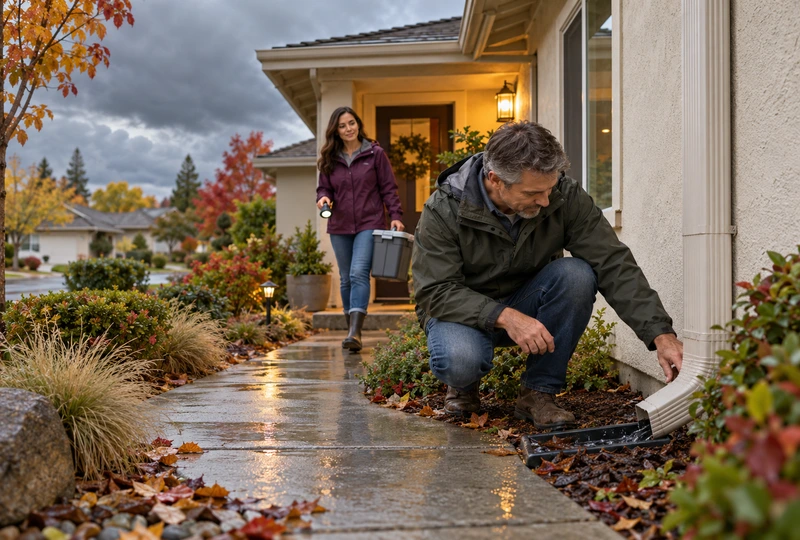
Start with gutters and downspouts. Leaves, pine needles and small branches can block the flow even when everything looks fine from the ground. Water should move through the system rather than spill over the edge beside an exterior wall.
Check brackets, joints and the point where each downspout discharges. If water empties directly beside the foundation or pools near the porch, cleaning the gutter alone may not solve the problem. Discuss drainage options with a qualified professional, particularly if changes to the property’s drainage system are needed.
After cleaning, a small flow from a garden hose can help check that water passes through, provided you can do this safely. Hire a professional for high roofs and difficult access. Working on a wet ladder or roof can turn a maintenance problem into an injury. The National Flood Insurance Program includes gutter cleaning among its flood preparation recommendations.
2️⃣ Inspect the Roof, Windows and Old Leak Marks
A ceiling stain, bubbling paint or a musty smell deserves attention even after several dry months. Start with areas that raised questions last winter. Take photographs so that changes will be easier to spot later.
Have a roofer examine damaged roofing materials and flashing around pipes, vents and the chimney. Around windows and doors, check weather seals and look for signs of water entry. Do not seal the drainage openings built into window frames; they are there to let moisture escape.
If you rent, send the property owner or management company a written maintenance request with photographs. A specific request to investigate a leak is more useful than a general warning about a rainy winter. Checking roofs, windows and doors is also part of FEMA’s home preparedness guidance.
3️⃣ Find the Weak Spot in Your Yard or Garage Entrance
Think back to where water lingered during previous storms. Was it by the gate, in front of the garage or near a side entrance? Remove leaves and debris from accessible surface drain grates and drainage channels, and clear stored items and garden equipment from the water’s path.
Residents of unincorporated Sacramento County can report clogged public storm drains and drainage concerns through 311. The county also offers discussions with technical staff and, when appropriate, an on-site consultation. If you live within an incorporated city, contact the relevant city department.
If your property has flooded before, find out ahead of time whether sandbags or purpose-built barriers would be appropriate. Check the current status of distribution sites before making a trip. Do not redirect water onto a neighboring property or block an existing drainage route. A makeshift solution can shift the problem to someone else’s home.
4️⃣ Check Trees and Anything the Wind Could Move
Dead or broken branches above the roof, driveway or walkway are worth assessing before a storm. Leave major tree work to a qualified professional. If branches are close to power lines, contact the utility.
Bring in or secure lightweight patio furniture, umbrellas, decorations and other items that wind could move. Check the condition of fences and awning attachments. Make sure outdoor belongings do not obstruct a quick exit from the house.
This walk around the property is also a good opportunity to check outdoor lighting. A clear, well-lit path matters when it is dark and raining, especially if you need to move belongings or help a family member. FEMA recommends trimming damaged branches, while CDC guidance advises securing or bringing in outdoor possessions.
5️⃣ Open Your Insurance Policy Before a Storm Is Announced
Standard homeowners insurance generally does not cover flood damage. Having a homeowners policy does not automatically mean that water entering your house will be covered. Flood protection usually requires separate coverage.
Call your insurance agent and ask how the policy applies to your address. Review building and contents coverage, deductibles, limits and exclusions. Ask separately about roof leaks, surface flooding and sewer backup. These are different circumstances, and coverage can differ.
A new National Flood Insurance Program policy typically has a 30-day waiting period, although exceptions exist. Private insurers may have different terms. Ask for the exact date your coverage would take effect. If your mortgage lender does not require flood insurance, that does not mean the property has no flood risk.
6️⃣ Move Important Belongings Higher and Document What You Own
Look at the garage and storage areas as if water were already spreading across the floor. Move documents, family photographs, electronics and valuable belongings to a higher, dry and secure location. Keep papers in waterproof packaging and protect digital copies with passwords.
Record a short video of your rooms and photograph appliances, furniture and other expensive possessions. Save serial numbers and any receipts you have. An inventory can help you explain to an insurer what you owned before damage occurred.
If your home has a sump pump, check its operation and backup power according to the manufacturer’s instructions. Discuss backflow valves and protection for building systems with a plumber or another appropriate professional. Schedule complex work before severe weather arrives.
7️⃣ Prepare for a Power Outage or a Possible Evacuation
Gather enough water, food and essential supplies for at least 72 hours. Check flashlights, batteries, chargers and first-aid supplies. Account for medications, children, older relatives, pets and anyone who relies on medical equipment.
Sign up for official local emergency notifications. Placer County residents can use Placer Alert. Talk with your household about how to communicate if service is disrupted, where to meet and where to go if you need to leave. Keep documents and keys somewhere easy to reach.
If you use a generator, operate it outdoors only, well away from windows, doors and vents. Do not enter water to reach electrical equipment, and do not attempt to drive through a flooded road. Follow instructions from emergency officials when an evacuation order is issued.
Where to Start This Weekend
You do not have to tackle every issue in a single day. Start by checking old leaks, tracing the route water takes from the roof to the property’s drainage outlet, and calling your insurance agent. Then make a list of jobs that need a professional and gather supplies for a possible power outage.
A strong seasonal outlook is still a forecast. But clear gutters, a sound roof and a clear understanding of your insurance coverage are useful in any winter. The best time to find your home’s weak spot is before the water finds it for you.