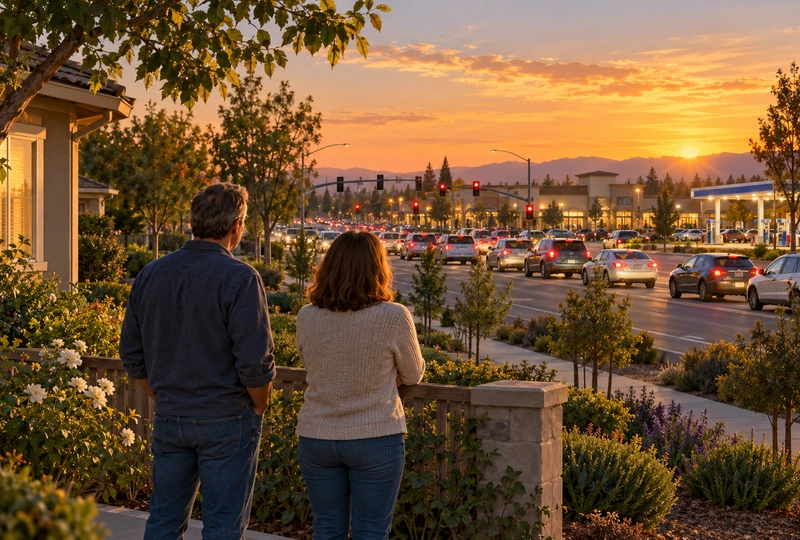
A grocery store minutes from home. Restaurants around the corner. A place to fill up on the drive back from work. On paper, a new shopping center sounds like a convenient addition to a residential neighborhood. For someone whose windows would face the development, however, the same proposal raises a different set of questions: How many cars will it attract? Will the neighborhood stay quiet at night? Where will the parking lot lights shine?
Those questions are at the heart of the debate over Sierra View Shopping Center in west Roseville. Planned for the southwest corner of Pleasant Grove Boulevard and Fiddyment Road, the development promises everyday services closer to home. Residents who challenged its approval want a closer examination of what that convenience could mean for the people living next door. he story has moved beyond the hearing announced in earlier reports. On October 21, the Roseville City Council voted 5–0 to send the project back to the Planning Commission. According to Onsite Observer’s October 22 report, city staff said a neighborhood group’s letter, received the day before the meeting, raised issues requiring review and correction. The project’s approval process therefore remains unresolved. Residents have not secured a permanent cancellation of the shopping center, either. The proposal is returning for additional consideration, giving neighbors another opportunity to seek answers and requiring the applicant and city to revisit the disputed materials.
What Is Planned
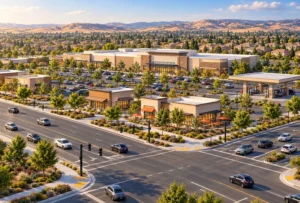
The city’s project listing identifies the site as 1875 Pleasant Grove Boulevard and describes a commercial development on approximately 14 acres. The proposal includes retail and restaurant uses. An August report by Onsite Observer also described a grocery store, three drive-through restaurants and a 24-hour gas station. This is the kind of shopping center built around everyday errands: picking up groceries, buying coffee, collecting a meal or filling the gas tank. Its appeal lies in fitting several stops into an existing routine. Having services in one place can make that routine easier. Yet that same convenience for drivers becomes a concern when commercial uses sit near homes. A single short visit may seem insignificant. Repeated throughout the day, those visits create a flow of vehicles that must be accounted for in the design of entrances, exits and nearby intersections.
Published size estimates also need context. The city’s project listing, which references documents current as of July 2026, describes approximately 75,000 square feet of combined building area. Onsite Observer’s August account described roughly 58,000 square feet. Those figures should be read with their dates and document versions in mind. The discrepancy alone does not establish that the project has recently grown or shrunk.
Why Residents Challenged the Approval
The Planning Commission approved the project on August 13. On August 24, Protect Roseville Neighborhoods filed an appeal. As reported by Onsite Observer, one of the group’s central objections concerns environmental review: it argues that the city should require a new study rather than update an environmental document from 2010. The underlying question is straightforward. If the area around a site has changed over the years, residents want to know whether earlier assumptions still reflect conditions on the ground. They are asking about the effect of this particular development on nearby homes, beyond its consistency with long-established plans for the area. That is the appellants’ position. It does not establish that the shopping center will necessarily cause dangerous pollution or unacceptable noise. Those conclusions require evidence and analysis. Equally, the prospect of convenient shopping does not, by itself, answer questions about compatibility with neighboring homes. Residents’ concerns in the original discussion included traffic, noise, lighting and air quality. Each relates to daily life. For someone arriving home in the evening, the future grocery selection matters alongside the ability to leave a residential street comfortably, open a window or spend time in the yard.
Convenience for Shoppers, Peace for Neighbors
A grocery store and a gas station can operate on different schedules. A 24-hour business calls for attention to nighttime lighting, vehicle movements and servicing arrangements. Drive-through restaurants raise another practical question: Where will cars wait, and will queues remain within the lanes designed to hold them?
These are matters for analysis and operating conditions, rather than predictions that problems are inevitable. The outcome depends on the layout, business operations and any restrictions adopted. A useful discussion moves from broad assurances to specific measures that can be evaluated. For future customers, nearby services may mean an easier trip. For immediate neighbors, the same proximity may mean a steady presence of commercial traffic. Both interests concern neighborhood quality of life. Weighing them requires more than choosing between support for new stores and opposition to more cars. Concerns should not automatically become predictions about falling home values, either. The sources reviewed for this article do not provide an assessment supporting that conclusion for Sierra View. Property-market effects, traffic impacts and everyday residential comfort are separate questions, each requiring its own evidence.
What the October 21 Decision Means
Before the meeting, city staff’s written recommendation called for denying the appeal and maintaining the August approval. The council instead returned the project to the Planning Commission after issues emerged that required further examination. For residents, the decision shows that their challenge influenced the next step in the review process. It does not yet establish which changes will be made or what the commission will decide. Sending the materials back should not be treated as a promise to prohibit construction or as confirmation that every concern has been resolved.
The next documents and official commission agenda will matter. They should help clarify responses to the objections, the current development parameters and proposed operating conditions. An opening date or future retail tenants should not be announced without confirmation. As of October 27, 2026, the key confirmed development is the City Council’s decision to send Sierra View back for additional consideration. Future decisions should be evaluated against updated materials, rather than the original announcement of the council hearing. The Sierra View debate illustrates how differently people can define a convenient neighborhood. For one person, convenience starts with a store nearby. For another, it diminishes when the evening trip home becomes more difficult or commercial activity moves too close to the windows.
Whether those expectations can be reconciled depends on concrete decisions. Those decisions are now back up for discussion. The question facing Roseville extends beyond whether to build: What would make a shopping center work for the people who stop there for groceries and the neighbors who live beside it every night?