Aftershock’s Record Weekend Shows How Much Sacramento’s Festival Has Grown
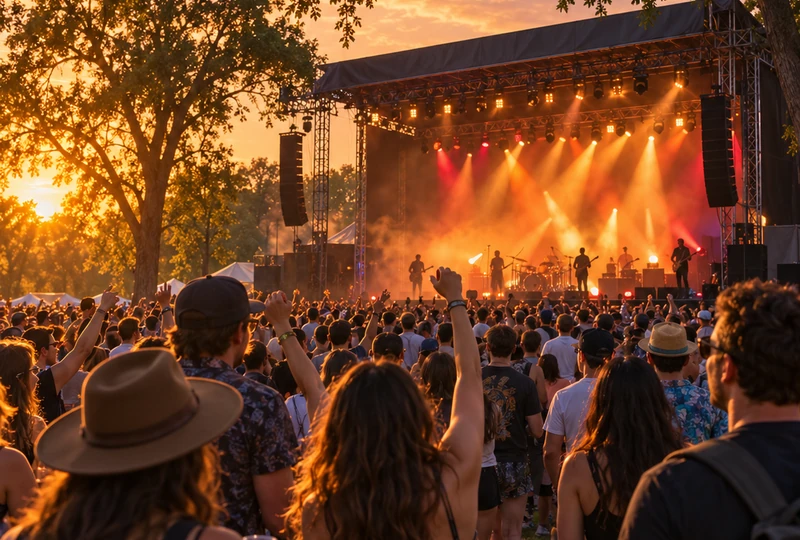
On Sunday night, October 4, the last sets at Discovery Park brought four days of Aftershock to a close. The 2026 festival had drawn its largest crowd yet, according to organizers. The Sacramento Bee reported that attendance was about 15,000 higher than the year before. That is a meaningful increase, though a precise, final 2026 total was not available in the verified reports reviewed for this article. The clearest story for now is both the size of the event and the experience of the people inside it.
Aftershock’s reach did not appear overnight. The event started as a one-day show in 2012 with nearly 13,000 fans. Visit Sacramento says more than 164,000 attended across the four days in 2025. This year’s lineup featured more than 140 acts on five stages, moving among rock, metal, punk and neighboring sounds. My Chemical Romance, Limp Bizkit, Pierce The Veil and Tool occupied the top of the bill. Sacramento-linked acts such as Dance Gavin Dance, Oleander and The Story So Far gave the weekend a different kind of draw: musicians returning to a major stage in their own region.
The scale of the production also changed. For the first time, official car-and-tent and RV camping was offered at Cal Expo, separate from the concert site at Discovery Park. Campers could use a shuttle option and return to the festival during operating hours under the camping rules. That created a broader weekend experience for travelers. It also made the festival a citywide logistical undertaking, reaching beyond the gates into transportation, lodging and nearby businesses.
There was no regular attendee parking at Discovery Park. A park-and-ride option at Cal Expo connected ticket holders to the site, while the camping program gave some guests re-entry privileges. For a visitor, those are practical choices: a hotel room versus a campsite, a shuttle ride versus a drop-off, and time set aside to leave with a large crowd at the end of the night. For neighbors, transportation plans shape how the weekend feels even if they never enter the festival. The louder and bigger the event becomes, the more visible those surrounding systems are.
Visit Sacramento estimated the 2025 festival’s local economic impact at roughly $39 million and said that year’s visitors came from every state and more than 30 countries. That number describes 2025, not the result for 2026. More attendees may mean more demand for rooms, meals and rides, but an attendance claim alone cannot tell us how much visitors actually spent. A fresh economic estimate would help separate the festival’s measurable effect from the excitement of a record-setting weekend.
The local connection is more than a tourism calculation. A Sacramento musician who reaches a festival crowd at home gets a different opportunity from a touring act passing through. Meanwhile, restaurants and hotels can welcome travelers who may return for a different reason later. Those possible benefits deserve attention, but they are not a substitute for the numbers that would show which businesses saw a real gain. The 2025 estimate offers a baseline, while the 2026 results still need to be measured.
For many ticket holders, the most immediate challenge was the weather. October in Sacramento can still feel like summer, and this festival landed during unusually hot conditions. ABC10 reported that organizers added free water spigots and misting fans, offered bottled water for $2 and had medical and emergency teams on site. Fans described looking for shade and carrying their own ways to cool down. A four-day outdoor event asks more of its audience than a single evening concert; heat makes access to water, rest and a manageable route between sets part of the show.
The conversations after the final performance have not been one-sided. A post in the public Aftershock community on Reddit, criticizing cleanliness, aspects of sound and organization, drew roughly 250 votes when checked. Other posts focused on the audio mix. Some fans described a very different weekend and praised the music and people they met. These comments show what is being discussed in one public forum. They cannot establish how the entire crowd felt, and they should not be treated as a representative survey.
That distinction matters when assessing a growing festival. A fan standing near one stage may hear a different mix from a fan farther away. A person who finds a short water line might never see the queue that shaped someone else’s afternoon. Neither account should be dismissed, and neither can stand in for every attendee. Specific, repeated concerns are useful because they give the organizers something concrete to examine: sound at particular stages, cleaning schedules, wayfinding and the availability of shade and water at the busiest hours.
Not all of that can be solved by adding capacity. More refill points help only if guests know where to find them. More ground space is welcome only if the walking routes make sense. A review of a weekend this large should therefore ask about the ordinary transitions between performances, when thousands of people move at once. That is where a visitor discovers whether the festival has grown as a whole or simply admitted more people.
There is a larger lesson for Sacramento’s event calendar. A festival can sell the city to first-time visitors and create a homecoming for local artists. It also shares public space and transportation networks with people who are not there for the music. An event that grows by thousands of attendees has to grow its services with them. Its success is measured in the strength of the performances and in how comfortably people can hear, move, refill a bottle and make it through the day.
Aftershock can claim a new attendance record based on the organizers’ account. The next useful milestones are a final total, a measured assessment of the 2026 local economic effect and a response to practical fan feedback. Those answers would make the story more complete than either a celebratory number or an angry comment thread alone. If you went this year, which set made the weekend for you, and what one change would improve the next Aftershock?