This time, I set out toward Hearst Castle — a place I had heard countless stories about but never truly believed existed. Somewhere along the rugged California coast, between the endless blue of the Pacific and the rolling hills of San Simeon, stands a real castle — with marble staircases, pools, towers, and a story woven from Hollywood glamour, dreams, and the madness of one man.
I left early in the morning. The sky was clear, the road almost empty, and the ocean to my left shimmered like polished steel. The closer I got to San Simeon, the stronger the feeling grew — as if I was approaching something truly extraordinary.
The Road to a Dream
From the small coastal town of San Simeon, a perfectly kept road winds up toward the castle. With every mile, the landscape grows more cinematic — green hills, vineyards, grazing cattle, and power lines disappearing into the horizon.
At the huge parking lot, I parked my car. Families with children, couples with coffee cups, tourists with cameras — everyone was waiting for the next bus to take them up the hill.
As the bus began its slow climb, the view opened wider and wider. The Pacific stretched out below — calm and mighty, like eternity itself. At one point, it felt as though we were driving straight into the clouds.
I turned off the audio guide. I wanted to hear the real soundtrack — the wind, the rustle of leaves, the distant cries of seagulls, the soft hum of the engine. In moments like this, you stop being a spectator and become part of the story — part of California itself.
The Enchanted Hill
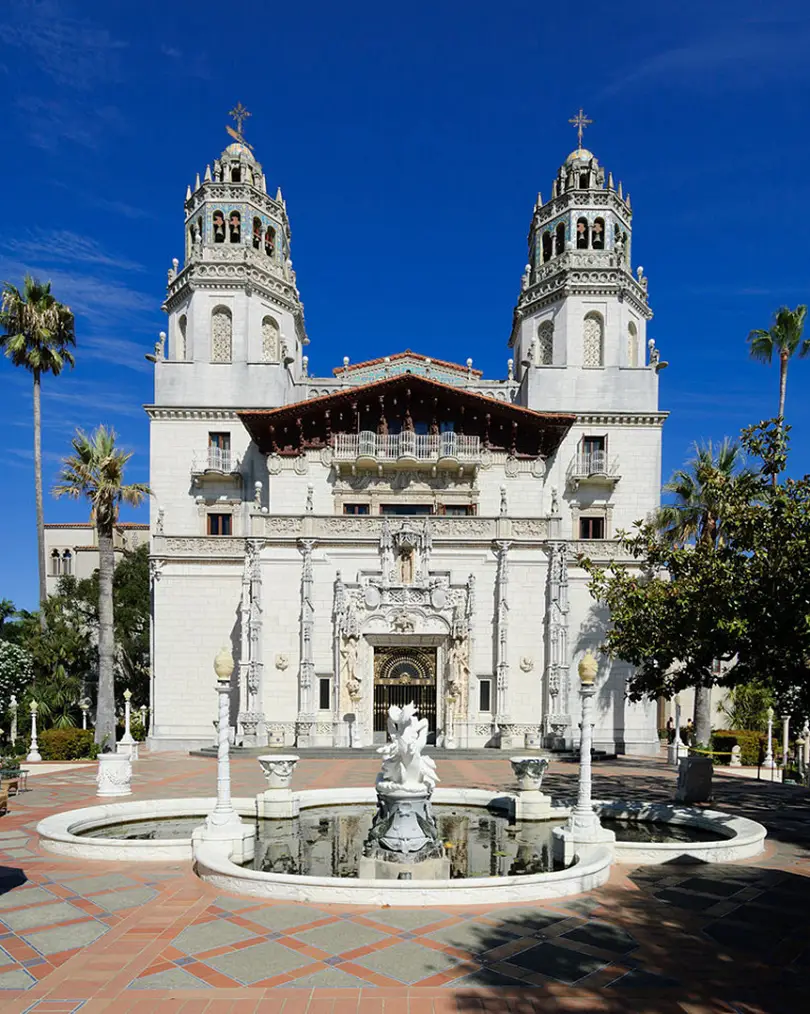
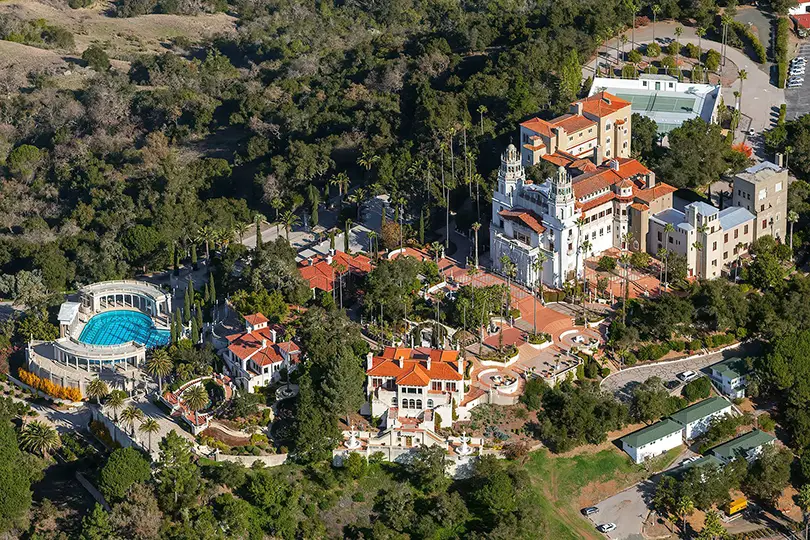
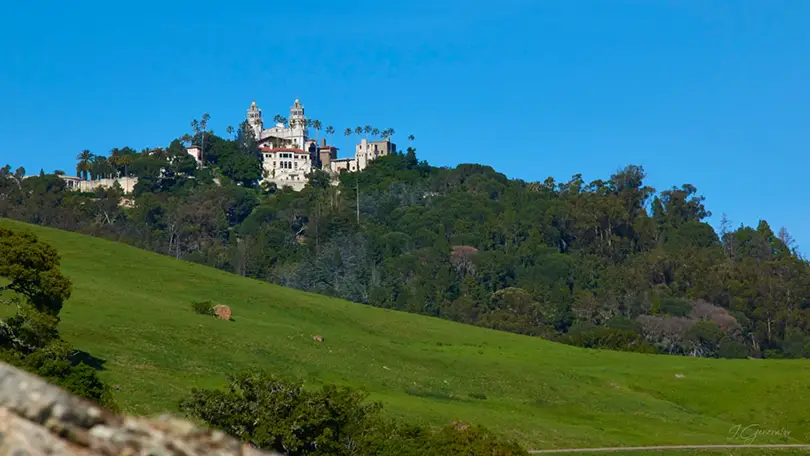
And then, the summit. La Cuesta Encantada — The Enchanted Hill. Before me rose gleaming white towers in Spanish style, arches, marble columns, olive trees, and a fountain sparkling in the sun.
Hearst Castle looks almost unreal, like something from a dream. Too beautiful, too cinematic to be just a home.
Our guide began to tell us about William Randolph Hearst — the media tycoon who created one of the largest publishing empires in American history. The king of headlines, a collector of art, a producer, and a man who built himself a palace to match his ambition.
In the 1920s and 30s, this estate saw more stars than the Hollywood Walk of Fame. Charlie Chaplin, Harry Houdini, Clark Gable, the Marx Brothers, Winston Churchill, even Franklin D. Roosevelt — all of them were here. Some arrived on Hearst’s private train from Los Angeles; others landed on his personal airstrip right by the hill.
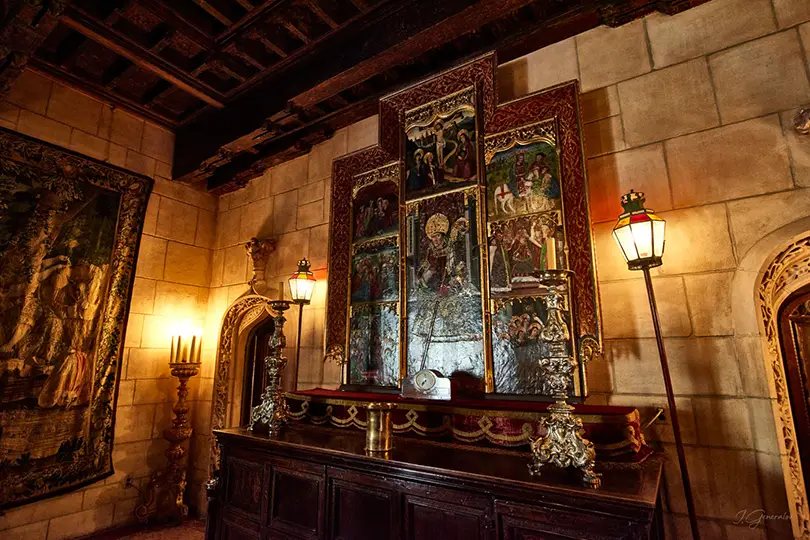
Inside the Castle
Stepping inside, you immediately want to slow down. Every room feels like a work of art. The ceilings came from Spanish monasteries, the doors from Italian cathedrals, the tapestries from France, the furniture from ancient European palaces.
Hearst and his architect, Julia Morgan, collected treasures from around the world. Morgan, the first licensed female architect in California, worked with Hearst on this project for nearly three decades.
As I wandered through the corridors, I could almost hear laughter and clinking glasses, the faint echoes of a jazz band from the 1930s. You can easily imagine the conversations that once filled these rooms — about politics, art, and the future of Hollywood.
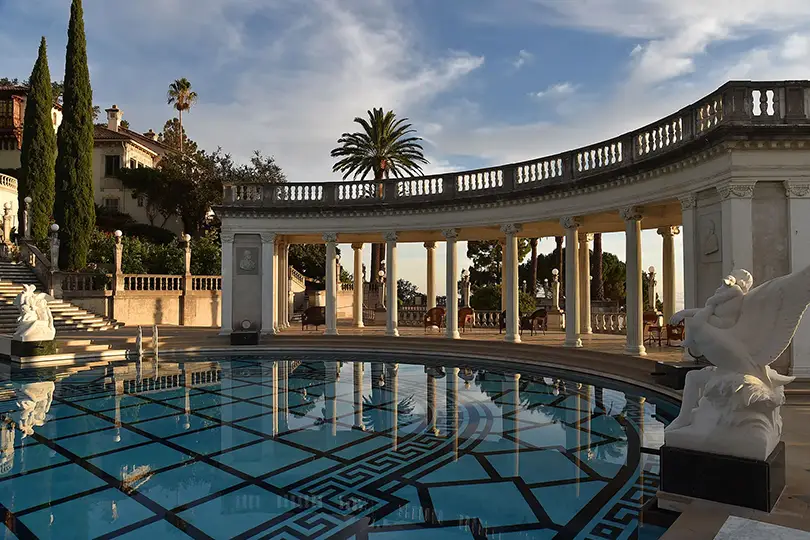
The Neptune Pool — Heart of the Estate
Outside, the sunlight felt softer, carried by a light ocean breeze. Then suddenly, the view opened to the legendary Neptune Pool. Columns, statues, turquoise water — it looked like a stage set for gods and heroes.
I stood there for a long time, mesmerized. Photos can’t capture the feeling of standing beside it. The moment seems to pause, waiting for you to breathe it in — the silence, the grandeur, the magic.
And somewhere inside me a quiet thought whispered: “This — this is why we travel.”
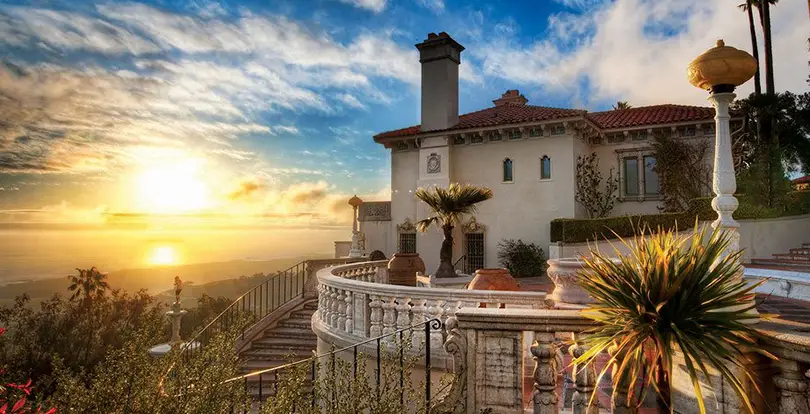
Gardens and the Ocean View
The gardens around the castle tell their own story — terraces of roses, olive groves, fountains, and winding paths leading to ocean lookouts. The air smells of sun-warmed stone, salt, and flowers.
The guide mentioned that the estate once had its own movie theater, tennis courts, an airstrip, and even a private zoo. Lions, giraffes, elephants — yes, real ones — once roamed these hills. Their descendants now live in the zoos of San Diego and San Francisco, but the legend of Hearst’s private safari still lingers in the air.
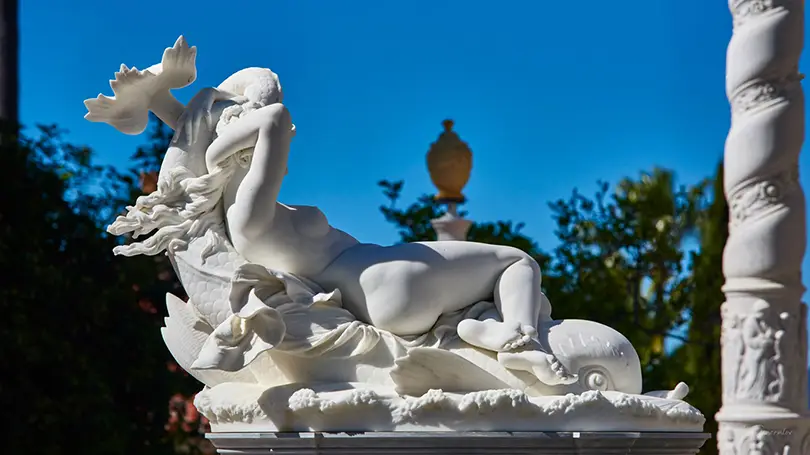
Where Dreams Turn to Stone
Hearst Castle is more than a building. It’s a symbol of how far a dream can take you. Every marble arch, every carved column speaks of one man’s desire to make beauty eternal.
Hearst built not just a home, but a universe — a place where art, ambition, and the hunger for immortality collided. He passed away in 1951, yet his spirit still feels present here — in the sunlight glinting off the water, in the whisper of palm leaves, in the ocean breeze that drifts through open halls.
Sunset and the Road Back
As the bus winds back down the hill, the sun sinks toward the horizon. The ocean below glows like bronze, and the sky fades into violet. Seagulls flash white in the last light of day. Everything feels slightly unreal — like the closing scene of a classic film.
And maybe that’s exactly what Hearst wanted — to turn life itself into cinema.
If You Haven’t Been to Hearst Castle Yet — Go
Bring a light sweater — the wind on the hill can be cool even in summer. Bring a camera — not for the likes, but for the memories. And most importantly, take your time.