Why communication has become the new programming, and how the skill of speaking turns experts, entrepreneurs, and leaders into the future’s most valuable people.
In today’s world, where artificial intelligence rapidly takes over analytics, routine tasks, and much of technical work, one skill remains irreplaceable: the human ability to speak with clarity and conviction. The winners are no longer the ones who simply know more, but the ones who can express the essential, persuade audiences, sell ideas, and inspire action. Communication has become the new currency of leadership, and public speaking has become an investment asset that shapes careers and defines the future of business.
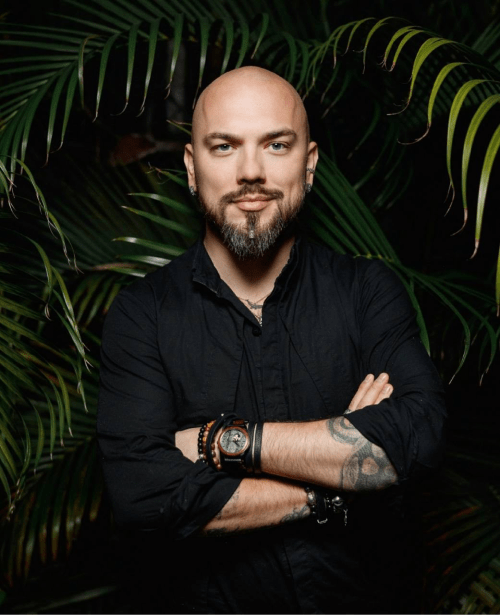
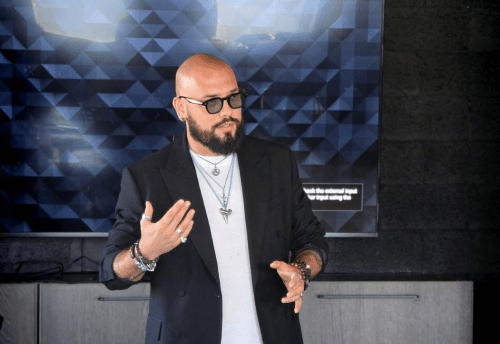
Dimitriy Wolf, Co Founder of SmartExpert, Head of Learning & Development, and one of the most sought-after TEDx coaches who has trained hundreds of entrepreneurs and experts across the U.S. and Europe, including Heads of State, believes that speech is the new profession of the 21st century and the most powerful tool of influence in the age of AI. In this interview, he reveals what really happens behind the scenes of TEDx, explains why communication is becoming the new programming language, and shows how mastering your voice can unlock income, opportunity, and status. This is a conversation about the future, where words once again become power.
▸ Dimitriy, how has the world changed in recent years, and why do people who speak clearly and confidently tend to succeed more than those who are simply the smartest?
In a world where AI can handle most of the cognitive and technical work, the real competitive edge shifted to soft skills.
Because the one thing machines can’t replace is the human ability to communicate, persuade, and create trust.
And here’s the part people forget: even talking to AI is communication. The clearer your input, the stronger your output. Clarity has become a form of intelligence.
So today, being the smartest or the most technically skilled isn’t enough.
When two equally strong professionals compete, two investors, two founders, two experts, the winner is always the one who can speak cleaner, present sharper, manage attention, and make people trust them.
That’s the person who gets the deal, the capital, the client, not the quiet genius sitting in the corner.
▸ Why do you believe communication and public speaking have become such critical factors in career and business growth?
Every era crowns its own dominant skill.
When the world ran on manual labor, the people who could read and write became the elite. The skill curve always moved with the evolution of civilization.
Now we’ve hit a new point on that curve.
AI has taken over cognitive work and a huge chunk of technical and creative processes. So the pressure point is no longer the product, the quality, or the content, it’s trust.
And trust is the one thing machines can’t manufacture.
It’s built through human skills: rapport, emotional intelligence, presentation, sales, communication, relationship management. Everything we call “soft skills”, though there’s nothing soft about them anymore.
For the past decade, soft skills have been rising, and they’ll only grow stronger.
We’re shifting from the attention economy to the trust economy, and machines can’t build relationships. Humans still do.
That’s why communication becomes the root skill of the new era. It’s the skill that powers all the others, and the one AI can’t replace.
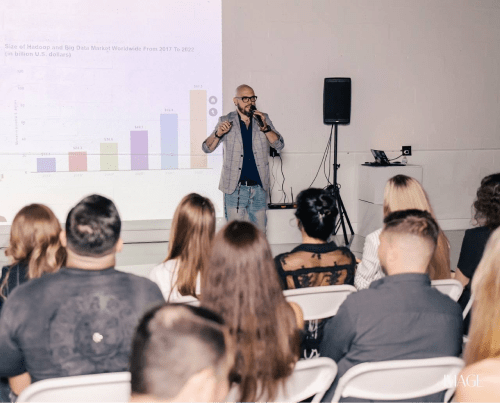
▸ What major communication and leadership trends are you seeing right now in the American market?
I’m seeing three major trends in the American market.
First radical clarity. The old motivational rhetoric is dying. Nobody wants recycled success stories or emotional sugar anymore. The winners are the ones who speak clean, short, and without verbal trash, direct, applicable, adaptive, and emotionally precise.
Second, neuro-leadership. We live in a culture of overload and anxiety. The strongest person in the room isn’t the loud visionary, it’s the one whose presence regulates the room. A steady voice, calm tone, clear direction, that’s what people trust now.
Third, human-AI communication. If two people have the same AI-powered machinery, the one who communicates more clearly with the system wins. Clarity becomes leverage. The sharper your thinking and expression, the better the intelligence you can extract.
These three trends are shaping the new communication landscape, clean speech, regulated presence, and the ability to command both humans and machines with clarity.
▸ What do today’s entrepreneurs and executives need to do to be heard, respected, and taken seriously?
They need to stay relevant, that’s the starting point.
We live in an era where information updates faster than we can absorb it, which means most data expires before we even realize it. And yet many executives still run their businesses on old narratives, outdated assumptions, and strategies that stopped working years ago.
To survive this pace, you need two things: lifelong learning and ruthless filtering.
Not just consuming information, curating it, cutting the noise, building the right streams, analyzing fast, and applying even faster.
This requires flexibility, range, and a worldview wide enough to avoid getting trapped in dogma.
And ironically, the humanities, history, philosophy, psychology, help more than anything, because they teach you how to interpret reality instead of just reacting to it.
If executives want to stay relevant, that’s the skillset: learn constantly, think clearly, filter aggressively, and never let yesterday’s logic run tomorrow’s decisions.
▸ How does strong communication help build a personal brand and drive sales?
It sounds like an obvious question, but the answer isn’t obvious at all.
Most entrepreneurs still compete with price, bonuses, delivery, features, packaging and sure, all of that works. But it’s not what wins.
What communication gives you is trust.
And trust is the real currency of this era.
We’re drowning in distorted information. Everyone is an expert, everyone has an offer, everyone promises solutions. The market is overcrowded with choices, but people don’t choose the “best deal.” They choose the person they believe won’t waste their time or betray their expectations.
Even if the price is higher. Even if the conditions aren’t perfect.
Trust decides.
And communication is the fastest, cleanest way to build that trust, in your brand, in your product, and in yourself.
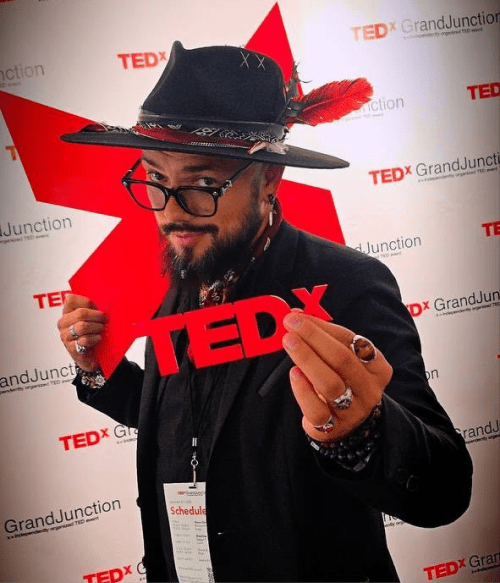
▸ Why do you consider TEDx one of the most powerful platforms for building credibility and reputation?
TEDx isn’t “the best platform”, I don’t romanticize any stage.
But it is one of the biggest. Forty-three million people on YouTube alone. And in a world where everyone is screaming on social media, the fastest way to accelerate your speaking career is to stop thinking small and step onto a stage that actually matters.
TEDx is one of those stages.
With the right positioning, the right message, and the right understanding of your audience, a TEDx talk can give you what most people chase for years: reach, credibility, and trust. And trust converts, into clients, opportunities, and status.
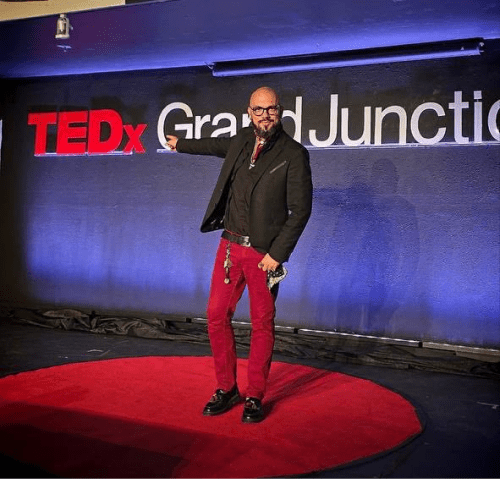
I’ve seen careers take off from that red circle.
That’s why I call TEDx what it truly is: a springboard that’s available to anyone bold enough to step on it.
▸ Dimitriy, can you walk us through what really happens behind the scenes at TEDx and how speakers are selected?
The real answer?
Only the organizers know, joking, of course.
Here’s how it actually works: TED is decentralized. Each licensed organizer builds their own event and chooses speakers based on TED’s guidelines. And because TED isn’t about selling or self-promotion, the first thing they look at is the idea, what makes it original, useful, and worth putting on a global stage.
Then they check your background: why are you the person to deliver this idea?
After that, they look at the “give-away”, what the audience will walk out with.
If you can communicate all that clearly, you move on to preparation: months of refining, shaping, and rehearsing with the organizer’s coach to make sure you stay true to the TED format.
The talk itself is filmed professionally, then published to an audience of more than 43 million.
And the whole journey takes six months to a year, from application to the red circle.
It’s a long process, but for anyone with a real idea and a real voice, it’s one of the most meaningful milestones you can put in your career.
▸ What are the most common mistakes you see in applications from people who want to speak at TEDx?
One of the biggest mistakes I see is speakers trying to sell themselves, their business, their services, or their “life-changing story.” The second can work if it carries real insight. The first almost never does.
TEDx isn’t a marketplace. Promotional talks die before they reach the application stage.
To get on that stage, you need to understand how organizers think: the theme of the event, the meaning they want to explore, and the cultural trends shaping the conversation. Some topics simply have more gravitational pull than others.
Right now, ideas around AI, automation, human skills, awareness, navigating a technological world, post-humanism, and transhumanism are far more compelling than another “Here’s how I built my business” narrative.
If you don’t understand what the world is curious about, you won’t get on the stage that shapes it.
▸ Why is preparing for TEDx so valuable for entrepreneurs, coaches, and industry experts?
Let me quote Woodrow Wilson. He said:
“If I’m to speak for ten minutes, I need a week to prepare. Fifteen minutes — three days. Half an hour — two days. An hour, I can give right now.”
TEDx is exactly that compressed genius.
A ten-minute talk is the hardest format in the world. Wilson had decades of speaking experience, yet even he needed days to craft a short, sharp message. Most entrepreneurs and experts don’t have that level of training, which means they need even more time, clarity, and structure.
And that’s why preparing for TEDx is so valuable: it forces you to distill your life’s work into one idea that actually matters. It trains discipline, sharpens thinking, and teaches you to communicate with surgical precision, the same skills that grow a business, build a brand, and win clients.
▸ Dimitriy, what’s the secret to creating a talk that not only inspires people but also communicates a core message so clearly that the audience wants to take action?
Public speaking is art.
It follows the same rules as any great piece of writing: dramaturgy, structure, rhythm, contrast, and emotional logic.
A strong talk isn’t just “a message.”
It’s the right mix of facts, stories, numbers, examples, and quotes, arranged in a sequence that carries the audience somewhere. And the delivery matters just as much: volume, pace, intonation, and the ability to steer attention in real time.
When all of that aligns, you don’t just speak, you create an experience.
And that experience can become the launchpad for a career, a business, or a brand.
▸ Can you share examples of clients who significantly increased their income, opportunities, or professional status after improving their speaking skills?
All of them.
Every single client who starts speaking better starts earning better, sometimes immediately, sometimes dramatically. And I’ll borrow Warren Buffett’s line, because he said it cleaner than anyone:
“You can increase your value by 50% just by learning communication skills, public speaking.”
He wasn’t exaggerating.
When you speak clearly, opportunities multiply: income, authority, invitations, partnerships. Communication is the skill that raises the ceiling on everything else.
▸ What typically changes in a business once someone strengthens their public speaking abilities?
On a bigger level, public speaking reshapes how you understand communication and business itself.
Every company speaks, through its people, its social media, its website. And the founder or executive is usually the primary voice. If that voice is weak, the whole structure limps. If it’s strong, everything accelerates.
When you master public speaking, you move from A to B faster, cleaner, and with far fewer mistakes.
It sharpens strategy, clarifies messaging, and forces the entire organization to communicate with more precision.
Good speaking doesn’t just make you sound better, it makes the whole business operate better.

▸ Why do you think strong speakers are becoming a new type of influencer in today’s world?
The answer is in history.
Every major shift in the world, every invention, revolution, movement, or transformation, started the same way: with a speech. Before the building, before the rocket, before the engine or the breakthrough, there was a sentence. A dialogue. A monologue.
Speech is the first moment an idea becomes matter.
It’s the blueprint that turns thought into form.
And that’s why strong speakers shape the world more than anyone else.
They’re the people who know how to turn a thought into something real and every great change begins exactly there.
▸ Why won’t artificial intelligence ever be able to replace people who master the art of communication?
I wouldn’t phrase the question that way.
AI already outperforms a huge portion of the population in basic communication emails, replies, tone, structure, even emotional calibration. In many aspects, it’s cleaner and more coherent than people.
But here’s the limit: AI doesn’t build trust. It can shape a sentence, but it can’t create a bond.
Only humans do that.
And that means one thing, the operator still matters. You have to understand and feel how the text will land on another person. I see this all the time: people with weak social skills try to use AI as a shortcut to influence. It works… until it doesn’t. Eventually they trip over their own blind spots, because they can’t tell what resonates and what falls flat.
It’s simple: garbage in, garbage out.
If you want a powerful output, you need a powerful input. And that requires communication skills, the one thing AI can’t replace.
▸ Dimitriy, would you say communication has become the new universal language of the modern world?
“In the beginning was the word.”
And now we finally understand what that means.
We used to speak just to communicate with another person. Today we use speech as code, to create things: ideas, products, books, images, music, videos, 3D worlds, research. Human language has become an operating system for building reality.
We turned speech into creation.
And in a strange way, we’ve come back to what the word originally was.
▸ What skills should people start developing now to stay relevant in the near future?
We need to develop every soft skill we can: communication, emotional intelligence, non-verbal awareness, self-regulation, time and task management. And we need to master information, filtering it, fact-checking it, and making sense of it.
Most importantly, we need to learn how to learn.
And just as often how to unlearn.
The world is shifting so fast that the protocols of how we work, think, and interact are constantly rewritten. Neuroplasticity becomes a survival skill.
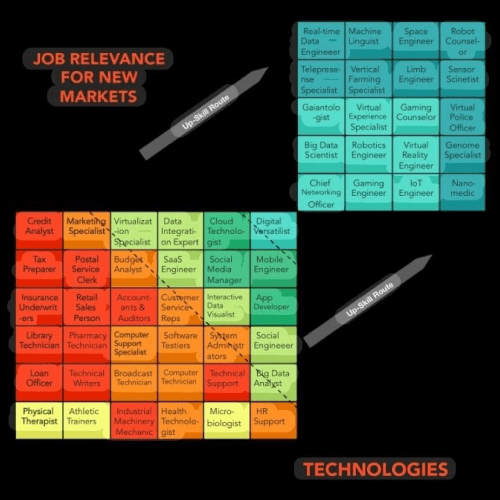
On the hard-skills side, there’s a great model Forbes published years ago, the Job Upskill Route. It maps which professions will stay, which will disappear, and which will explode in demand. If you understand the pattern, you can draw your own professional curve and upgrade your skills in sync with technological progress.
The future belongs to those who can adapt, fast, often, and without emotional drama.
▸ Why do you believe technical specialists may lose their competitive edge in the next few years?
Some tech giants say this is the last generation of programmers.
It’s exaggerated, sure but the direction is real. As AI grows, the world needs fewer executors and more operators: people who know how to set the right task, check the quality, and supervise the machine. One operator replaces dozens of traditional roles.
There’s also a shift in who holds value.
People with advanced cognitive skills and strong soft skills, the ones who can lead, support, and manage the mental state of others are becoming the connective tissue of the new economy.
And the trend is clear: the deeper the fusion between robotics and AI, the less demand there will be for many technical positions.
We’re moving from a world built on hands and code to a world built on thinking, directing, and relational intelligence.
▸ Which professions are most at risk of disappearing first, and what skills will replace them?
Anything that can be automated and anything that doesn’t demand real empathy, flexibility, or improvisation is at risk.
Delivery. Insurance. Retail. Loan officers. Programming. Tech support. Accounting. Auditing.
Entire sectors built on predictable tasks are already in the danger zone.
The rest depends on the business model.
But the pattern is simple: if a machine can replicate the logic, it will eventually replace the role.
▸ Why is the ability to articulate thoughts clearly and precisely becoming the defining skill of the new era?
Anything that can be automated and anything that doesn’t demand real empathy, flexibility, or improvisation is at risk.
Delivery. Insurance. Retail. Loan officers. Programming. Tech support. Accounting. Auditing.
Entire sectors built on predictable tasks are already in the danger zone.
The rest depends on the business model.
But the pattern is simple: if a machine can replicate the logic, it will eventually replace the role.
▸ Can the ability to give instructions to AI be considered a future leadership skill?
Absolutely.
The role of a “human–machine mediator” is already a real profession, and it’s only going to grow. The person who can communicate clearly with AI becomes irreplaceable, the operator who unlocks the machine’s full potential.
If you can translate human intent into precise instructions, you’re no longer just an employee.
You’re the link that makes the entire system work.
▸ How did you start working with TEDx speakers, and what was the turning point in your professional journey?
I’ve been preparing speakers for 15 years.
TEDx launched in 1986, one year after I was born, so I grew up professionally with TED already in the world. I got online early, discovered that red circle early, and as someone who carries ideas and amplifies others, I naturally wanted my students to stand there. Not just on TEDx, but on the UN General Assembly stage and every major platform that shapes global thinking.
At first it was pure ambition. I simply started telling my strongest students, “You should be on that stage.” And step by step I went deeper into this niche.
And since everyone eventually asks, why haven’t I spoken there myself?
Because I want a body of work behind me.
I want to stand on that stage one day and talk about how I helped others get there — with dozens of real cases.
▸ Which talk has been the most transformative for you personally, and why?
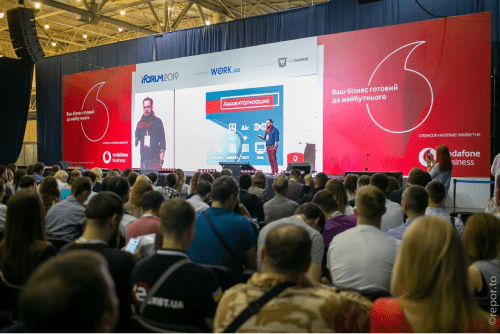
In 2019, I shared a stage with President Zelensky.
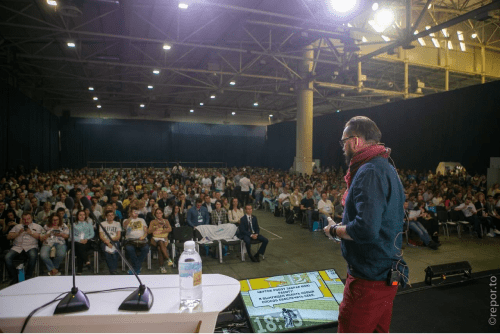
Ten thousand people in the room. I went on right before him. And in that moment I learned something most speakers never discover: the audience isn’t judging you — you’re judging the audience.
You set the pace. You set the rhythm.
Clap your hands, hit the table ten thousand people react.
That realization hits you like electricity: any audience can be led.
In 2021, I spoke in a stadium and understood something even bigger, the fear was gone. Completely. At least the fear tied to public speaking. And once that fear disappeared, everything else collapsed with it: titles, ranks, social hierarchy, the illusion that some rooms are “too big” or some people “too important.”
What remained was clarity: there is a tool, there is a structure, there is influence, and there is always a path to the goal.
All you need is the right words, the right rhythm, and the right dramaturgy to carry people where you want them to go.
▸ What qualities should someone develop first to strengthen their voice, influence, and leadership presence?
All those “perfect speakers” you see on screen the charm, the wink, the effortless confidence none of that is natural. It’s training. Hours in front of a mirror. Work with coaches. The way the lips move, the micro-expressions, the gaze, the eyebrows every detail can be built like a muscle.
Then comes the harder layer: the architecture of thinking.
Structured thought. Clear reasoning. Multiple thinking frameworks.
Erudition. Cultural range. Understanding people, contexts, histories.
That’s the real foundation of charisma.
And the good news?
This is exactly what I teach.
You can learn in months what took me years or a lifetime to master.
There is an express route. You don’t need to spend decades reinventing it.
▸ What message would you like to share with business owners and entrepreneurs?
Stop chasing money.
Money is a side effect not a purpose.
Real value comes from understanding people: how they think, how they change, how they react when the world pressures them. If you can read those shifts early, anticipate the next turn, and understand what people will need before they realize it themselves, your business won’t just grow, it will take off.
That’s the real game.
Not the cash, but the competence behind it.
And when you build that level of understanding, money shows up on its own, as a predictable byproduct of doing things right.
▸ What courses do you offer for aspiring speakers?
I run individual, group, and corporate trainings in public speaking, networking, communication, negotiation, sales, time and task management, and emotional self-regulation. I also build fully custom educational programs for clients, on almost any topic they need solved.
And there’s a separate part of my work that I’m genuinely obsessed with: teaching people erudition and helping them navigate the world of exponential technologies AI, robotics, digital biology, autonomous transport, 3D printing, VR/AR/MR, blockchain, Big Data, IoT, and everything shaping the next economy.
I train people to speak, think, and operate at the level the future demands.
▸ What is the best way for people to contact you?
I’m easy to reach.
WhatsApp, Instagram, Facebook, Twitter, X, I’m on all of them, and I respond fast. If someone needs me, they usually get an answer the same day.
▸ Last question: Is Wolf your pseudonym or your real last name?
It’s part of my family story, my heritage is mixed, layered, and a little unconventional, and the name reflects that.
So the short answer is: yes, it’s real.
And the honest answer is: not from my father’s side but that’s a technicality.
The name is mine.
It carries my history, and I stand behind it.
About Dimitriy Wolf
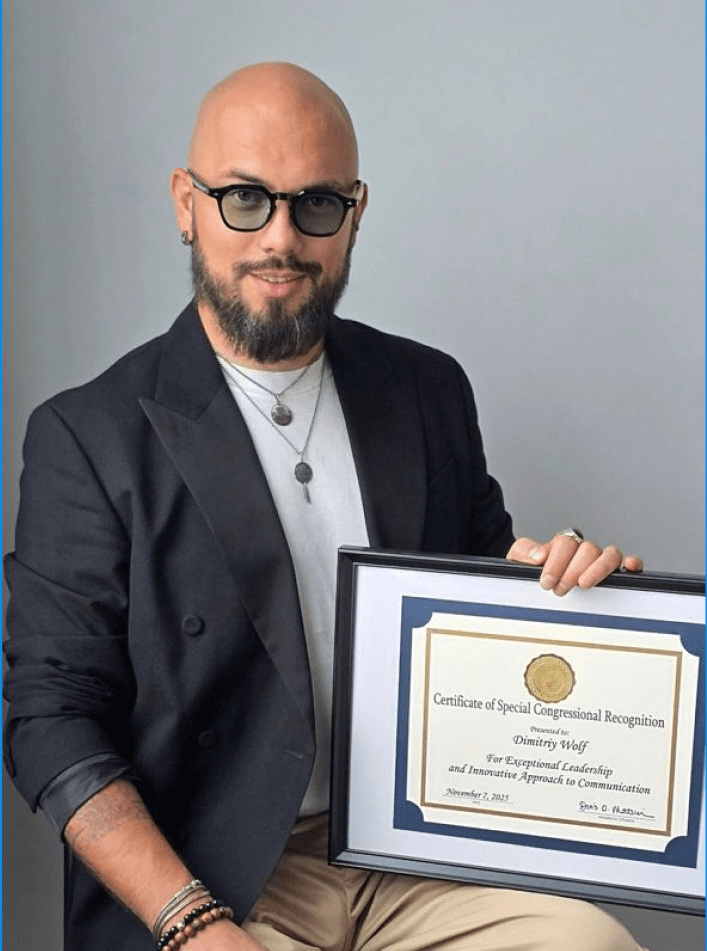
Dimitriy Wolf is a Communication Coach, Social Scientist, and Entrepreneur with over fifteen years of experience helping leaders elevate their influence through the science of speech, social dynamics, and human behavior. His career is dedicated to mastering communication at the intersection of public speaking, psychology, and brain science, enabling clients to unlock authority, confidence, and strategic visibility.
Throughout his journey, Dimitriy has coached top leaders across Europe and the United States, including politicians, celebrities, public figures, and high-profile founders. He has helped clients refine their public speaking, strengthen their executive presence, and deliver investment pitches that have raised millions of dollars in minutes. One of the defining moments of his career was sharing the stage with Volodymyr Zelensky in 2019, a milestone that further solidified his credibility in the field of influence and communication.
Dimitriy’s path was anything but linear. Growing up between culturally rich environments and periods of economic hardship, frequent relocations, and complex family dynamics shaped his deep understanding of human adaptability, resilience, and interpersonal nuance. These experiences gave him unique insight into societal norms, communication barriers, and the psychology of overcoming adversity.
Since 2008, Dimitriy has been teaching Communication Science with a focus on public speaking, pitching, negotiation, and self-presentation. His coaching blends strategy with emotional intelligence, helping leaders craft messages that resonate and perform under pressure. Whether preparing founders for high-stakes investor meetings or guiding experts on global stages, his mission remains the same: help people communicate more effectively, intentionally, and authentically.
As a lecturer at Singularity University Kyiv & mentor at Mana Tech, Dimitriy specializes in AI-driven communication for EdTech and emerging industries. He helps companies integrate technological innovation into their learning and development systems, ensuring teams stay adaptive in a rapidly evolving world.
He heads the Dimitriy Wolf Training Center (dimitriywolf.com), co-leads the media and brand agency FirmaWorks.com, and works as an independent consultant, most often operating as an Learn & Development lead or Chief Communication Strategist for client companies. His work focuses on designing communication architectures and building educational programs that sharpen teams, elevate leaders, and create long-term competitive advantage.
At SmartExpert.io and ContentBuilder.ai, he co-owns and leads Learning & Development, creating advanced AI-powered education systems that make learning more engaging, efficient, and accessible.
Beyond his professional work, Dimitriy values honesty, precision, and exceeding expectations. Outside of coaching, he can be found captaining yachts, collecting rare books, studying history and astronomy, or practicing historical fencing.