Not long ago, artificial intelligence was seen as a futuristic dream — a technology that might one day transform our world. For Fei-Fei Li, that future started years ago. And she’s been shaping it ever since.
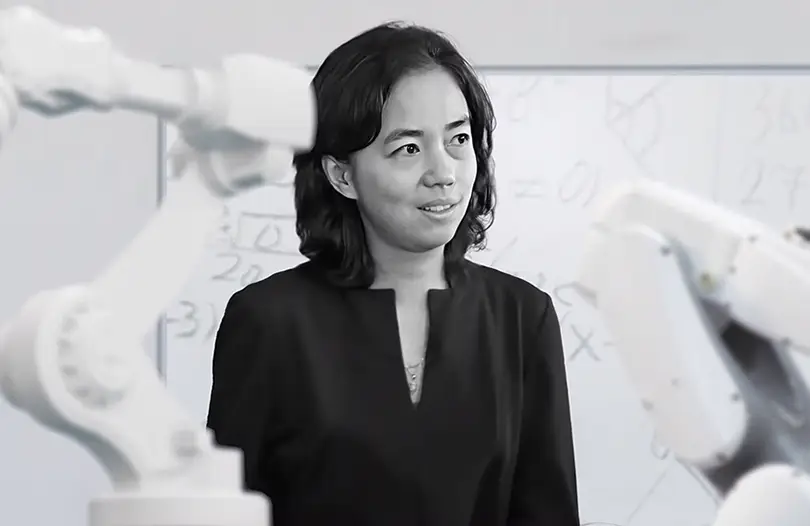
A professor at Stanford University and one of the world’s foremost AI pioneers, Fei-Fei Li has dedicated her life to a mission that goes beyond algorithms and code. She’s teaching machines to understand the world — and reminding humans what technology should truly stand for.
From a Childhood Dream to a Global Vision
Fei-Fei’s story begins in China, in a modest family that prized learning above all else. When she moved to the United States as a teenager, she faced all the challenges of starting over — new language, new culture, new expectations.
But those early struggles gave her something that no textbook could: resilience. At Princeton and later Cornell, she discovered a passion for computer vision — the idea that machines could learn to see.
The Birth of ImageNet
In 2007, Fei-Fei launched an audacious project that would change AI forever: ImageNet. It was a massive database of labeled images — millions of them — that allowed computers to recognize objects in a way that mimicked human perception.
Before ImageNet, AI could identify shapes. After ImageNet, it could recognize the world. The project ignited a revolution in deep learning, fueling the development of self-driving cars, medical imaging breakthroughs, and even the smartphone cameras we use every day.
Human-Centered AI
But Fei-Fei Li’s vision has always gone beyond technology itself. She believes AI should amplify human potential — not replace it.
As she often says, “Technology reflects the people who build it.” That’s why she advocates for ethical, inclusive, and human-centered AI — systems designed with empathy, fairness, and accountability.
At Stanford’s Human-Centered AI Institute, which she co-directs, Fei-Fei leads research focused on how intelligent systems can serve society responsibly — from healthcare and education to climate solutions and accessibility.
Breaking Barriers in STEM
Fei-Fei Li is also a passionate advocate for diversity in science and technology. She knows what it means to be “the only woman in the room” — and she’s determined to make sure that future generations don’t face the same isolation.
Through mentorship, outreach, and public speaking, she encourages women and underrepresented groups to join the world of STEM. Her message is simple but powerful: the future of AI must include everyone.
Leading with Empathy
In a field often dominated by technical jargon and competition, Fei-Fei stands out for her warmth and humanity. Her students describe her as both a brilliant researcher and a compassionate leader — someone who believes collaboration, not rivalry, drives true innovation.
At Stanford’s AI Lab, she works with some of the brightest young minds in the world, guiding projects that explore everything from computer vision to climate prediction. Her leadership style is rooted in empathy — a reminder that science, at its best, is a human endeavor.
The Future She’s Building
Today, Fei-Fei Li is a global voice for responsible innovation. She advises governments and tech companies alike, urging them to think beyond profits and power toward ethics and inclusion.
Her impact stretches across industries — and across generations. For every student she mentors, every paper she publishes, and every speech she gives, Fei-Fei Li sends the same message: that artificial intelligence, when guided by human values, can be a force for good.
A Legacy of Purpose
Fei-Fei Li’s journey is more than a story of scientific success. It’s a reminder that technology alone doesn’t shape the future — people do.
Her work challenges us to see AI not as a threat, but as an opportunity to understand ourselves better. To build machines that learn, we must first remember what it means to be human.
And that, perhaps, is Fei-Fei Li’s greatest contribution — not teaching machines to see, but helping humanity look inward with new eyes.