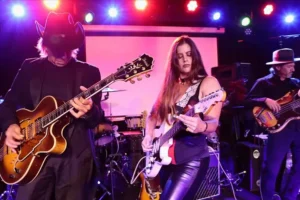
Noise from outdoor concerts may not be top of mind during this cold and foggy stretch, but the City of Sacramento is currently gathering feedback on proposed new rules for amplified sound at city-permitted events.
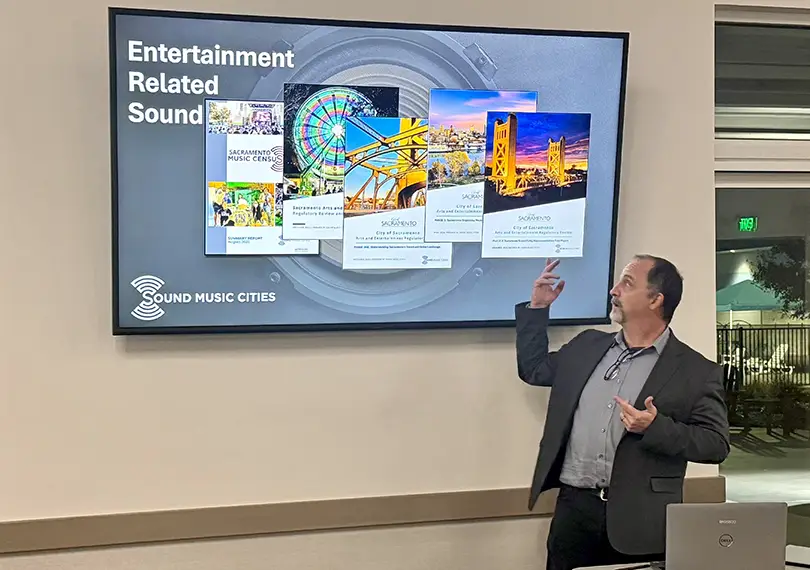
At the proposal’s core are strategies to reduce low-frequency bass travel, a leading driver of noise complaints in recent years amid efforts to grow Sacramento’s entertainment scene.
On Nov. 25, the city released a report on recommendations from the Austin, Texas-based firm Sound Music Cities after a multiyear review of Sacramento’s music scene and sound policies. The focus is on events and venues that require a city permit. Officials held three community meetings the week of Dec. 8 to collect input as they weigh implementation options for 2026.
City staff are developing an implementation strategy based on internal and community feedback and expect to outline a draft by the end of January, according to Julie Hall, a spokesperson for the city’s Entertainment Services Division.
Don Pitts, president of Sound Music Cities, said Sacramento’s sound management practices have fallen short for years, with unclear rules, inconsistent enforcement and limited communication between the City and stakeholders contributing to widespread frustration.
“It wasn’t working for the residents and it wasn’t working for the venues and presenters either,” said Pitts, who’s known for bridging conflicts between venues and neighborhoods and leading reforms in Austin that reduced sound complaints by 74%, the report states. “If you’re going to promote a healthy, vibrant nightlife, you need better balance.”
Noise problems are typically frequency-related, not volume-related, said Pitts, citing low-end bass common in Electronic Dance Music or “EDM,” which has become a staple in Sacramento’s music scene in recent years.
His recommendations for Sacramento aim to shift existing city resources to prevent conflicts before shows take place.
Proposed changes include requiring event organizers and venues to address sound impacts as part of the permitting process, scaling city oversight to match event size and impact and assigning a single city official to oversee sound policy.
When it comes to real-time sound monitoring, “transparency is your best friend,” said Pitts. He recommends a standardized system that measures sound 150 feet from the source using a sound meter connected to a live, public-facing dashboard — tools the city already has.
But a critical challenge, the report notes, is that major sound impacts often originate from Discovery Park and Cal Expo, county and state venues the city cannot directly regulate. Pitts advises reconvening a regional working group to align monitoring and 311 complaint responses.
The recommendations were informed by small-group discussions, listening sessions and online survey responses from more than 1,100 residents, businesses and entertainment stakeholders. Survey responses included concerns about low-end bass travel, impacts to quality of life in mixed-use residential areas and skepticism around enforcement and accountability, plus cautious optimism that residents and the entertainment scene can thrive in tandem.
“We keep having to fight in our neighborhood just to get a quality of life,” said Woodlake resident Elaine Jackson, who called for stronger nighttime enforcement around residential noise and parking issues during a Dec. 8 meeting in Natomas.
Melissa Romero, who has permitted special events for the city for nearly 20 years, said the proposed changes would give the city clearer enforcement authority to manage bass issues tied to EDM.
A collective mindset and cultural shift is needed among Sacramento residents, venues, producers and city staff, said Pitts. Effective sound management is more about building trust and relationships through city-driven education and outreach than ordinances governing decibel levels and cut-off times, he added.
Pitts said that while full implementation could take time — it took three years to see meaningful results in Austin — the city can start taking steps toward key changes now. These include better aligning programming with location and educating producers on best practices for tailoring speaker orientation to a venue’s surrounding environment.
“You can’t eliminate all the low-end bass but you can definitely eliminate certain frequencies that cause more damage and really penetrate the houses and the exterior walls,” said Pitts.
Hall said that as the city shapes its priorities and next steps, staff are assessing which items can be implemented through existing processes and which may require formal steps such as code updates.
Dustin Hollingsworth, assistant director of Convention and Cultural Services, said at the Dec. 8 meeting that he hopes ordinances could be developed by the end of 2026.
The city will continue accepting comments emailed to EntertainmentServices@cityofsacramento.org and will post updates to the City’s Entertainment Services Division page, Hall said.
This story was funded by the City of Sacramento’s Arts and Creative Economy Journalism Grant to Solving Sacramento. Following our journalism code of ethics and protocols, the city had no editorial influence over this story and no city official reviewed this story before it was published. Our partners include California Groundbreakers, CapRadio, Hmong Daily News, Russian America Media, Sacramento Business Journal, Sacramento News & Review and Sacramento Observer. Sign up for our “Sac Art Pulse” newsletter here.
By Serena Roberts