Long-overlooked history is now being written into California’s classrooms through the state’s new Hmong Model Curriculum, a project years in the making and shaped by scholars, communities, and cultural workers.
Only recently — after the passage of Senate Bill 369 in 2023 and a related 2021 education bill prioritizing Southeast Asian history — did the space open up for this kind of curriculum to be integrated into the state’s classrooms.
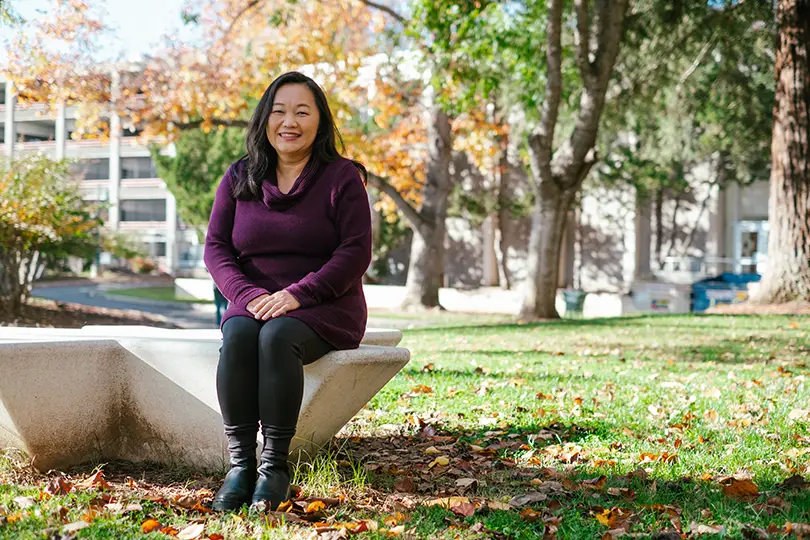
Sacramento State associate professor and Director of Asian American Studies Bao Lo has been involved in developing the classwork, reviewing lesson plans and shaping the subject areas. She explains that even though Sacramento is home to one of the country’s largest Hmong communities, most students here have grown up learning almost nothing about their Hmong classmates or neighbors.
“As more of our elders pass on, they’re not learning the history,” says Lo. “Our own children in our communities are learning this for the first time.”
As educators prepare to introduce the lessons statewide, Solving Sacramento spoke with Lo about the work behind the curriculum and the stakes for Hmong students today.
How did this curriculum effort begin?
It wasn’t just Hmong Americans pushing these bills. It was Southeast Asian community members with support from groups like SEARAC, which advocates on behalf of Southeast Asian Americans nationally and locally. They helped to advocate for passing [SB 369]. There’s very little history or knowledge of Southeast Asians in K-12 curriculum and there was a clear need to have teachings about this community, particularly because they’re so significant in California.
Why is this curriculum important for schools?
Educators who teach large Hmong student populations need this knowledge. And Hmong students themselves often don’t know their own history. As more of our elders pass on, they’re not learning the history. Our own children are learning this for the first time.
This gives students a way to understand themselves, and it helps their classmates understand who their neighbors are.
What did your work in the scholars group involve?
We were consulted for the content as it was being developed. I didn’t write lesson plans, but I reviewed them and provided feedback about accuracy, the direction of the themes, the topics, and things that were necessary or needed. We wanted to honor the community and what the histories represent. We didn’t want it to be monolithic. There was consensus that the Secret War, CIA involvement, the refugee experience, and themes like community empowerment and community building were important.
The curriculum is structured into four parts: Hmong Ways of Knowing, Histories, Refugee Experiences, and Community Building & Empowerment. Why these four?
They capture what someone needs to know.
Hmong Ways of Knowing highlights cultural beliefs, practices, and how we understand the world.
History is “Where did the Hmong come from? Who are they? What does it even mean?” It includes origins before the Secret War and our connection to the U.S.
Refugee experience is crucial — why people fled Laos, the refugee camps, and how Hmong were resettled throughout the world.
Community building and empowerment show the present: how the community has developed, how far we’ve come, and how much leadership — especially from Hmong women — has shaped where we are today.
Are there particular themes or moments in Hmong history that the curriculum emphasizes?
A lot of people felt that the Secret War and the CIA involvement was central. That connection to the U.S. is important in telling the history of the Hmong and how we came here. The refugee experience was important too — fleeing to Thailand, the refugee camps and being resettled. That departure moment when people had to leave their family members behind is a big part of our history.
There’s also material on our origins. One of the lesson plans says “origin in China,” because there’s speculation that we came from China, although there’s no written history about it since we didn’t have a writing system until the French gave it to us. It gives students an overview of where Hmong people come from and what shaped the community before coming to the U.S.
Can you explain the artwork on the curriculum cover and why it resonated with you?
It reflects a real moment in Hmong history — boarding buses in Thai refugee camps, leaving family behind without knowing if they’d ever see them again. There are actual photos of Hmong families running behind the buses and touching the windows.
But the artist is also bringing in the present. You see Hmong people dressed in their clothing, celebrating Hmong New Year. It’s connecting the past with the present, saying, ‘We have that history, but we’re also Hmong American now. We still have culture. We still value community and kinship.’ It’s humanizing that experience, not just situating us in war and trauma.
How can educators use this curriculum?
It’s a model curriculum. Teachers can take it and use it directly. There are handouts, slides — everything ready to go. They can teach a lesson on Hmong shamanism, the Secret War and community building. It’s all there.
But, it’s not mandatory. It’s a model curriculum, so teachers don’t have to use it. I don’t know how it will align with the ethnic studies mandate for high schools because that’s still being decided.
What does rollout look like? Where is this being introduced?
Conferences have already taken place in Fresno and Merced. Chico is next, and then Sacramento at the Serna Center in March. The target group is K-12 teachers and educators, to roll this curriculum out and give them an overview of what the components are.
We’re targeting these particular regions because they have large populations of Hmong Americans — mainly the Central Valley — that’s where the communities are concentrated. From the north to the south, places like Chico, Merced, Fresno and Sacramento reach the areas where Hmong communities are dispersed. So the rollout is really meant to reach the communities and the educators who work with them.
Can you talk about your own research and why this work matters to you?
After college, I worked at the Hmong Women’s Heritage Association in Sacramento and saw the lack of youth support. Schools didn’t understand Hmong students. They thought second-generation kids were refugees who didn’t speak English — that wasn’t true.
My dissertation at UC Santa Cruz focused on second-generation Hmong youth in Sacramento between 2006 and 2009. I found huge gender differences. Hmong girls were doing much better in school, and Hmong boys were being policed and criminalized — even boys with 4.0 GPAs. Their experiences weren’t known in the schools or the community.
That gendered experience reshaped the community. Many men ended up with records, in jail or being deported because they never got naturalized. Meanwhile, women became leaders in politics, education and business — it totally transformed the Hmong social structure.
What do people often misunderstand about the Hmong community?
Most people only know Hmong culture through food or New Year celebrations. That’s usually the entry point. But that’s not who we all are. And many people don’t even know that Hmong communities are concentrated in places like Sacramento, Fresno or Chico, or why those concentrations exist.
The problem with our American education system is that we don’t know much about our own neighbors — who they are, their names, where they come from, their background. So the only things people feel comfortable asking about us are food or New Year. That’s all we have — the food and the New Year.
And even the schools reduced Hmong identity. They thought second-generation kids were refugees who didn’t speak English, and that wasn’t true. Hmong boys especially were being policed and criminalized as low-income Southeast Asian males — being associated as criminal, violent, gangster. So the identity gets reduced to these stereotypes instead of understanding the complexity of who we are as a community.
How does it feel knowing you contributed to something that may be taught statewide?
Growing up, I had none of this. I didn’t learn about Hmong history until college at UC Santa Cruz. I grew up feeling ashamed — why my parents were strict, why we were poor. I didn’t understand any of it until I took ethnic studies and did an oral history of my grandmother.
If I had learned this earlier, it would’ve made my upbringing less confusing. Hmong youth deserve that knowledge.
Anything else you want readers to know?
This curriculum helps humanize our people. It connects our past and present, honors how far we’ve come, and shows where the community is going. It gives a sense of respect and honor to who we are and how much we’ve advanced through our own resistance and resilience. At the end of the day, like ethnic studies always tries to do, we want to humanize our people and acknowledge our ability to make a home for ourselves here.
This story is part of the Solving Sacramento journalism collaborative. Our partners include California Groundbreakers, Capital Public Radio, Hmong Daily News, Russian America Media, Sacramento Business Journal, Sacramento News & Review and Sacramento Observer. Support stories like these here, and sign up for our monthly newsletter.
By Srishti Prabha