Winter in California is a season with its own quiet magic. Even if you’ve lived in the state for years, something about this time feels different: the air turns sharper, fog hangs longer in the valleys, and the mountains regain their snow-capped silhouettes. And it’s precisely in winter that nature offers one of its most striking scenes — encounters with wild deer and elk.
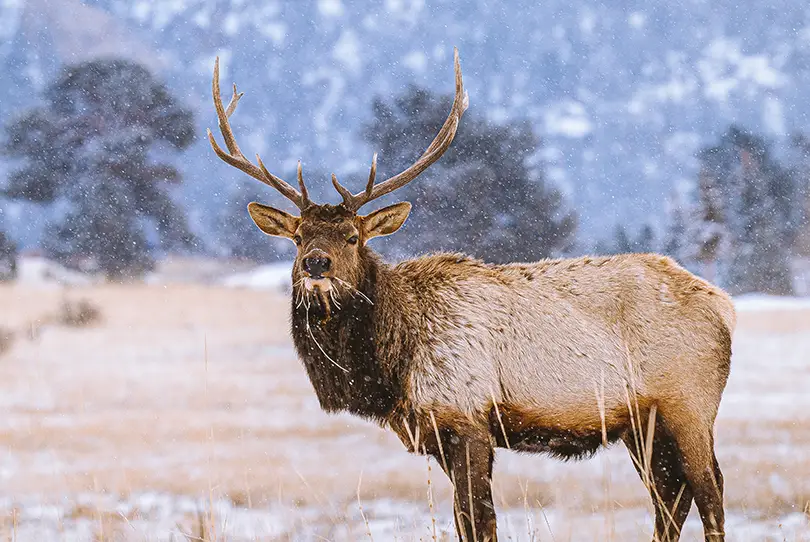
While some people wait for skiing season or winter festivals, others head for preserves and national parks to see animals that have shaped California’s landscapes for centuries. Elk stride across damp valleys with slow, regal confidence. Black-tailed deer cross pine clearings. And large herds of tule elk — a species found almost exclusively in California — gather on quiet coastal plains.
Winter makes these encounters even more rewarding. With leaves fallen, visibility improves. Animals move more, many herds stay together, and tourist crowds thin out. It’s an ideal season for anyone who wants to experience the wild side of California up close — safely and respectfully.
Below are the most impressive places in the state to see deer and elk in their natural habitat during winter. Keep this list if you’re looking for new travel ideas, hoping to bring home stunning photos, or just planning a peaceful weekend somewhere the sky feels bigger and the trails quieter.
Yosemite National Park
Deer in winter fog and on frosted meadows
Winter transforms Yosemite into something almost otherworldly. With most tourists gone and a crisp layer of frost covering the valley, black-tailed deer take back the open spaces. They venture onto meadows in search of grass beneath the snow, moving slowly and deliberately, but far less cautiously than in summer.
Best places to watch them: Yosemite Valley, El Capitan Meadow, Curry Village, and the Yosemite Falls area.
Winter has its advantages: deer rarely head up to higher elevations, making them easier to spot from trails without intruding on their space. Early mornings are especially memorable, when the animals emerge from the forest and the first sunlight cuts through the fog.
Point Reyes National Seashore
The kingdom of tule elk
If there is one place in California that could be called the true homeland of tule elk, it’s Point Reyes. Here you’ll find the largest herds of this animal — a species that once nearly vanished. Winter is the best season to observe them going about their everyday lives, undisturbed and majestic.
Elk stay close to open landscapes, especially in the Tule Elk Reserve on the Tomales Point peninsula. In the colder months, they graze longer, gather in larger groups, and stand out clearly against the pale hills.
This is the perfect spot for anyone wanting to see elk in a setting that feels almost cinematic: ocean winds, heavy surf, low clouds, and groups of massive bulls slowly moving across winter fields.
Redwood National and State Parks
Roosevelt elk — giants of the misty North
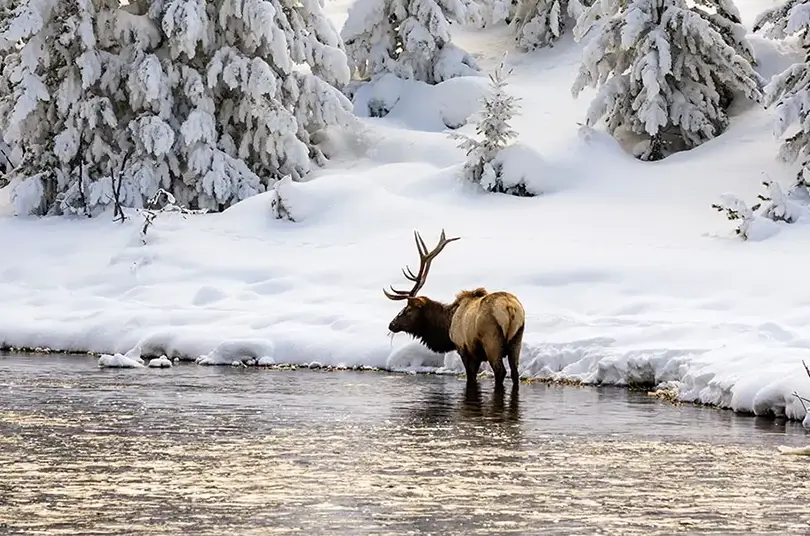
Northern California is home to the largest surviving subspecies of American elk — the Roosevelt elk. In summer, they often retreat deep into the redwood groves. But in winter, they return to broad pastures and can be seen right from park roads and visitor areas.
Best places: Prairie Creek Redwoods State Park, Elk Meadow, and Gold Bluffs Beach.
What makes winter encounters here so unforgettable is the contrast. Towering redwoods create the feeling of an enormous natural cathedral, and in front of you stands a massive elk, calm and unhurried. The fog enhances the dreamlike atmosphere, and light rains make the animals even more active.
Lassen Volcanic National Park
Deer against volcanic winter landscapes
Though Lassen often lies under deep snow in winter, the park’s lower elevations and surrounding regions become home to large groups of black-tailed deer. They descend from higher ground to feed in the valleys and are frequently spotted by travelers.
Winter highlights include the areas around Manzanita Lake and the Kohm Yah-mah-nee Visitor Center entrance.
The scenery here is more open than in Yosemite: snowy fields, dark volcanic rock, and clusters of evergreens create an ideal backdrop for observing wildlife. With fewer visitors, the animals remain calmer, giving you rare photo opportunities impossible during peak season.
The Plains of Northern Central Valley
Where deer share winter wetlands with migratory birds
A series of refuges within the Sacramento National Wildlife Refuge Complex becomes one of California’s most vibrant natural stages in winter. Hundreds of thousands of migratory birds — geese, cranes, herons — create a spectacular backdrop for spotting deer, which are especially active at this time.
It’s common to see a small family group of deer just a short distance from massive flocks of birds lifting into the sky. The soundscape, the fog, and the wide-open fields combine into a scene that feels like a living postcard from the northern wilderness.
Big Sur
Where mountains meet the ocean and deer appear along the trails
Big Sur is known for its dramatic scenery, but in winter it reveals a quieter side. Deer often come close to roadside areas, appear along brushy slopes, and move near trails overlooking the ocean.
Best places to encounter them: Andrew Molera State Park, Garrapata State Park, and Pfeiffer Big Sur State Park.
The cold season makes the animals less elusive. They seek out patches where vegetation stays green longer. And the morning light in Big Sur — especially in winter — is among the best in the state if you’re hoping for the perfect shot.
What to remember when watching wildlife in winter
Winter is a prime season for wildlife viewing, but it also calls for extra care. To protect animals and maintain the ecological balance, keep these rules in mind:
- Keep a safe distance. Elk can be unpredictable.
- Do not feed wildlife.
- Avoid loud noises or running toward herds.
- Never block their path or corner them.
- Use long lenses instead of trying to get closer.
Wild animals should stay wild. That’s the essence of the experience.
Why winter is the ideal time
It’s not just that deer and elk are easier to spot in winter — it’s the atmosphere. The quiet trails, the mist above the fields, the long shadows cast by low winter sun. This is when California — known for its brightness, energy, and pace — suddenly shifts rhythm. It becomes calmer, more open, more accessible to anyone who wants to see its wild soul.
A brief encounter with an elk or a deer is a reminder that California still holds its natural beauty, despite its cities and technologies. Every sighting feels like a story worth sharing. That’s why winter trips to parks and preserves continue to grow in popularity.
A simple winter weekend itinerary
If you want an easy two-day winter route, try this:
Day 1 — Point Reyes: walk the Tule Elk Reserve, then take a short trail to the coast.
Day 2 — Sonoma or Marin: explore hill trails where black-tailed deer often appear.
It’s a simple plan with a very high chance of seeing both deer and elk.
Why these moments bring people together
There’s something unifying about watching wildlife. People share these experiences because they’re rare, striking, and deeply authentic. Standing on the windy hills of Point Reyes, watching a herd of tule elk move slowly along the horizon, you feel connected to something bigger.
Winter in California offers these moments more readily than any other season. And if you’ve been looking for a reason to step outside during the time of year when many prefer blankets and movies, you won’t find a better invitation.
California’s nature is waiting — quiet, wild, and true. And winter suits it beautifully.
If you want to share this article with friends or keep it for a future trip, this list is a strong start to building your own winter wildlife route.