For decades, herpes has been treated as an uncomfortable fact of life. Millions of people manage recurring symptoms. Doctors prescribe drugs that shorten outbreaks. And most patients are told the same thing. The virus never really goes away.
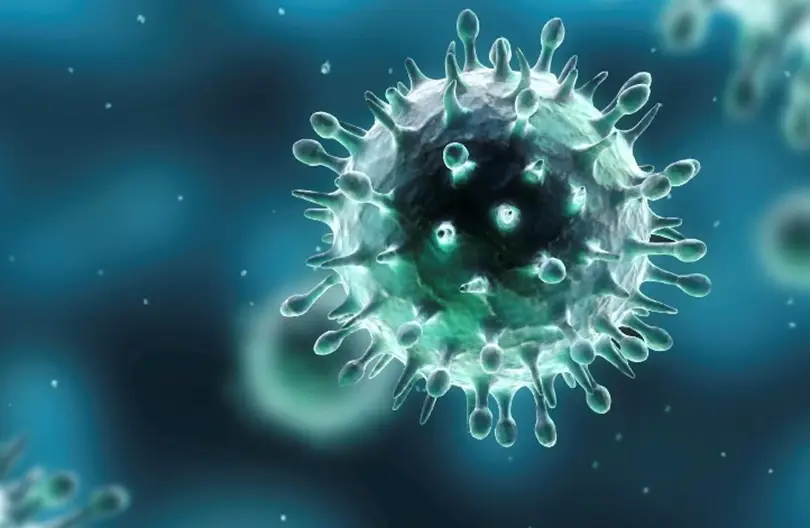
But what if herpes could be stopped before it even enters a cell.
That question moved from science fiction to serious research after a team at Washington State University used artificial intelligence to uncover a tiny molecular detail that changes everything. Their discovery does not simply slow the virus down. It blocks the very first step of infection.
The virus that always finds a way in
Herpes viruses are incredibly successful. They infect humans early in life, slip past immune defenses, and then hide quietly for years. When conditions are right, they reactivate. This cycle has made herpes one of the hardest viral families to control.
Current antiviral drugs work after infection has already happened. They interfere with replication, not entry. Once the virus is inside the cell, damage is already underway. Preventing that first contact has always been the dream, but scientists lacked a clear target.
The protein that opens the door
To infect a cell, herpes relies on a surface protein known as gB. Think of it as a molecular key. Without it, the virus cannot fuse with the cell membrane.
Scientists have studied gB for years. They knew it was essential. What they did not know was which exact part of the protein made it work. The structure is complex, packed with hundreds of amino acids interacting in subtle ways. Changing the wrong one does nothing. Changing the right one changes everything.
Finding that critical spot using traditional lab methods would require years of trial and error.
That is where artificial intelligence entered the picture.
Letting AI read the molecular blueprint
The research team turned to an AI model called LINES. Instead of guessing, the system analyzed thousands of internal interactions within the gB protein. It examined how different amino acids stabilize the structure and how they help the protein bind to the cell membrane.
The AI identified a surprisingly precise interaction. A bond between two amino acids, glutamine and arginine, turned out to be central to the protein’s stability and function.
In other words, if this connection failed, the entire entry mechanism would fail with it.
One change that stopped infection cold
To test the AI’s prediction, scientists made a single modification. They replaced glutamine with another amino acid called proline.
This was not a dramatic rewrite of the protein. It was a microscopic edit. But when researchers exposed cells to the modified virus, something remarkable happened.
Nothing.
The virus could no longer enter the cells. It remained outside, unable to fuse with the membrane, unable to begin infection. The molecular door stayed shut.
Lab experiments confirmed it again and again. One small mutation completely disabled the virus’s entry system.
Why this discovery is such a big deal
Finding a weak point is one thing. Finding a universal weak point is something else entirely.
The gB protein is one of the most stable and conserved elements across the entire herpesvirus family. That includes HSV 1 and HSV 2, the virus that causes chickenpox, cytomegalovirus, and Epstein Barr virus.
This means the same strategy could potentially work against multiple viruses, not just one. Instead of designing separate treatments for each infection, scientists may now have a single molecular target shared across them all.
That possibility is what makes this discovery so powerful.
AI did not just speed things up. It changed the outcome
According to the researchers, without AI this breakthrough might never have happened. Or it might have taken many years.
The gB protein contains countless possible mutation sites. Testing them manually would be slow, expensive, and largely based on educated guesses. The AI model narrowed the search to one interaction that truly mattered.
This is a clear example of artificial intelligence acting as a discovery engine, not just a calculator. It revealed a solution that human intuition alone might not have reached.
What this means for future treatments
This research does not produce a new drug overnight. But it lays the foundation for an entirely new class of antiviral therapies.
Instead of targeting the virus after it has entered the cell, future medicines could block the entry process itself. That approach could reduce side effects, lower resistance, and provide longer lasting protection.
It is the difference between fighting an intruder inside your house and never letting them through the door.
Why herpes deserves more attention
Herpes is often minimized in public discussion, but the risks are real. For newborns, people with compromised immune systems, and transplant patients, herpes infections can be life threatening.
Epstein Barr virus is linked to autoimmune diseases and several types of cancer. Cytomegalovirus can cause severe complications in vulnerable populations.
Stopping these viruses before infection begins could change outcomes for millions of people worldwide.
A glimpse of medicine’s future
This discovery highlights a larger shift happening in science. Artificial intelligence is no longer just assisting research. It is guiding it.
By revealing hidden patterns in complex biological systems, AI allows scientists to ask better questions and find more precise answers. From viruses to cancer to genetic disorders, this approach is reshaping how medicine moves forward.
The start, not the finish
Finding the herpes off switch does not mean herpes is cured. But it does mean the rules have changed.
For the first time, scientists have identified a single molecular point that can stop infection at its earliest moment. And they found it with the help of artificial intelligence.
That combination of biology and machine intelligence may define the next era of medical breakthroughs.