Toward the end of each semester at the four Los Rios Community College campuses, all the world’s a stage for theater students. The plays staged at each campus theater showcase the skills students have learned over the semester.
The results are impressive productions that draw crowds and cement Los Rios’ reputation as having some of the strongest theater programs in the area.
The four colleges in the Los Rios district are Folsom Lake College (FLC), Cosumnes River College (CRC), Sacramento City College (SCC) and American River College (ARC). The fall 2025 semester saw productions at each campus: “Mr. Burns – A Post-Electric Play” at Folsom’s Falcon’s Eye Theatre; “Rent” at Cosumnes’ Black Box Theatre; “The Nutcracker: A Panto” at Sacramento City’s City Theatre, and “She Kills Monsters” at American River’s ARC College Theatre.
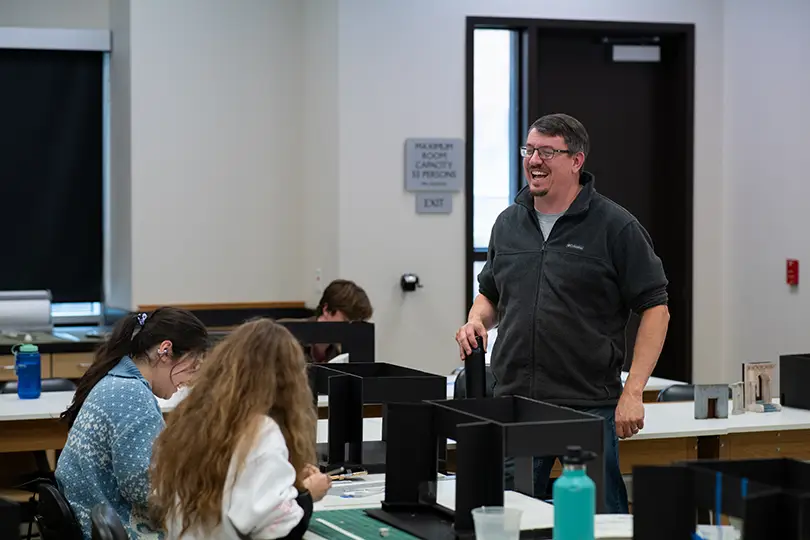
For some students, this may be the first time on stage in front of an audience. For others, it’s an opportunity to fine-tune the acting skills they learned in high school or other theater endeavors. And then there are the students who embrace the production skills – set design, lighting and sound, tech, costuming and props.
The professors and instructors bring years of their own theater backgrounds in acting, playwrighting, stagecraft and tech design that help them guide students through the process.
Students may choose the community college path rather than a four-year university for various reasons — finances, grades, age, returning to school, smaller classes and larger skill-based opportunities.
“Many of our students are first-generation college students. Sometimes they have a struggle of convincing their parents that there may be a future in theater instead of engineering,” Cosumnes Theatre and Dance Arts Department Chair Martin Flynn said. “And some students didn’t do well in high school and are hesitant in college. We have a wide range of diversity. We strive to meet them where they’re at and encourage them.”
Potential drama students have a lot of options when choosing a school, and for many Los Rios colleges are the perfect fit.
“I think students have more opportunities than they would necessarily have in a much larger university setting, especially in those first two years,” said Ian Wallace, Folsom’s theatre and cinema arts department chair. “It’s also so much less expensive. Two years here, you get a great foundation.”
Many students who have participated in the Los Rios district‘s drama programs have found professional jobs in the local theater community, including B Street Theatre, Music Circus, Capital Stage and Celebration Arts. For example, Wade McKenzie-Bahr, now a lighting supervisor at B Street Theatre, began his theater journey as a student at Folsom Lake College.
“As a student, I was relieved to find that the classes all had practical skills for the students, rather than just theory or lectures,” said McKenzie-Bahr. “Having the classes tied so closely to the Falcon’s Eye performances meant that students could learn a skill and practically apply it within the same semester on a real production. I feel very fortunate that the skills I learned in class are the same ones that got me my career.”
Folsom Lake College’s Theatre and Cinema Arts Program
Folsom Lake College’s theater program began in 2001 under David Harris, professor of theatre and cinema arts, who slowly expanded the department leading to a collaborative partnership at FLC between Harris and Department Chair Wallace.
Harris began teaching theater 26 years ago, first at Sacramento City College and Cosumnes River College before landing at Folsom Lake College. Wallace is a bit newer, coming on board 13 years ago, but they have worked together at Folsom to build the theater department’s reputation and see the expansion of the Harris Center for the Arts in 2011, which houses three stages — one being the FLC’s Falcon’s Eye Theater.

Harris is also a local actor, so he brings his directing and acting skills to pass on to the students, while Wallace focuses on design and technical theater classes. They’ve welcomed a third full-time faculty member this year — theater and film actor Jennifer Provenza-Wallace.
Community college students gain hands-on experience and access to resources like career education grants, Wallace said, noting key classes such as Stagecraft and Scenic Design, as well as collaborative partnerships among faculty, students, audiences and local theater companies.
Wallace also said that many of his theater students start out feeling isolated but eventually find a tribe of their own in the drama department.
“Watching a student embrace theater and grow is so heart-warming,” said Wallace. “They find a group of people who are accepting of everything, of genders, of sexual orientations, of races, of religion or just feeling a little lost. The first day of class is always very quiet. Everyone’s shy. But by the last day of class, they’re friends.”
Former student Maddie Hardiman agrees. She said her time at the FLC theater department was truly foundational.
“It was the start of everything for me,” said Hardiman, who now works as a professional stage manager in the local theater community, including at Capital Stage and her alma mater, Folsom Lake College. “While attending Folsom, I was able to explore and learn from many different sides of live theater. Hands-on experiences with industry professionals gave me the confidence to pursue stage management as a career. Now, as a stage manager working professionally in the community, I see how much that foundation prepared me to be successful in my career goals.”
Cosumnes Theatre and Dance Arts Program
In 1995, under the direction of Professor Frank Condon, Cosumnes River College opened a new visual and performing arts complex that includes the Black Box Theatre.
After the pandemic, the theater department was rebuilt under Flynn’s leadership, reviving its original name, River Stage at Cosumnes River, expanding its drama offerings, emphasizing a “production-oriented program” and diversifying its faculty.
The college puts on seven shows a year during the fall, spring and summer sessions. Classes include introduction to theater, acting, history of theater, stagecraft, stage lighting, intro to scenic design, improv and costume construction.
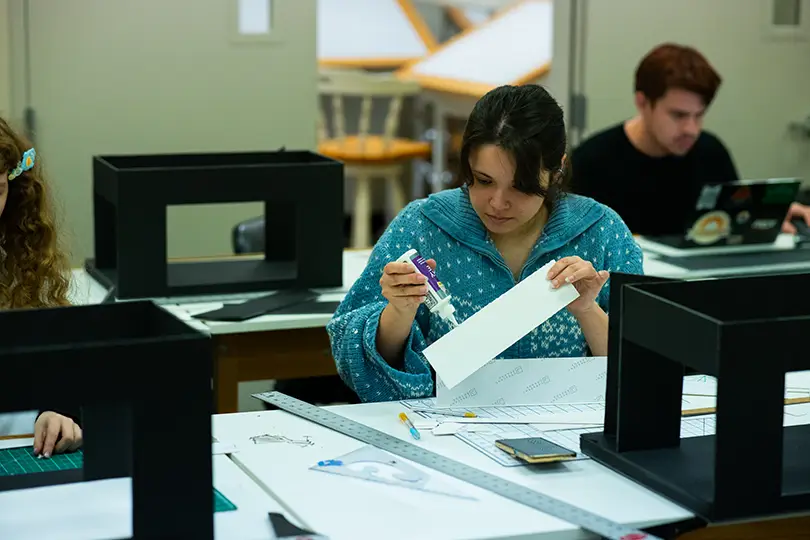
Flynn has experience as a community college student, having spent two years at one in New York. He acknowledges that there is a wide range of ages, economic backgrounds and cultures at community colleges, and that different expectations exist.
“All of our students have many opportunities to appear on stage or work backstage,” Flynn said. “Our goal is to produce graduates who can either adeptly transfer into a four-year program or go straight to work in the theater industry.”
Flynn reaches out to the local theaters in town for opportunities for their students. According to Flynn, many of their students begin working for local theater companies before they graduate, including Music Circus, Capital Stage, Celebration Arts and Teatro Nagual.
Natasha Larson-Swenson is thankful for her classes at Cosumnes River College, which eventually led to her current job as props artisan for Broadway at Music Circus.
“I signed up for a stagecraft class,” said Larson-Swenson, remembering her Cosumnes beginnings. “I didn’t know what it was about, but by the description, it sounded interesting because I enjoy working with my hands and building things.”
Eventually, Flynn suggested Larson-Swenson apply for a props internship at Music Circus, which ultimately led to her current job there.
“At this job, I’m able to learn more about making props and working with new materials to build them,” she said. “I am grateful that the guidance and assistance Martin has given me led me to a career doing something I truly enjoy and excel at.”
Sacramento City College’s Theatre Arts Program
Sacramento City College is the oldest college in the Los Rios Community College District — founded in 1916 by Belle Cooledge, a female educator and later the first woman mayor of Sacramento.
The college’s Performing Arts Center — now City Theatre — was established in 1937, and is known not only for its in-house theater productions but also for its annual summer Sacramento Shakespeare Festival, which began 40 years ago.
The Shakespeare Festival was a mainstay summer outing held for years at Land Park’s outdoor amphitheater. But a couple of summers ago, it was moved inside because of the heat and repairs, according to Luther Hanson, chair of Theatre Arts at Sacramento City College.
In addition to the summer festival, the department also stages one-act play festivals featuring scripts from Hanson’s playwriting classes.
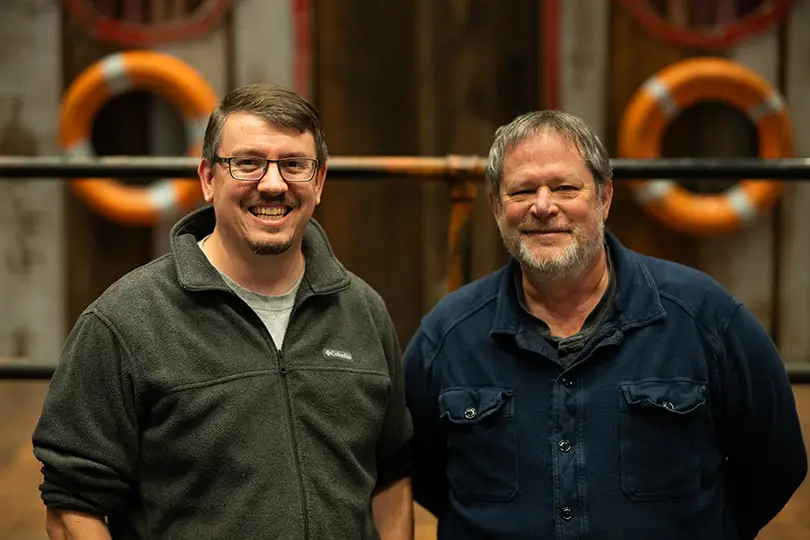
“Our playwriting students get an opportunity to see their work performed on our main stage,” Hanson said. Hanson has taught at SCC for 30 years and is active in theater — acting, directing and playwriting at various West Coast theaters. Other classes offered at SCC include acting, production, stagecraft, makeup, lighting design, scenic design and theater history.
“We have a large range of students who take our classes,” said Hanson. “Some are straight out of high school, some who have been in college for a couple of years, and actors in the community. One of my favorite actors is Tim Sapunor, who’s been acting for 60 years and [is] in lots of our plays.”
Hanson noted one of the main benefits of community college over a university is that tuition is more reasonable at $146 a semester. He’s also proud of the opportunities SCC provides students to be part of each semester’s productions.
Sacramento City College puts on six productions a year, including two Shakespeare Festival plays, its annual Panto play, two additional performances and a children’s theater play.
Mia Matista has performed in most of the annual Panto plays at SCC. This year, she portrayed Clara in “The Nutcracker: A Panto.”
Matista started in the drama program at SCC in 2016 and now works for the college’s Humanities and Fine Arts Department. She remembers her classes included theatre and acting techniques, taught by Hanson.
“I had a hard time figuring out what I wanted in college and when I started taking theater classes, I found a thriving community,” Matista said.
American River College’s Theatre Arts Program
The American River College theater department was established in the 1950s, according to Kathy Burleson, chair of the Theatre Arts Department.
For Burleson, Sacramento has always been her theater home. She first earned a bachelor’s degree in theatre from Sacramento State, and an MFA in theatre design from the University of California, Davis. Bringing her theater background with her, Burleson has been teaching technical theater at ARC for the past 40 years.
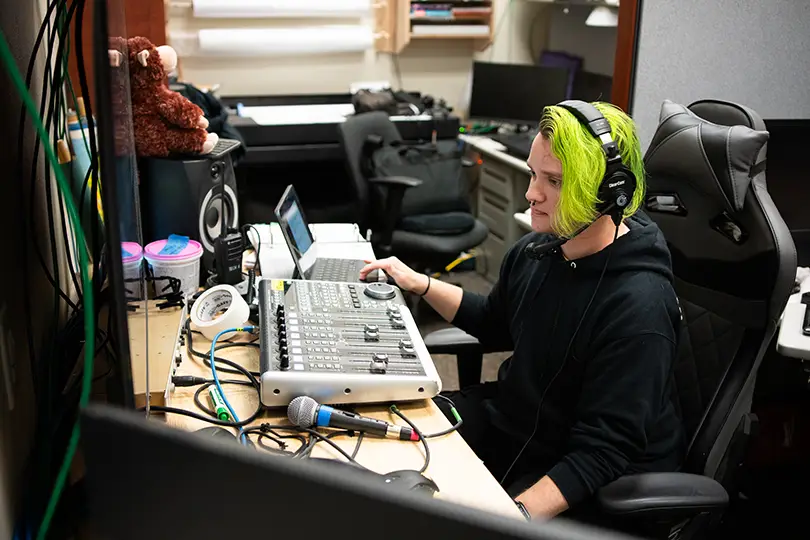
Each school year, the theater department puts on four mainstage productions at its ARC theater, one children’s touring play and one showcase, all featuring student involvement. This gives a wide range of opportunities for beginning actors who have taken an acting class, and for advanced students to get larger roles, participate in stage management and be assistant directors, said Burleson.
The production elements come from ARC technical classes, including stagecraft, lighting, sound, costuming, vintage costuming and makeup.
“Students in our daytime technical classes build and paint scenery for all shows, build props, hang and focus lights, do sound cues and build costumes,” Burleson said. “Then they have the opportunity to crew the shows: stage crew, props crew, dressers, lights and sound crews and front of the house crew.”
According to Burleson, ARC has a strong musical theater program with training in acting, dance and singing, along with involvement in complex technical theater setups.
Some of the ARC shows that Burleson notes include “The Wiz,” “Puffs,” “West Side Story,” “Lend Me a Tenor” and “Little Shop of Horrors,” where the theater department partners with other ARC departments such as dance, fashion, art/new media, electronic engineering, music and computer-aided design.
ARC also offers internships with Music Circus and Capital Stage. “Many of our students have been through the ARC internship program at Music Circus and have been able to move on into professional positions,” Burleson said.
This story is part of the Solving Sacramento journalism collaborative. This story was funded by the City of Sacramento’s Arts and Creative Economy Journalism Grant to Solving Sacramento. Following our journalism code of ethics, the city had no editorial influence over this story. Our partners include California Groundbreakers, Capital Public Radio, Hmong Daily News, Russian America Media, Sacramento Business Journal, Sacramento News & Review and Sacramento Observer. Sign up for our “Sac Art Pulse” newsletter here.
By Patti Roberts