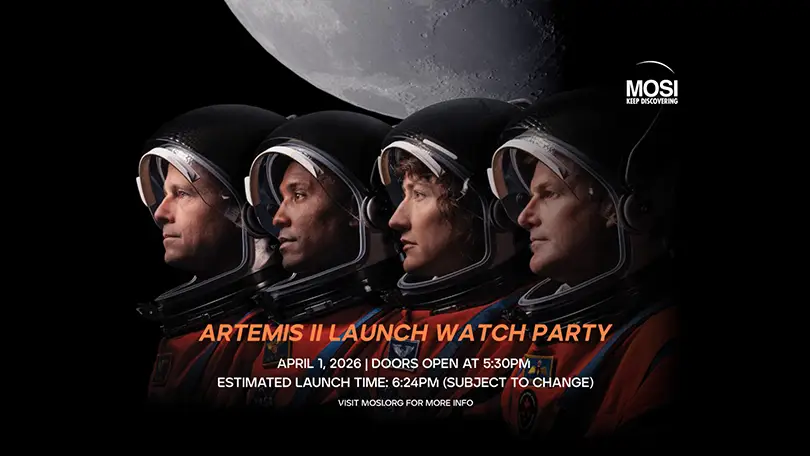
For the first time in over 50 years, humans are going back to the Moon. Not robots, not machines, real people. Four astronauts are about to take part in something that feels historic, but this time it is not just about repeating the past, it is about building the future.
The mission is called Artemis II and it is the first time humans will travel around the Moon since the days of the Apollo program. Back then, the goal was simple, get there first. Now the goal is very different, stay longer, build something real, prepare for what comes next.
The crew includes Reid Wiseman, Victor Glover, Christina Koch, and Jeremy Hansen. They are not just flying to space, they are testing what it takes for humans to live beyond Earth. Their spacecraft, Orion, will take them farther than any humans have traveled in decades, far beyond Earth’s orbit, into deep space where our planet looks like a small blue dot.
During the mission, they will fly around the Moon and see its far side, something only a handful of humans have ever seen with their own eyes. This mission will last about 10 days, but what we learn from it could shape the next 50 years, because this flight is not about landing on the Moon, not yet. It is about testing everything, the rocket, the systems, and the way humans survive in deep space.
Space is not easy, it is full of radiation, isolation, and extreme conditions. Scientists will study how the human body reacts, how astronauts sleep, think, and function far from Earth. Every minute of this mission gives us data, and that data brings us closer to living beyond our planet.
The reason humans have not been back to the Moon for so long is not because we cannot go, it is because the next step is harder. It is not about visiting, it is about staying.
The Artemis program is designed to do exactly that, build a long term presence on the Moon, test new technology, use local resources, and learn how to survive far from Earth. And ultimately prepare for Mars. But there is something else happening here that numbers cannot measure, inspiration.
When humans first landed on the Moon, it changed how people saw the world and made the impossible feel real. Today we are surrounded by endless content, short videos, and constant scrolling, but this cuts through all of that because it is real.
Four humans leaving Earth and heading into the unknown, not just for one country, but for all of us. This mission includes international partners, including Canada, and that shows something important, space is no longer a race, it is a shared journey. The Moon is no longer the finish line, it is the starting point.
If everything goes well, humans will land on the Moon again later this decade, but this time they are not going for a quick visit, they are going to stay, to build, to learn, and to take the next step.
Right now four astronauts are connecting the past with the future, and the real question is no longer if we are going back to space, it is how far we are ready to go.