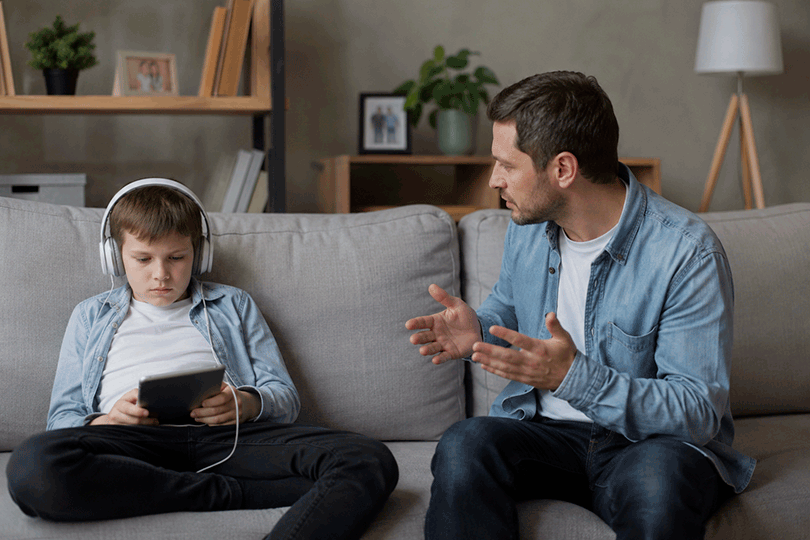
A friend’s son recently visited my home. He is ten years old. I asked him what he likes to do in his free time. He said, “Use my phone.” I asked what else. He paused for several seconds, genuinely searching for an answer. Then he said, “Watch YouTube while I use my phone.” His mother, my friend, sighed and said, “He’s not like I was as a child.” She is correct, but not in the way she imagines.
We constantly hear that children have changed. They are more anxious, less resilient, addicted to digital approval. That observation is true but shallow. The real transformation is not about gadgets. Gadgets are simply the tool. The real transformation is about the eradication of emptiness.
Emptiness is the experience of not knowing what to do. No scheduled activity. No screen. Just rain on the window and an open afternoon. For children of my generation, emptiness was the mother of invention. Cardboard boxes became spaceships. A ditch became the Grand Canyon. A fight with the neighbor kid became a lesson in negotiation and consequence. We did not have a word for procrastination, but we knew how to suffer through idleness and then claw our way out into something original.
Today’s children rarely encounter this void. The phone is always present. A wait in line means an iPad. A dull moment in class means scrolling memes under the desk. Parents themselves have grown so uncomfortable with silence that they hand over a screen at the first whimper. The result is a child who has lost the most fundamental human skill: making something from nothing. They are brilliant at consuming ready made worlds. They are terrified of building their own.
Fear has also changed shape. When I was young, fear had a face. Dark basements. Angry dogs. The bully two streets over. A bad grade in a paper diary. These fears were concrete and local. You could run from a dog. You could avoid the basement. Modern children carry a different kind of fear. It is abstract and global. A twelve year old girl told me she fears the planet dying from climate change and her own powerlessness. A ten year old boy told me he fears his videos will not get enough views and he will be nobody. Not pain. Not danger. Insignificance. You cannot run from insignificance. Social media has turned visibility into a public ranking system. Every child knows their follower count and compares themselves to influencers with millions. The comparison is not with the kid at the next desk. It is with a digital god. The outcome is fixed. You always lose. That is why eight year olds now carry anxiety that took our parents forty years to develop.
Here is the third shift, and it is the most uncomfortable for parents. Children no longer obey adults. They obey the algorithm. When I was small, authority flowed from mother to teacher to older sibling. Now authority flows from the recommendation feed. A child may reject your warning that sugar causes acne. But if a popular TikToker says the same thing, the child immediately changes behavior. You say, “Do not stay on your phone until midnight.” That is noise. But when the app itself shuts down at 1 AM, the child sees it as natural justice. The algorithm never yells. The algorithm always delivers what you want. A parent delivers what you need. That is the new generation gap. In the past, young people rebelled against ideology. Now they rebel against the messy, unpredictable, unfiltered experience of reality itself. The screen is a retreat into a world that obeys them, or at least pretends to.
What frightens me most is the loss of horizontal play. My childhood play was horizontal. We sat on the floor, built Lego cities, argued over rules, made up new ones, paused, restarted, laughed. It was chaotic and social. It trained flexibility. Today’s children excel at vertical play. Levels. Achievements. Loot boxes. They have stunning concentration and follow instructions perfectly. But they fall apart when the goal is unclear. I once suggested a game of “The Sea Is Rough” to a group of eight year olds. They did not understand. They asked for a script. They asked who wins. They asked if there would be bonuses. They need clear rules, immediate rewards, a system of points. Real life gives no likes for helping grandma cross the street. That silence terrifies them. They have lost the taste for the unpredictable.
I am not going to pretend that my generation was superior. We were not. Today’s children are smarter in many ways. A ten year old can find information faster than I could after two years of university. They can edit video, set up targeted ads, detect photoshop. At age five, they try to zoom in on a paper book. That is not a defect. That is a new way of seeing. But the same skills come with a price. They cannot endure discomfort. They cannot wait. They cannot lose without rage. I watched a boy lose a board game. He flipped the board and said, “The game lagged. That’s unfair.” He had transferred the logic of a video game, where you can restart a level, into real life, where there are no restarts. That is a dangerous confusion. Life does not give infinite lives.
So what works? I am not a guru. But I have noticed a pattern among the healthiest children I know. The ones who do not fall out of reality share one thing. They have a screen free hobby. Not an expensive “enrichment” class. A stupid hobby. Clay sculpting. Raising snails. Jigsaw puzzles. An out of tune guitar. Something that offers no instant reward, no likes, no leaderboard. Something where you get your hands dirty and fail quietly. These children also know how to be bored. They can lie on a couch and stare at the ceiling without panic. Their parents were brave enough to turn off the tablet for a full day, not just an hour. They let the tears of boredom happen. Because boredom, real boredom, is the soil where creativity grows. Without emptiness, nothing new appears.
The deepest loss for modern children is not screen time. It is the right to make mistakes. They live in a world of hints, walkthroughs, guides, and ready answers. Every question already has a solution online. They never have to struggle. But struggle is the teacher. A broken heart teaches you about feelings. A scraped knee teaches caution. An argument with a friend teaches repair. Today’s child has a five step guide for everything, including “How to survive a breakup.” That guide works like a painkiller. It numbs. It does not heal.
I do not know what this generation will become. But I know that complaining about them is a waste of breath. They are our mirror. We adults sit on our phones six hours a day. We trade likes for real conversation. We no longer stay up late talking in the kitchen. If we want them back in reality, we have to go there first. Put the phone away at dinner. Take them to the woods not for Instagram but for silence. Sit next to them and say, “I feel bored with you when you are on a screen. Let us talk about nothing.” That is terrifying. Because we have not talked about nothing for years. Because we are afraid of the pause. But it is the only bridge.
Children once ran away from home. Now they run into home, into their room, into their phone. The door closes. The headphones go on. They are physically close, but mentally absent. So here is the question I leave for you. Not for you to answer, but for you to send to a friend. What did you do today to make your child want to step out of their phone and into your reality? Not because you took the device away. Because being with you turned out to be more interesting than TikTok.