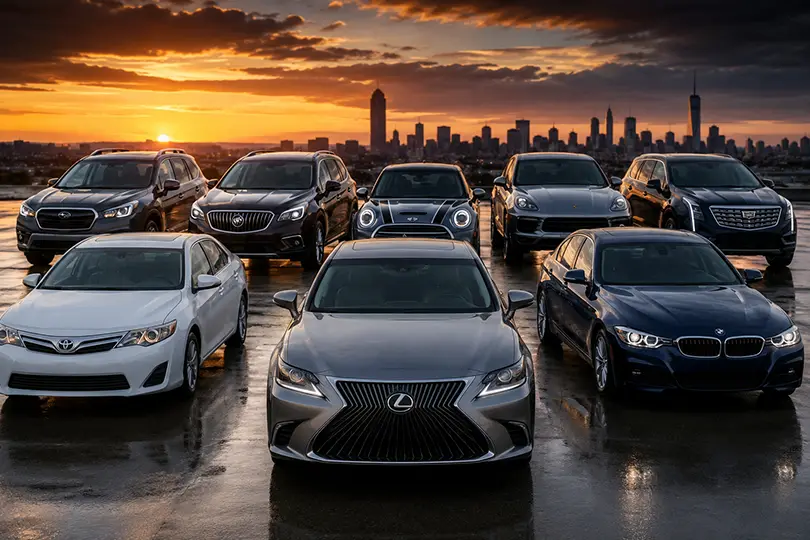
The Most Reliable Car Brands of 2026. But the Biggest Problem With Modern Cars Turned Out to Be Something Else Entirely
For years, car buyers judged reliability the same way. A reliable vehicle was one with a durable engine, a dependable transmission, and the ability to go years without expensive repairs. The latest J.D. Power Vehicle Dependability Study suggests that definition may be outdated.
Lexus once again topped the industry’s reliability rankings, recording just 151 problems per 100 three year old vehicles. The brand has now held first place for four consecutive years. Buick finished second with 160 problems per 100 vehicles, while MINI claimed third place with 168. Toyota, Subaru, Honda, Nissan, Mazda, Porsche, BMW, Cadillac, and Genesis also performed better than the industry average.
The rankings themselves are not particularly surprising. What stands out is the reason modern vehicles are generating so many complaints. The industry’s average problem rate climbed to 204 issues per 100 vehicles, yet most of those frustrations are no longer tied to engines, transmissions, or other traditional mechanical failures.
Instead, software has become one of the biggest reliability challenges in the automotive world.
Owners most frequently reported issues involving infotainment systems, touchscreen controls, smartphone connectivity, Apple CarPlay, Android Auto, and other digital features. The irony is difficult to ignore. The technologies designed to make vehicles smarter and more convenient are increasingly becoming the source of customer frustration.
Modern cars are evolving into rolling computers. While mechanical engineering continues to improve, digital complexity introduces an entirely new category of problems. A vehicle may perform flawlessly on the road while still leaving its owner irritated by frozen displays, connectivity failures, or software glitches.
The findings become even more interesting when powertrains are compared. Traditional gasoline vehicles achieved the strongest reliability results with 198 problems per 100 vehicles. Hybrid models posted the weakest performance at 281 problems per 100 vehicles, suggesting that additional layers of technology can sometimes come at the expense of long term dependability.
This trend reflects a broader reality extending far beyond the automotive industry. Companies constantly compete to add new features, new screens, and new capabilities. Yet consumers often value something much simpler: products that work consistently without demanding attention.
That may explain why Lexus continues to dominate dependability rankings year after year. Reliability is rarely the most exciting feature during a launch event, but it becomes one of the most valuable qualities over time. Drivers eventually stop caring about screen size, interface design, or marketing promises. What they remember is whether their vehicle was dependable when they needed it most.
At the opposite end of the rankings, Volkswagen, Volvo, and Land Rover delivered the weakest results. Volkswagen recorded 301 problems per 100 vehicles, nearly double the figure achieved by Lexus.
The biggest lesson from the 2026 study is surprisingly simple. The future of the automotive industry may not depend on who adds the most technology. It may depend on who can make that technology disappear into the background and simply work.
Because true reliability is not measured by what a vehicle can do. It is measured by how rarely its owner has to think about it.