For many California households, the most stressful moment of the month is no longer the mortgage statement or the grocery receipt. It is the utility bill.
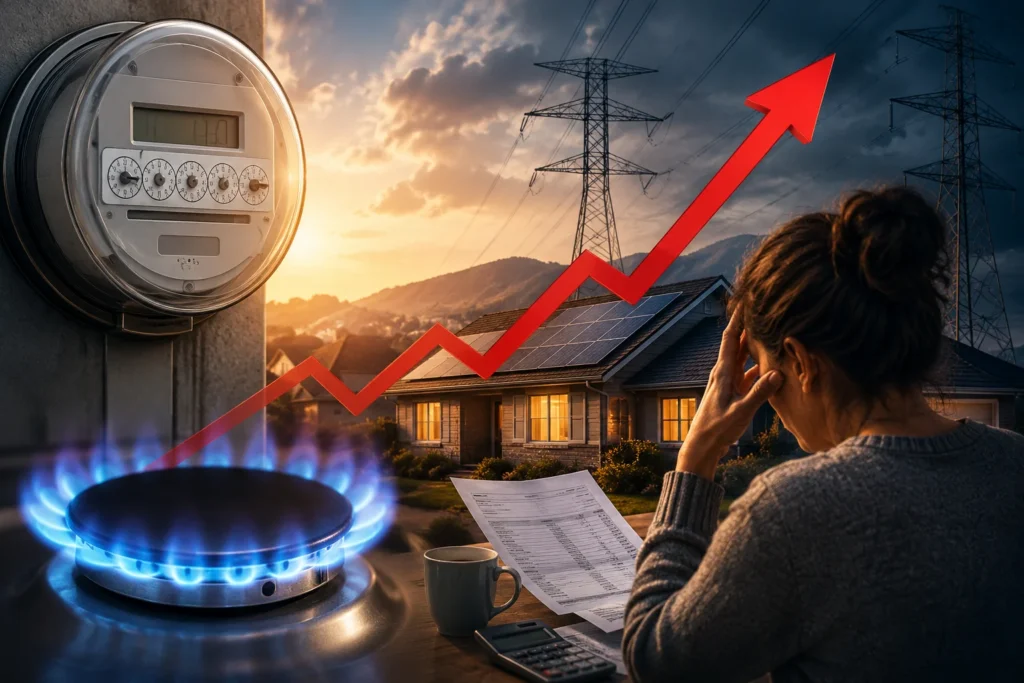
People open it at the kitchen table, scan the total, and feel the same quiet frustration. They used less heat. They turned off lights. Some even spent thousands of dollars installing solar panels. Yet the bill still feels too high.
Now, a new forecast is adding to that anxiety. Residents in Northern California could see electricity and natural gas costs rise sharply again by 2030, with some estimates suggesting PG&E customers may pay about $840 more per year.
That number is not abstract. For a family, it can mean fewer savings, delayed repairs, a canceled trip, or another monthly payment that makes life feel just a little tighter.
The bill that keeps growing
The average monthly gas and electric bill has already reached about $285, or roughly $3,420 a year. Compared with 2016, that is an increase of about 84 percent.
If the latest forecast comes true, households could face another increase of nearly 25 percent over the next four years.
For many residents, the problem is not one shocking bill. It is the slow accumulation of pressure. A little more for gas. A little more for electricity. A little more for insurance, groceries, rent, childcare, and car repairs.
At some point, ordinary people begin asking a simple question. How much more can a household absorb before California becomes too expensive for the people who built their lives here?
PG&E pushes back
PG&E says the forecast does not reflect the full picture.
The company argues that the actual increase will be much lower. According to PG&E, the average bill may rise by about $128 in 2027, followed by $119 in 2028, $126 in 2029, and $133 in 2030.
The company says it is working to reduce certain costs and control spending. It also points to the enormous expense of maintaining and modernizing a complex energy system in a state facing wildfire danger, extreme heat, and rising demand.
That is the heart of the conflict. Customers see a bill they can barely justify. The utility sees a grid that needs expensive repairs, upgrades, and safety investments.
Both sides are talking about reality. They are simply living in different parts of it.
Why energy is becoming so expensive
California’s energy problem did not appear overnight.
The state has spent years trying to make its power system safer after devastating wildfires, some of which were linked to electrical equipment. Utility companies have had to upgrade lines, bury some equipment underground, strengthen fire prevention programs, and invest in systems that can shut off power during dangerous conditions.
At the same time, California is trying to build a cleaner energy future. That means more renewable energy, more grid capacity, more storage, and more technology to manage demand.
None of that is cheap.
Consumers are not only paying for the electricity they use today. They are also paying for a safer grid, a cleaner system, and years of deferred maintenance.
That may make sense on paper. But on a household budget, it still feels like another bill arriving at the worst possible time.
The solar surprise
For years, rooftop solar was sold as a way to take control of energy costs. For many homeowners, it still helps. But it no longer feels like a magic escape hatch.
Some residents say they installed solar panels and still receive monthly PG&E bills of $200 or $300.
That surprises people because they assume generating power at home should dramatically reduce what they owe. But modern utility bills include more than energy usage. They also include grid fees, transmission charges, service costs, and other expenses tied to maintaining the system everyone depends on.
Changes to California’s solar compensation rules have also reduced the value of sending excess power back to the grid.
The result is a painful lesson for homeowners. Solar can help, but it does not always free a family from the larger economics of the power system.
Who decides what happens next
The California Public Utilities Commission is expected to begin making final decisions on future rates starting in 2027.
That means the numbers are not final yet. Forecasts can change. Company requests can be challenged. Regulators can approve, reject, or modify proposed increases.
But residents already know one thing. Utility affordability is becoming one of California’s biggest quality of life issues.
Electricity is no longer just about lights and appliances. It powers remote work, medical devices, air conditioning during heat waves, electric vehicles, internet access, schoolwork, and basic comfort.
When energy becomes too expensive, it affects nearly every part of daily life.
The question California cannot avoid
California wants a safer grid. It wants cleaner energy. It wants fewer wildfire risks and fewer blackouts. Most residents want those things too.
But the unanswered question is who pays for the transition, and how much ordinary families can realistically carry.
If rates keep climbing, more people may begin to feel that the future is being built on their monthly bills.
That is why this story matters. It is not only about PG&E, regulators, or energy forecasts. It is about the quiet pressure inside California homes, where families sit at the table, look at another bill, and wonder what they will have to cut next.
A utility bill used to be just a number. Now, for many Californians, it has become a warning about the cost of staying in the state they call home.