A San Francisco Museum Is Closing After Nearly 60 Years. Its Last Day Is Still a Mystery
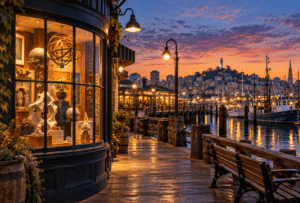
There is a particular kind of San Francisco afternoon that starts at Fisherman’s Wharf and ends somewhere you did not expect. A family walks past the fishing boats, turns onto Jefferson Street and enters a museum where the question is not simply what they are looking at, but how such a thing could exist. That experience still awaits visitors at Ripley’s Believe It or Not! For now. The company says its current San Francisco attraction will close before the end of 2026, after nearly six decades at the Wharf.
The announcement came in a September 22 message from Ripley’s president Jim Pattison Jr. He said the company had made a difficult decision to close this location after careful consideration. He did not give a final date, and he did not state a specific reason. That distinction matters in a city where an announcement about a familiar landmark can quickly turn into a story about a place that has already vanished. Ripley’s is still open at 175 Jefferson Street. Its attraction page continues to list visitor information and tickets.
The practical advice for a prospective visitor is straightforward: check the official site for current hours, availability and prices immediately before setting out. Pattison said the company will publish the final day once it is set. A family trip next month may be possible, but nobody should treat a projected year-end closing as a confirmed December appointment. Until Ripley’s announces a date, there is no published countdown to plan around.
The San Francisco site officially opened on February 2, 1967. Pattison recalled how the company introduced it at the time as the city’s newest and most unusual attraction. Nearly 60 years later, that description has become a local memory. It occupies a different niche from a traditional art museum or a harbor cruise. Its appeal rests in the pleasure of encountering something peculiar, then looking again to see if it is really there.
The relationship between Ripley’s and San Francisco reaches back further than the building. Robert Ripley began his professional career at the San Francisco Bulletin in 1909. The company later exhibited at the Golden Gate International Exposition on Treasure Island in 1939 and 1940. Over the years it operated other attractions around Fisherman’s Wharf, including a museum that evolved from the Museum of Witchcraft and Magic into the Guinness World Records Museum, along with a magic shop. These are chapters in the company’s history here, not a list of venues currently open to visitors.
Pattison’s message gives a sense of the people behind that history. He thanked the staff who helped run the attraction and said the company was offering support to current employees as they prepare for a transition. He remembered free visits for groups of local children in the 1970s. He also named famous visitors, including Michael Jackson and Joe DiMaggio. For most families, the more recognizable story may be quieter: the adult who planned a quick stop and ended up as captivated by an odd object as the child beside them.
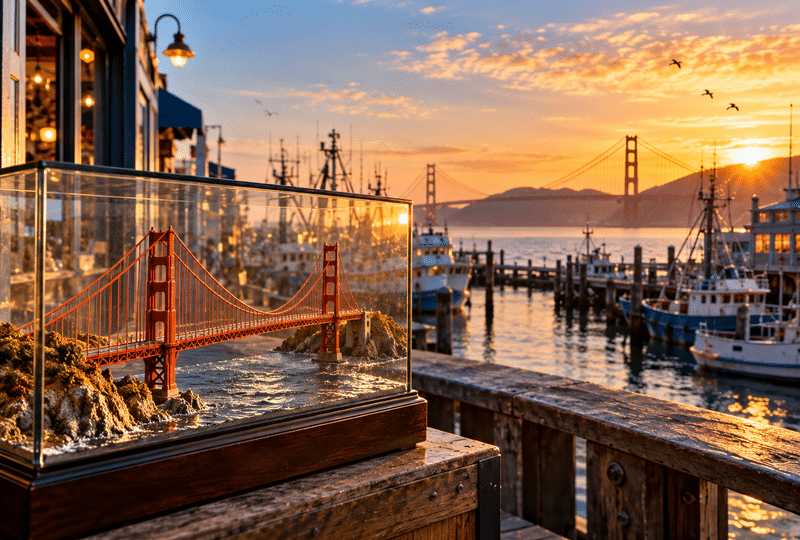
Some objects linked to San Francisco may eventually leave with collectors rather than the attraction. Ripley’s says it is considering selling a selected group of exhibits, including a Golden Gate Bridge made on the head of a pin, toothpick versions of the bridge by a local artist, Joe DiMaggio’s crutches and a chicken-wire portrait of Janis Joplin. The company has not published final sale details. It would be inaccurate to present every named item as already on the market or to quote prices that have not been announced.
The closing announcement arrives amid visible change at Fisherman’s Wharf. The Port of San Francisco’s Fisherman’s Wharf Forward program includes public spaces around the Inner Lagoon, lighting, opportunities for businesses and longer-term work addressing earthquake and sea-level risks. These plans describe the neighborhood’s transformation. They do not establish why Ripley’s chose to close its attraction. Pattison did not make that connection in his announcement, and the precise reason remains undisclosed.
That uncertainty should not crowd out the more interesting question: what does a city keep when a longtime attraction leaves? A waterfront needs investment, working infrastructure and room for new visitors. It also draws meaning from small rituals repeated across generations. Someone remembers a first trip with grandparents. Someone else remembers a rainy afternoon when a museum became the unexpected highlight. No single replacement storefront can recreate those moments, even if the neighborhood’s next chapter brings worthwhile changes.
There is a narrow possibility of another chapter for Ripley’s itself. Pattison said that leaving this location did not necessarily mean saying goodbye to San Francisco. The statement was deliberately open-ended. The company has announced no replacement address, opening date or deal for a new venue. For now, the concrete news is the planned closure of the current attraction, not a permanent exit from the city or a promised return.
If the museum has been on your San Francisco list, you still have a chance to visit. Check the official attraction page, confirm the hours and book only when the details fit your plans. If you have already been, this is a good moment to ask someone who went with you what they remember most. The oddities may be the reason people step inside, but the shared stories are often what they take home. Pass the news to a friend who would want one more look. 🤍