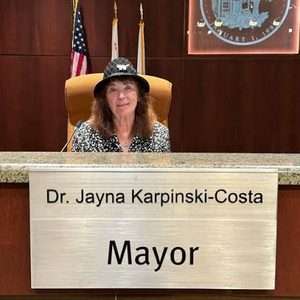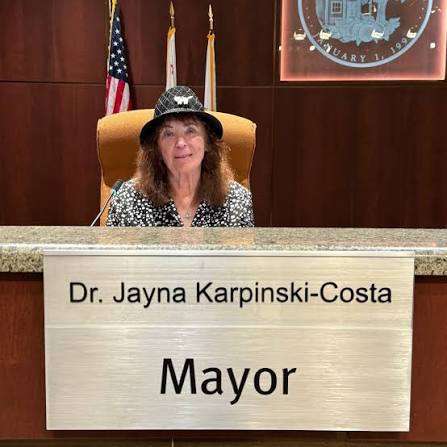
Dr. Jayna Karpinski-Costa has built an unusual professional and civic résumé spanning veterinary medicine, law, small business ownership and local government. A Citrus Heights resident since 1991, she earned a B.S. in Microbiology and Doctor of Veterinary Medicine degree from Colorado State University before earning her J.D. from Santa Clara University School of Law. Her city biography also notes that she presented arguments before the U.S. Supreme Court. Her involvement in Citrus Heights government stretches back more than two decades. She served on the Citrus Heights Planning Commission from 2002 to 2004, was elected to the City Council in 2004 and 2008, and returned to the Council after winning the District 4 seat in 2022. She served as mayor in 2011 and again in 2024–2025. She currently represents District 4 and is seeking another four-year term in the November 3, 2026election.
New Times Magazine editor spoke with Dr. Karpinski-Costa about the experiences that shaped her approach to public service, the issues she says are most important to Citrus Heights residents, and what she hopes to accomplish if reelected.
Dr. Karpinski-Costa, you have worked as a veterinarian, attorney, small business owner and elected official. How have those different careers influenced the way you approach decisions on the City Council?
Each experience has taught me to look carefully at the facts before making a decision. Veterinary medicine requires you to diagnose a problem, consider the available options and determine the best course of action. Law teaches you to examine evidence and understand different sides of an issue. Running a small business teaches you that resources are limited and that every financial decision matters. I bring those perspectives to the City Council. Before voting, I ask three basic questions: Do we want it? Do we need it? Can we afford it? I also consider how a decision will affect our residents, our businesses and Citrus Heights’ position within the region.
You have lived in Citrus Heights since 1991. What has kept you connected to this community for more than three decades?
Citrus Heights has been my home for 35 years. I value the variety of neighborhoods and housing opportunities we have here. Someone can live on an acre, as I do, while another resident may prefer a condominium or a different type of neighborhood. I have also watched Citrus Heights evolve as a city. Local government is much closer to residents today, and people have opportunities to participate through their neighborhoods and communicate directly with city leaders. I believe that connection between residents and their local government is extremely important.
Why are you seeking another term on the Citrus Heights City Council?
There is still significant work underway. We are addressing the condition of our roads, planning for the future of the Sunrise Mall property and looking at the long term financial health of the city. Citrus Heights currently faces the challenge of balancing increasing expenses with pressure on revenues. My position is that we need to meet those challenges responsibly without imposing new taxes. I want to continue working on these issues and see major projects move from planning into implementation.
Road conditions are a major concern for many Citrus Heights residents. What would you like to see happen?
Roads are one of my highest priorities, particularly in District 4. We need to remain focused on improving pavement conditions and continue looking for opportunities to add more streets to the city’s improvement schedule each year. This is not something that can be solved overnight. It requires sustained investment and careful prioritization. The long term objective should be to steadily improve the condition of streets throughout Citrus Heights rather than allowing deferred maintenance to create even more expensive problems later.
Sunrise Mall has been part of Citrus Heights’ identity for decades.
What do you see as the opportunity there now?
The redevelopment of Sunrise Mall is one of the most consequential long term projects facing Citrus Heights. The city has already invested substantial planning into Sunrise Tomorrow, but planning is only part of the process. We need to create conditions that encourage viable private investment and redevelopment. I also believe we should look beyond Sunrise Mall itself. Citrus Heights has aging commercial centers that need reinvestment. We should be asking what the city can appropriately do to encourage redevelopment, attract businesses and reduce vacancies.
You describe yourself as fiscally conservative when it comes to city government. What does that mean in practice?
It means understanding that government is spending taxpayers’ money and treating those resources carefully. Citrus Heights has historically worked to maintain its finances responsibly. When I consider new expenditures, programs or obligations, affordability matters. We have to distinguish between something that would be nice to have and something the city actually needs. I am opposed to new taxes as a solution to our financial challenges. I believe we should first look carefully at priorities, expenditures and available resources.
You have sometimes disagreed with the rest of the City Council. How important is independence to you as an elected official?
Very important. I listen to staff, my fellow councilmembers and residents, but ultimately I have to make my own decision. One example was the decision to move street sweeping costs into the residential waste contract. I opposed that change. My concern was that it shifted the cost directly to individual homeowners, including residents on private or dirt roads who may not receive the same street sweeping service. At the same time, disagreement does not mean that councilmembers must oppose one another simply for the sake of opposition. There are many issues where we reach similar conclusions because city staff provides extensive information and alternatives for us to consider.
You have spent many years working through neighborhood organizations. What have you learned from that experience?
Local government works best when residents are involved before a problem becomes a crisis. I helped establish the Sylvan Old Auburn Road Neighborhood Association, known as SOAR, in 1998 and served for many years as its president. I now serve as treasurer. The organization has supported neighborhood projects, worked with other nonprofits and participated in activities benefiting residents. That experience keeps you close to everyday concerns. People are not necessarily thinking about municipal policy. They are thinking about their street, their neighborhood, their property, their family and whether government is responding when they need help.
Animal welfare has also remained part of your community work. Why is that important to you?
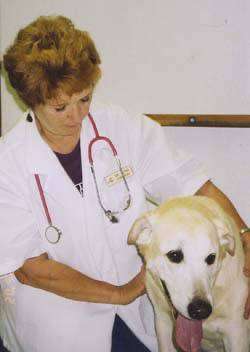
I have been a veterinarian since 1980, so animals have been part of my professional life for decades. One project I have supported is the city’s microchipping effort. Through the “Chip, Chip, Hooray!” initiative, I donated more than $5,000 toward microchips. The goal is very practical: when pets become lost, microchipping can help reunite them with their families. It is a relatively simple program, but it can make a meaningful difference for residents and their animals.
Your public service extends beyond the City Council. Why does regional representation matter to Citrus Heights?
Cities do not operate in isolation. Transportation, air quality, wastewater, homelessness and other issues cross city boundaries. I have represented Citrus Heights on regional bodies, and I currently serve on the Sacramento Area Sewer District and Sacramento-Yolo Mosquito and Vector Control District boards. When Citrus Heights participates in regional discussions, we need to make sure our city’s interests and the needs of our residents are represented.
What role should residents play in City Hall decisions?
Residents should never feel that government is inaccessible to them. One of the advantages of local government is that people can directly contact their representatives. I encourage residents to call, write, attend meetings and tell us what they think, including when they disagree with us. An elected official cannot represent people effectively without listening to them.
If you are reelected, what would you want residents to see accomplished during the next four years?
I would like residents to see measurable progress on our roads, meaningful movement toward redevelopment of Sunrise Mall and greater investment in aging commercial properties throughout Citrus Heights. I also want the city to maintain financial discipline while continuing to provide the services residents expect. Ultimately, local government should produce results people can actually see in their neighborhoods and in their everyday lives.
After so many years in public service, what still motivates you to continue?
Citrus Heights is my home. I have lived here since 1991, built my business here and spent decades working with residents and neighborhood organizations. Public service gives me an opportunity to take the concerns people bring to me and work toward practical solutions. I do not believe an elected official should simply be another echo. My responsibility is to listen, study the issue and make the decision that I believe best serves the people of Citrus Heights.
Dr. Jayna Karpinski-Costa, how can Citrus Heights residents help you during this election?
The most important thing residents can do is become involved. Talk with your neighbors, learn about the candidates and the issues facing Citrus Heights, and make sure you vote. For people who want to support my campaign directly, there are many ways to participate. They can volunteer, help us reach residents in District 4, display a campaign sign on their property, share information with friends and neighbors, or contribute to the campaign. I am personally walking neighborhoods because I believe there is no substitute for meeting people where they live, listening to their concerns and answering their questions. Most importantly, I ask residents to look at my record, ask me the difficult questions and decide for themselves whether they want me to continue representing District 4. The election is November 3, 2026, and District 4 voters will choose their representative for the next four years.
And last question, why do you believe voting in local elections is so important?
Local government is the level of government people encounter every day, sometimes without realizing it. The condition of your streets, public safety, development, local businesses, neighborhoods and many of the services that affect your quality of life are influenced by decisions made at City Hall. In Citrus Heights, we have five City Council districts, and residents elect the councilmember who represents the district where they live. That means your local vote determines who will be sitting at the table when decisions affecting your neighborhood and your city are made. People naturally pay attention to presidential and national elections, but they should not overlook local elections. City government is close enough that residents can attend a council meeting, contact their councilmember directly and make their voices heard. I believe voting locally is one of the most direct ways residents can participate in shaping the future of the community they call home.
•••
Editor’s note: Dr. Jayna Karpinski-Costa is the incumbent Citrus Heights City Council member for District 4 and is a qualified candidate in the November 3, 2026 election.
CONTACT DR. JAYNA KARPINSKI-COSTA
Dr. Jayna Karpinski-Costa
Candidate for Citrus Heights City Council, District 4
Phone: (916) 599-3647
Email: vetlaw@drjayna.com
Website: www.drjayna.com