An ordinary mosquito bite can feel like a minor annoyance that you forget within minutes. But this fall in California, it has become a real health threat. According to the California Department of Public Health, 147 cases of West Nile virus disease had been confirmed in 21 counties by September 18. Ten people died. By comparison, only 36 cases in 11 counties had been reported by the same date last year.
An increase of more than four times shows that this is not a small seasonal change. Virus activity has reached its highest level in five years. The severity of the reported cases is especially concerning. Among the 147 patients, 120, or 82 percent, developed neuroinvasive disease. This form attacks the central nervous system and can cause inflammation of the brain, inflammation of the membranes around the brain, muscle weakness, paralysis, and lasting health problems.
These numbers do not mean that most infected people develop severe illness. Many people never notice the infection, while others experience fever, headache, body aches, nausea, or a rash. Official statistics are more likely to include people who sought medical care and were tested. This is why the percentage of severe cases among confirmed patients may look very high. But that does not make the situation less serious. Instead, the numbers show the price some people can pay when the infection moves beyond a mild illness.
West Nile virus has already affected several neighboring counties in Northern California. Sacramento County has confirmed 11 human cases, Yolo County has reported 4, and Sutter County has reported 3. Of the ten deaths statewide, two occurred in Sacramento County and two more in Yolo County. This matters greatly to local residents because the virus is not being found somewhere far away. It is circulating in the same communities where people take evening walks, work in their yards, and spend time near water.
Some early reports included a figure of 9 cases in Placer County. However, the official report shows that this number refers to birds that tested positive, not infected people. The table dated September 18 lists no confirmed human cases in Placer County. Similar confusion appeared around Los Angeles County. The official state report lists 44 human cases, not 100. When discussing an outbreak, it is important to separate human cases from positive tests in birds and mosquito samples because these numbers describe different parts of the public health picture.
By September 18, California had recorded 3,544 positive mosquito samples in 29 counties. Another 623 dead birds tested positive in 24 counties. This does not mean that every mosquito carries the virus or that every bite will cause illness. These findings work as an early warning system. The more positive samples that appear in an area, the more alert local health agencies and residents should be.
The main problem is that there is currently no vaccine against West Nile virus for people. There is also no specific medicine that can destroy the virus after infection. In mild cases, doctors help patients manage symptoms. Severe illness may require hospitalization, intravenous fluids, pain relief, breathing support, and continuous monitoring. That is why protection begins not in the hospital, but around your own home.
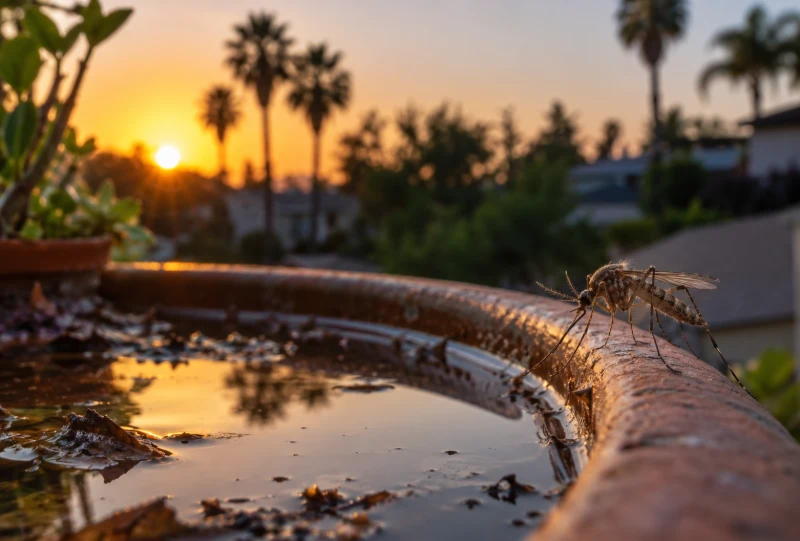
The easiest step takes only a few minutes. Check your yard, balcony, or patio and empty water from flowerpot saucers, buckets, children’s toys, watering cans, old tires, and other containers. Even a small amount of water may be enough for mosquitoes to breed. Water in birdbaths and pet bowls should be changed regularly, while pools and other water features should be properly maintained.
When going outside, use a registered insect repellent and follow the instructions on the label. Protection is especially important around dawn and after sunset, when many mosquitoes that spread West Nile virus are most active. Long, loose sleeves and pants reduce the amount of exposed skin. Screens in good condition help keep insects out of the home. These actions are simple, but they remain the main defense while no human vaccine is available.
Severe illness can develop at any age, but the risk rises as people get older. People with certain chronic health conditions or weakened immune systems are also more vulnerable. For them, mosquito protection should never feel like a minor concern. If your family includes older relatives, help them check their window screens, remove standing water around the home, and choose a repellent they can use comfortably.
Most mosquito bites, of course, do not lead to infection. Most infected people also do not suffer severe complications. Still, some symptoms should never be blamed on simple fatigue or a common cold. High fever, a very severe headache, neck stiffness, confusion, tremors, unusual muscle weakness, loss of sensation, or seizures require immediate medical evaluation. It is also wise to contact a healthcare professional about milder symptoms after many mosquito bites, especially if the person is in a higher risk group.
Mosquito season in California usually continues into the fall, and its exact length depends on temperature and local conditions. Warm evenings allow mosquitoes to stay active longer. The end of summer does not mean that protection is no longer necessary. The virus cannot be seen or felt at the moment of a bite, and an infected mosquito looks no different from any other mosquito.
The situation does not call for panic, but it does call for a change in habits. Keep insect repellent near your keys or gardening gloves, and turn a yard check into a short weekly routine. What looks like a tiny puddle in a flowerpot saucer can become a mosquito breeding site. What feels like an ordinary evening bite can, in rare cases, lead to weeks of treatment and a long recovery.
California has experienced seasons with far more cases, but this year’s sharp increase is a reminder of how quickly conditions can change. By September 18, the number of cases was more than four times higher than at the same point last year, and most reported patients had developed disease affecting the nervous system. At a moment like this, the most useful response is not fear. It is taking simple steps that can truly reduce the risk.
Check your yard, warn older relatives, and share this information with your neighbors. Sometimes protecting an entire community begins with one empty flowerpot saucer. Have you checked your home for standing water yet?
❤️ Please share this article with your family and friends. One message from you may help someone protect an older parent, a child, or another person they love before the next mosquito bite.