For a long time, the Moon felt like a chapter already written. A proud memory from black and white television, a moment sealed in history books. But history has a way of reopening itself when the future demands it. This week, the Moon returned to the center of America’s conversation.
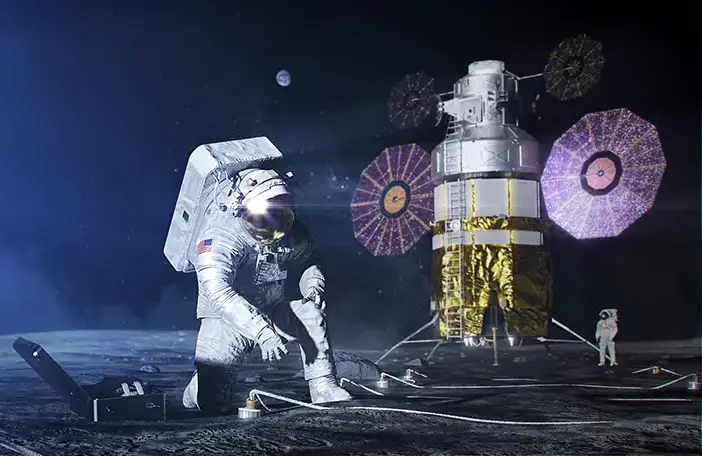
Donald Trump signed an executive order that sets clear priorities for the United States space program and confirms a bold goal. American astronauts are expected to return to the Moon in 2028. The decision, reported by Reuters, signals something bigger than a single mission. It marks a shift in how the country sees space, power, and its place in the world.
This is not nostalgia. It is strategy.
From Symbol to Strategy
In the past, going to the Moon was about proving something. It was about showing the world what American science and determination could achieve. Today, the message is different. The Moon is no longer just a destination. It is a platform.
Under the Artemis program, the plan is not only to land astronauts on the lunar surface but to begin building the first elements of a permanent presence by 2030. That means infrastructure. Habitats. Power systems. Research facilities. The kind of setup that allows humans to stay, work, and return again and again.
The Moon is being treated less like a finish line and more like the next starting point.
What Living on the Moon Really Means
Living on the Moon is not romantic. It is difficult, expensive, and unforgiving. Temperatures swing to extremes. Nights last for weeks. Dust clings to everything. This is why one detail in the executive order stands out.
The plan includes the use of nuclear power.
For many readers, that phrase alone raises questions. But on the Moon, it solves a simple problem. Solar energy cannot provide steady power during long periods of darkness. Nuclear systems can. They offer a reliable source of electricity for life support, research, and communication.
Without dependable energy, a permanent base is impossible. With it, the Moon becomes a place where humans can actually function.
Why California Is at the Center of This Story
For Californians, this is not distant policy. It is local reality.
California has been shaping America’s space story for decades. From aerospace engineering in Southern California to advanced software and robotics in Silicon Valley, much of what makes modern spaceflight possible is built here.
When Washington sets new space priorities, California feels the impact quickly. Federal contracts grow. Research funding expands. Universities train the next generation of engineers and scientists. Entire industries move forward.
This Moon plan is not just about exploration. It is about jobs, innovation, and long term economic leadership.
A New Space Race Is Quietly Taking Shape
The executive order also points to a global reality that cannot be ignored. China plans to send astronauts to the Moon by 2030. That timeline matters.
Space has once again become a measure of national strength. Not because of flags or speeches, but because of technology, coordination, and long term vision.
Returning to the Moon before China is not about winning headlines. It is about setting standards, building alliances, and shaping how the next era of space exploration will work.
Just as in the past, leadership beyond Earth reflects leadership on it.
Space and Security Are Now Linked
The document does not stop with exploration. It also directs the Pentagon and the intelligence community to develop a new approach to space security.
Modern life depends on satellites. Navigation, banking, weather forecasts, communication, and emergency services all rely on systems orbiting Earth. If those systems are threatened, daily life is affected almost instantly.
Space is no longer separate from national security. It is part of it.
The Golden Dome and the Future of Defense
One of the most futuristic elements of the order is the call to demonstrate new missile defense technologies under a program known as the Golden Dome.
The idea is simple in concept and complex in execution. Build a layered defense system that can detect and stop threats before they reach their target. Some of those systems may operate in space.
What once sounded like science fiction is now being tested in labs and simulations. Many of those efforts are happening in California, where defense technology and innovation often intersect.
Vision Is Not Enough
An executive order does not build rockets or place modules on the Moon. It creates direction. What follows will matter just as much.
These plans will require consistent funding, political cooperation, and careful management. They will also depend heavily on private companies that have already changed how spaceflight works.
Private launch providers have lowered costs and increased reliability. Their role in Artemis could determine whether the 2028 goal is realistic or delayed.
Ambition alone is not enough. Execution will decide everything.
Why This Matters Beyond Space
It is easy to ask why any of this matters to everyday life. The answer lies in history.
Space programs have always produced benefits far beyond their original goals. Medical imaging, advanced materials, satellite navigation, and global communication all grew out of space research.
Investing in the Moon means investing in technologies that will eventually reach hospitals, schools, and homes. It means creating careers that do not yet exist and solving problems that extend far beyond space.
A Moment That Shapes the Future
Moments like this do not happen often. They are easy to miss while they are unfolding.
A return to the Moon has the power to inspire students, challenge engineers, and remind the country what long term thinking looks like. It asks a simple question with a complex answer. What kind of future does America want to build.
If these plans move forward, 2028 will not just mark another mission. It will mark a decision to think bigger again. To look up and plan far ahead. The Moon is no longer a memory. It is a direction.