While podcasting and streaming have grown exponentially over the last decade, radio still has a prominent spot in our daily lives, with an estimated 82% of people 12 and older in the U.S. still listening to the radio over a given week, according to a 2023 report from the Pew Research Center.
Sacramento and its neighbors are by no means an exception to this. People may be familiar with local commercial stations like 98 Rock, or public stations like CapRadio, but many are not aware of the various community radio stations available in the area.
Community radio separates itself from public and commercial stations by being far more focused on local concerns. Community stations are often run by non-profits who are in turn operated by the people who live in the communities they serve. The focus of these stations can range from social issues to a simple desire for more diverse music choices.
A lot of these stations also operate as low power FM. LPFM radio only has a maximum of 100 watts of broadcasting power. Stations with LPFM licenses don’t have amazing reach in terms of distance, but are able to license music for lower costs than public and commercial stations.
A prime example of this comes in the form 93.3 K-ZAP, a non-profit LPFM rock station that borrows its name and logo from the original K-ZAP. First airing in 2015, the station was founded by members of the original K-ZAP, including General Manager Dennis Newhall.
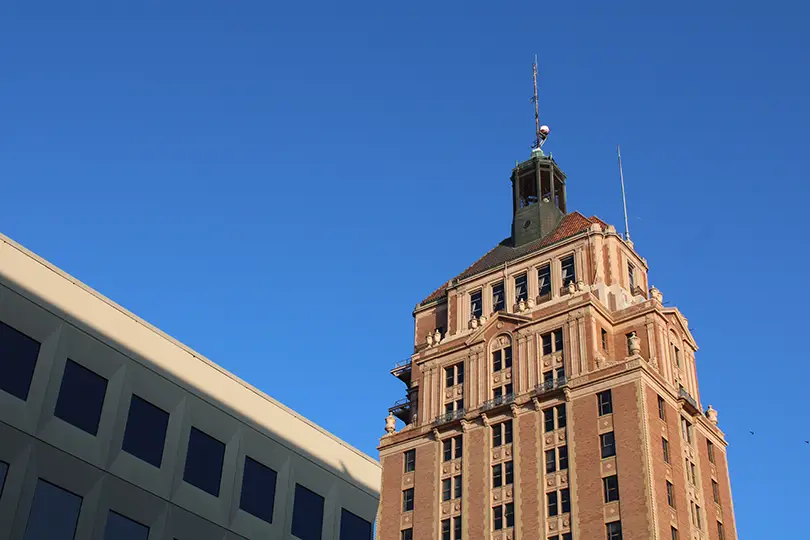
“We went on the air in the spirit of the original K-ZAP, which was to play the existing music, but continue to listen to new music,” Newhall said. “We’ve got a library that’s several magnitudes bigger than any of the classic rock stations.”
Joining K-ZAP in this philosophy of sharing new music is 95.7 KUTZ, a remotely operated LPFM station run by non-profit Midtown Radio. Like K-ZAP, KUTZ has a focus on providing music that’s not normally played on commercial stations, and in the last year has focused on presenting more local artists.
“I discovered that Sacramento had just an amazing local music scene for an area that I thought was going to be very dull,” said John Ellis, general manager at KUTZ. “We are about supporting local artists, local music, local venues, and the local arts and there’s not a station right now that is really focused on local artists.”
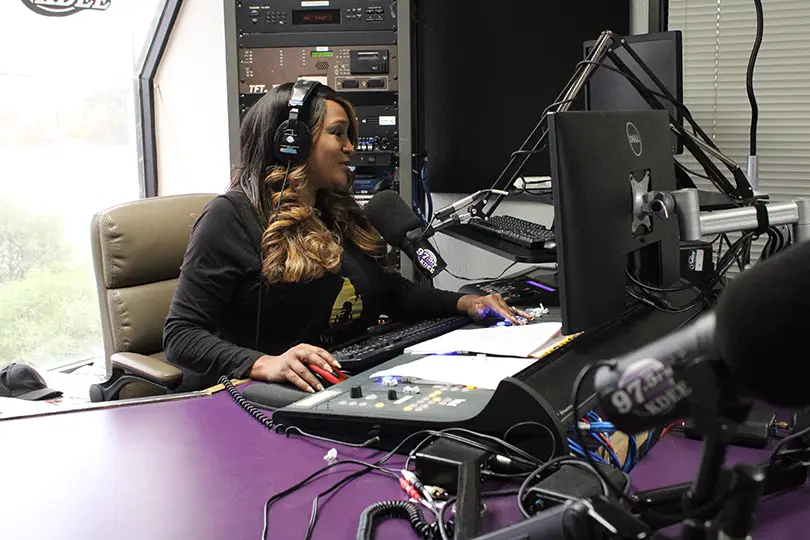
As important as music is, these stations also provide an opportunity for communities to get their voice out there, with one of the most prominent of these in Sacramento being 97.5 KDEE, another low power station better known to some as the “grown folks station.”
“We are unapologetically focused on concerns and issues that impact the African American diaspora community,” said Leon Guidry, a host and community director with KDEE. “Nobody else is catering to the African American demographic in the way that we do and to the degree we do it.”
Founded in 2004 by the California Black Chamber of Commerce Foundation, KDEE is one of only three African American-owned radio stations in California. In addition to its music programming, the station also features talk radio covering a variety of topics from an African American perspective.
“Every talk show is from a Black perspective, and the mainstream facts will intertwine with the black perspective,” Guidry said. “We don’t discourage anyone else from listening because there are teachable moments all through our programming.”
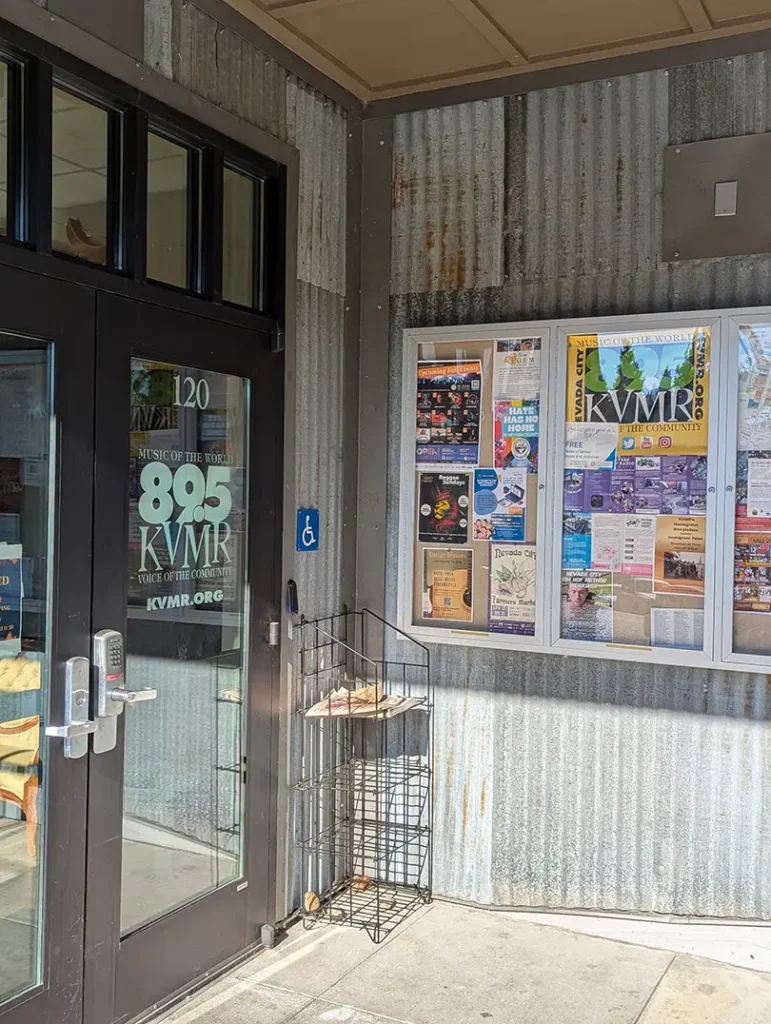
Outside of providing diversity to music and perspective, community stations can also act as an important utility, such as the case of KVMR, a Nevada City station that reaches Woodland on 93.9. Volunteer host Joyce Miller says in recent years the station has taken on an important new role outside of its music programming.
“In the last, I would say, 10 years or so with climate change and the threat of wildfires to our area, we’ve become so much more important as an emergency broadcast station,” Miller said. “We’re the official emergency broadcast station for Nevada County, so we’ve had to become much more news oriented and be able to respond to events at a moment’s notice.”
The station’s mission statement has always been to empower its community, with its role as an emergency broadcaster being another facet of that goal. Miller said the station still wants to keep up the spirit of community and independence that built the station, even as they take on new roles.
“We do try to keep KVMR weird and make sure that there’s a lot of creativity and quirkiness and individuality while also keeping up our quality, our reliability and being dedicated to our local area,” Miller said. “We are a community radio station, so we belong to the community.”
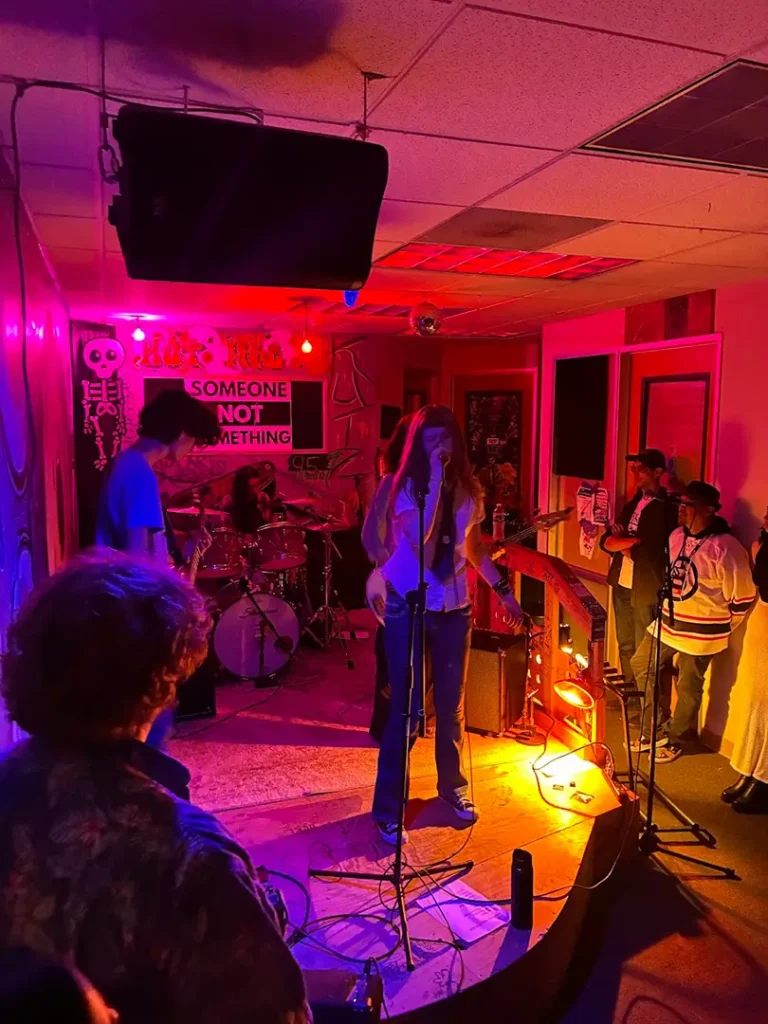
In turn, community support through donations is the main way these stations manage to keep afloat. Guidry mentioned that while KDEE received a lot of support on special occasions, the station still needed to be better about getting more consistent funding throughout the year.
“There is a spike in the revenue generated, but not enough to sustain us for the whole year,” Guidry said. “If we need the money, and we do, we have to step it up because the money definitely is drying up.”
Part of this drought has come in the form of federal cuts to funds that would have previously gone to these stations. Over the summer, Congress cut $1 billion in public broadcasting funds, with the Corporation for Public Broadcasting and announced it would be winding down operations as a result of these cuts.
Smaller scale community stations aren’t exempt from feeling the effects of these kinds of cuts either. Miller noted that KVMR has had to step up their own donations in order to fill the gap left by these cuts.
“We had about approximately 14% of our yearly budget taken away from us in the decision that President Trump signed earlier this year,” MIller said. “Luckily for us, our community really has stepped up for us and we had our most successful membership drive ever back in October.”
For whatever difficulty these stations may be having, the people running them have also made it clear that they are dedicated to doing what they can to keep them running. Ellis noted that having these stations was an important part in a community being able to use its rights.
“Low power radio is owned by the community and it’s governed by the community,” Ellis said. “There’s a big power with low power and communities need to understand that LPFM is true freedom of speech.”
This story is part of the Solving Sacramento journalism collaborative. This story was funded by the City of Sacramento’s Arts and Creative Economy Journalism Grant to Solving Sacramento. Following our journalism code of ethics, the city had no editorial influence over this story. Our partners include California Groundbreakers, Capital Public Radio, Hmong Daily News, Outword, Russian America Media, Sacramento Business Journal, Sacramento News & Review and Sacramento Observer. Sign up for our “Sac Art Pulse” newsletter here.
By Jacob Peterson