December in California has a strange talent: it turns familiar landscapes into something quieter, sharper, more alive. The haze of summer disappears, the air settles, and thousands of birds—locals, migrants, wanderers—start showing up in places where two months earlier the sky felt almost empty.
For birdwatchers, both experienced and new, this is the moment when the state reveals just how dramatic and varied its ecosystems really are. From salt-marsh coastlines to desert basins and snow-dusted mountains, December is the month when California becomes one long, open-air theater.
Below are five destinations where winter birdwatching isn’t just a hobby—it’s an experience, a reason to head outside, pack a thermos, and let the state surprise you.
1. Monterey Bay: Where Winter Turns the Ocean Into a Bird Highway
If California birding had a crown jewel in December, it would be Monterey Bay. Even people who’ve never picked up binoculars instantly feel the pull of its dramatic cliffs, its wide horizon, and its constant movement—currents, wind, and wings.
December is peak season for pelagic birds. Species you might only glimpse in books suddenly appear in astonishing numbers:
- shearwaters gliding like they’re carved from air
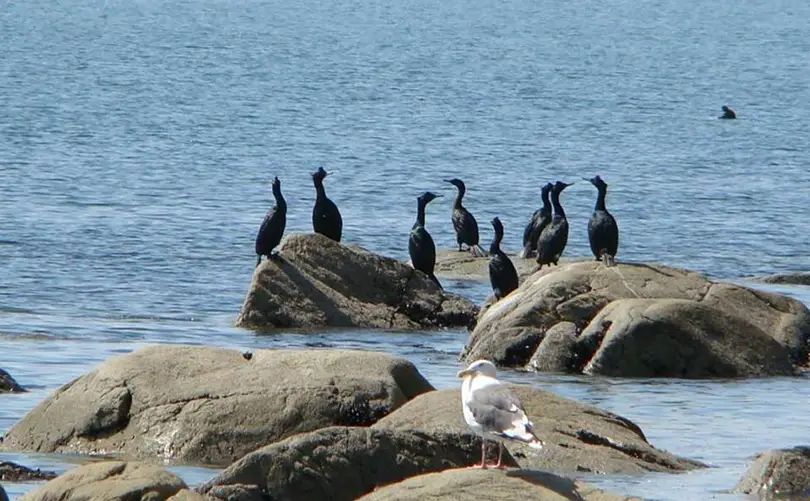
- Brandt’s cormorants clustered along the rocks
- gull species swirling together in restless masses
- loons moving with slow, deliberate grace
Stand on the coast and you may spot gray whales beginning their migration south—an unexpected bonus to a bird-focused trip. On calm winter days, the intersection of sea life and bird life is so rich that even casual observers end up staying far longer than planned.
Best time to go: early morning or late afternoon
What to bring: layers, wind protection, binoculars with good stabilization for viewing birds on the water
2. Central Valley Refuge Loop: California’s Winter Migration Heartbeat
While many travelers speed through the Central Valley without a second glance, birdwatchers know that December turns this region into something phenomenal. The valley becomes one of North America’s most important seasonal rest stops.
The Pacific Flyway funnels millions of birds right through the area, and wildlife refuges fill with movement and sound:
- tens of thousands of snow geese in synchronized flight
- the resonant calls of sandhill cranes rising over wetlands
- streaks of color from pintail ducks and northern shovelers
- Northern harriers gliding low over golden grasslands
If the coastal regions are about drama, the Central Valley is about scale—waves of birds so immense and coordinated that their takeoff can sound like a distant storm breaking open.
Places like the Merced National Wildlife Refuge, Colusa Refuge, and the San Luis complex offer viewing platforms, loops, and auto routes ideal for birding during colder months.
Best time to go: just before sunrise, when cranes return from feeding fields
What makes it special: the sheer number of birds; the acoustics; the feeling of standing inside a migration corridor
3. Big Bear Lake: High-Altitude Winter Birding With Character
When Southern Californians picture Big Bear in December, they usually imagine fresh powder, sled tracks, and mountain cabins. But for birders, this season offers something different—clear views of winter residents that thrive in high-altitude habitats.
Among the pines and icy lake edges, you can find:
- Steller’s jays flashing electric blue
- mountain chickadees darting through branches
- nuthatches climbing tree trunks in gravity-defying spirals
- bald eagles surveying the lake for fish beneath the frost
The cold can be sharp, but it sharpens the senses: every woodpecker tap, every rustle of wings, every unexpected call carries through the crystalline mountain air.
This is birdwatching with a winter edge—invigorating, refreshing, and visually striking.
Best time to go: midday, when sunlight warms the forest and activity increases
Pro tip: stop at the lake’s north shore for the best chance of seeing eagles
4. Torrance Beach and the Los Angeles Coast: Urban Birding With Ocean Energy
Los Angeles may be known for freeways and film sets, but its coastline becomes a surprisingly rich birding zone in December. And Torrance Beach, with its calmer pace compared to the more saturated sections of the city, offers one of the best vantage points.
Here, the meeting of sand and surf creates a corridor for coastal birds such as:
- sanderlings racing the waves
- western and Heermann’s gulls scouting for food
- pelicans cruising low over the water
- shorebirds probing the sand for winter abundance
You don’t need to go far to see movement—in fact, you might spot multiple species just by settling into a quiet spot and letting the tide cycle carry the birds toward you.
This is the perfect destination for new birders: convenient access, consistent activity, and enough variety to spark curiosity.
Best time to go: mornings after high tide
Why it works: simplicity—just arrive, look, and let the coast reveal its rhythms
5. Anza-Borrego Desert State Park: Where Silence Makes Every Bird Stand Out
The desert in December is a lesson in contrast. Days are cool and crystal clear, nights drop toward freezing, and plant life pulls inward. But for birdwatchers, this slower season makes every sighting feel intentional.
Against quiet hills and pale winter light, birds become unexpectedly vivid:
- phainopeplas with glossy black feathers and ruby eyes
- cactus wrens perched dramatically on cholla
- verdins adding quick flashes of yellow
- hawks tracing slow circles above the desert floor
The desert rewards patience. It teaches you to scan slowly, listen carefully, and appreciate each species as part of a landscape that feels almost otherworldly in winter.
Best time to go: early morning or late afternoon, when the desert is cool and birds are active
Atmosphere: stillness, clarity, and views that reward slow observation
Why December Birdwatching in California Feels Different
If you ask birders why they love this season, many won’t talk about the species list first. They’ll talk about the feeling of it.
December strips California down to essentials—light, air, movement. It lowers the noise of peak tourism, making space for details that get lost in summer. It gives you crisp horizons, quiet trails, and the sense that you’re stepping into a natural cycle happening on its own time.
Whether you head to the coast, the mountains, the desert, or the center of the state, you’ll find birds that only appear in winter, or that behave differently this time of year. And even if you go alone, the experience often feels communal—shared with every other observer who stood in the same place, listening for wingbeats in the cold.
December birdwatching in California isn’t just about spotting rare species. It’s about remembering how alive the landscape becomes when the air cools and the sky fills with movement.