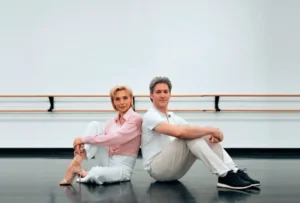
Arsen and Oksana, your names are recognized internationally in the world of classical ballet. What first inspired each of you to dedicate your lives to this art form?
Arsen: For me, ballet was never simply a profession-it became a way of understanding discipline, artistry, and life itself. From a very young age, I was fascinated by the power of movement and storytelling. Growing up in a culture where classical arts were deeply respected, I was inspired by the dedication, elegance, and commitment of great dancers.
One of my greatest inspirations was Mikhail Baryshnikov. His extraordinary artistry, technical brilliance, and ability to connect with audiences through every performance showed me what is possible when talent is combined with relentless dedication. His career demonstrated that ballet is not only about mastering technique but also about expressing humanity and emotion through movement.
Once I entered serious training, I realized that ballet has the ability to transform not only the body but also the mind and character of a person. It teaches discipline, perseverance, respect, and the pursuit of excellence-qualities that extend far beyond the stage and shape every aspect of life.
Oksana: For me, ballet started with a feeling. As a child, I was completely fascinated by the music, the movement, the costumes, and the magic happening on stage. I still remember the moment my mother asked me what I wanted to do, and without hesitation I said, “I want to dance on my toes.” Even then, there was something so beautiful and mysterious about ballet to me. I remember watching dancers and thinking it looked both impossible and beautiful at the same time – and I wanted to become part of that world.
How did your journeys in ballet begin, and what were some of the defining moments that shaped your careers?
Arsen: My journey in ballet began with rigorous classical training that demanded complete discipline, dedication, and commitment from an early age. One of the most defining moments of my career was being accepted into the Bolshoi Ballet Academy, one of the most prestigious ballet institutions in the world. The training, artistic expectations, and traditions I experienced there shaped my standards of excellence and influenced my approach to both performing and teaching.
As my career progressed, I had the opportunity to perform professionally and work alongside remarkable artists, experiences that deepened my appreciation for the art form. However, another defining chapter came when I transitioned from performing to teaching and mentoring young dancers. Seeing students grow, overcome challenges, and discover confidence in themselves became just as rewarding as being on stage.
As I grew older, I also gained a broader understanding of ballet’s value beyond performance. I realized that ballet develops skills that can be applied to many different careers and aspects of life. The discipline, work ethic, creativity, communication, leadership, and perseverance cultivated through ballet prepare individuals for success far beyond the studio. This realization has greatly shaped my mission as an educator-to help young people not only become strong dancers, but also confident, capable individuals who can thrive in whatever path they choose.
Oksana: My journey in ballet began very early, when I first entered a ballet studio as a child. At that age, I didn’t fully understand how demanding this profession would become – I simply loved dancing and felt happiest on stage. But over time, ballet became a true way of life.
There were many defining moments along the way. Competitions, important performances, long rehearsals, injuries, moments of doubt, and moments of success – all of these experiences shaped me both personally and professionally.
One of the biggest turning points was realizing that ballet is not only about technique, but also about character, discipline, and the ability to keep going even during difficult times.
Another important chapter in my career was working with remarkable teachers and artists who inspired me and helped me grow. Later, teaching became a meaningful part of my own journey as well. Passing on knowledge and watching young dancers discover their own passion for ballet has brought a completely new perspective and purpose to my career.
Arsen, how did your training at the prestigious Bolshoi Ballet Academy influence your artistic vision and teaching philosophy?
Arsen: The Bolshoi Ballet Academy taught me that true artistry is built on discipline, consistency, and deep understanding. It was never only about technique – it was about becoming an educated and thoughtful artist. We were trained to respect music, literature, acting, history, and culture as part of ballet education.
Today, I bring that same philosophy into my teaching. I want students to understand why they move, not simply memorize steps. Ballet should develop the whole person – physically, mentally, and emotionally. My goal is to help students build strong foundations while also encouraging individuality and artistic intelligence.
Oksana, what inspired you to bring the traditions of Russian classical ballet to California and establish the Universal Conservatory of Ballet?
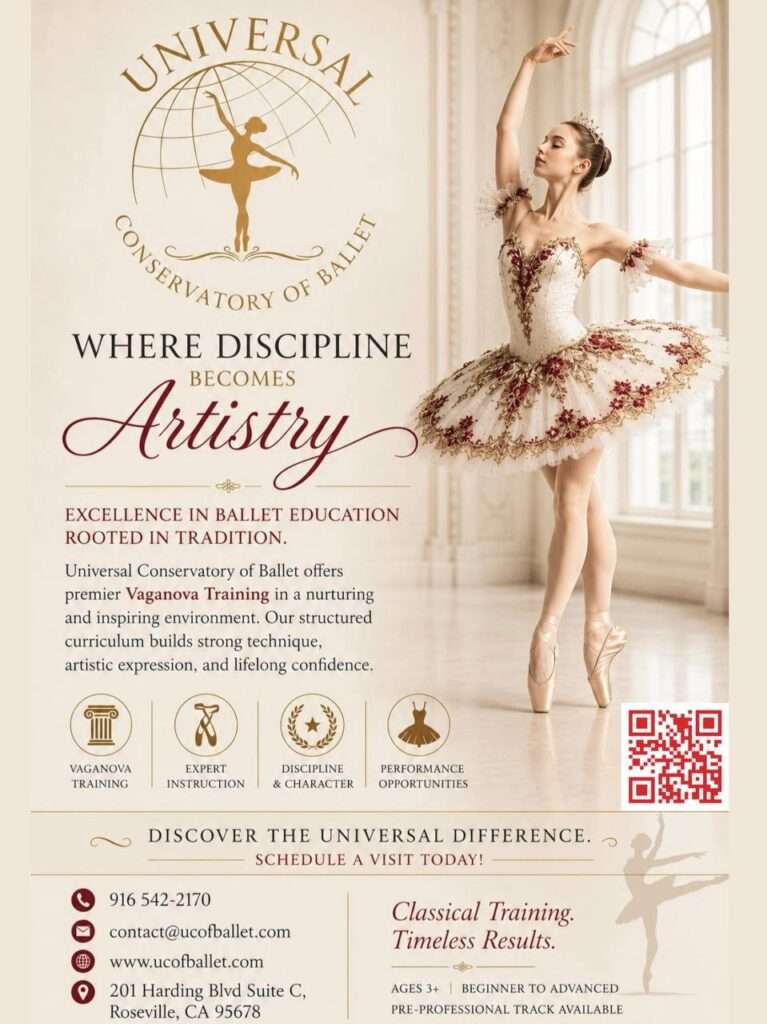
Oksana: California has incredible artistic energy and diversity, but we saw a growing need for highly structured classical ballet education rooted in authentic Vaganova methodology. We wanted to create a conservatory where students could receive professional-level training while still being nurtured as individuals.
The Universal Conservatory of Ballet was created with a vision of combining world-class classical training with a supportive and inspiring environment. We wanted students in Northern California to have access to the same quality of education found in elite international ballet institutions.
What makes classical ballet such a powerful tool for developing discipline, confidence, and character in young people?
Ballet teaches young people how to work through challenges without giving up. It develops patience, responsibility, respect, and resilience. In ballet, progress does not happen overnight – students learn that success comes through consistency and dedication.
At the same time, ballet builds confidence because students begin to understand what they are capable of achieving through hard work. It gives children structure, purpose, and a sense of accomplishment that often carries into every other area of life.
In today’s digital age, many children face distractions from screens and social media. How does ballet help them stay focused and develop life skills?
Ballet creates an environment where students must be fully present. In the studio, there is no shortcut to improvement. Students learn concentration, time management, discipline, and communication skills.
We often see children become more focused and emotionally balanced through dance training. Ballet teaches delayed gratification – the understanding that meaningful achievements require patience and long-term commitment, which is something increasingly rare in today’s fast-paced digital culture.
What qualities do you look for in young dancers who aspire to pursue ballet professionally?
Talent is important, but mindset matters even more. We look for discipline, humility, consistency, curiosity, and the willingness to learn. The students who grow the most are often the ones who are coachable and genuinely passionate about improving.
Professional ballet requires emotional strength and dedication. A dancer must be able to accept corrections positively and continue growing through challenges.
Can you share a success story of a student whose journey has particularly inspired you?
One of the most inspiring parts of teaching is watching students discover confidence in themselves over time.
We have worked with students who began as shy children lacking confidence and later developed into strong performers accepted into prestigious programs and international opportunities.
What inspires us most is not only professional success, but seeing students become disciplined, respectful, hardworking young people who carry those values into life beyond ballet.
How do you balance preserving the traditions of classical ballet while embracing innovation and modern artistic expression?
We believe strong classical foundations create the freedom for artistic innovation. Tradition provides structure and technique, while modern creativity allows dancers to develop individuality and emotional expression.
At the Universal Conservatory of Ballet, we respect the integrity of classical training while also encouraging students to explore artistry, acting, musicality, and contemporary influences that prepare them for the evolving world of dance.
What role do parents play in supporting a child’s growth and success in the performing arts?
Parents play an enormous role. Their support, encouragement, and understanding create the emotional foundation children need to grow confidently. Successful dance education is truly a partnership between teachers, students, and parents.
At the same time, balance is important. Children thrive when parents encourage consistency and dedication while also allowing them space to develop independence and self-motivation.
The Universal Conservatory of Ballet has earned international recognition. What do you believe has been the key to its success?
Our success comes from authenticity, quality, and genuine care for students. We focus on individualized attention and maintaining high artistic standards while creating a supportive environment.
We are not interested in building the largest school – we are focused on building meaningful training and long-term development. Families recognize when education is rooted in passion, professionalism, and integrity.
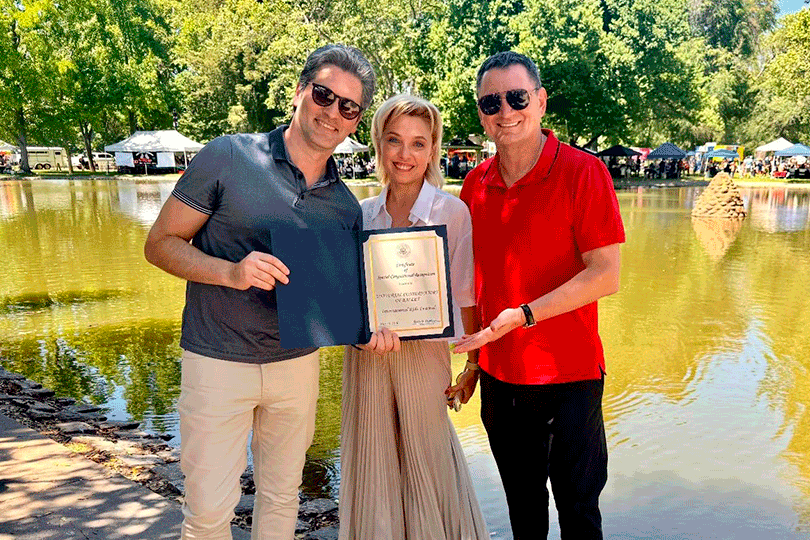
You recently joined the International Kids Festival. What motivated you to become involved with this community event?
We believe the arts should be accessible and visible within the community. Events like the International Kids Festival create opportunities for children and families to experience culture, creativity, and inspiration together.
We were excited to participate because it aligns with our mission of using the arts to unite people and encourage young talent.
How important are cultural and artistic festivals in helping children discover new passions and talents?
They are incredibly important. Festivals expose children to new experiences, cultures, and forms of expression they may never encounter otherwise. Sometimes a single performance or interaction can inspire a child’s entire future path.
Artistic events also strengthen communities by bringing families together through creativity and shared experiences.
What impact do you hope your participation in the International Kids Festival will have on Sacramento’s youth and families?
We hope it inspires children to believe in their potential and encourages families to value arts education as an essential part of personal growth. We want young people to understand that creativity and discipline can coexist, and that the arts can open doors to confidence, opportunity, and self-expression.
What are some of the biggest challenges facing arts education today, and how can communities help support programs like ballet?
One of the biggest challenges is that arts education is often undervalued compared to other activities, despite its enormous impact on emotional, intellectual, and social development.
Communities can support the arts by attending performances, investing in local programs, encouraging cultural education, and recognizing that the arts are not extracurricular luxuries – they are essential for developing well-rounded human beings.
How has ballet influenced your own personal values, leadership style, and outlook on life?
Ballet taught us discipline, resilience, and respect for excellence. It also taught us humility because growth never truly ends in this art form.
As leaders and educators, we try to lead through consistency, professionalism, and example. Ballet shaped our belief that meaningful success comes from long-term dedication rather than instant results.
What advice would you give to young people who dream of performing on the world’s greatest stages?
Dream big, but understand that dreams require discipline. Stay patient, remain teachable, and never stop learning. Focus on becoming the best version of yourself rather than comparing yourself to others.
The journey is never easy, but passion combined with hard work can create extraordinary opportunities.
Looking ahead, what is your vision for the future of ballet education and the next generation of dancers?
We believe the future of ballet education should combine strong classical foundations with holistic development. Dancers today need not only technical excellence, but also emotional intelligence, adaptability, and artistic individuality.
Our vision is to create an environment where students receive world-class training while also developing confidence, creativity, leadership, and life skills that extend far beyond the stage.
What legacy would you like to leave through your work as educators, mentors, and leaders in the international ballet community?
We hope our legacy will be measured not only by successful dancers, but by the lives we positively influenced. We want students to remember that we believed in them, challenged them, and helped them grow into disciplined and confident individuals.
If we can inspire future generations to value excellence, culture, and the arts, then we have fulfilled our purpose.
Finally, what message would you like to share with the readers of New Times Magazine about the importance of arts education in today’s world?
In today’s fast-moving world, the arts remind us what it means to be human. Arts education teaches empathy, discipline, creativity, and emotional expression – qualities our society needs more than ever.
When children are exposed to music, dance, theater, and visual arts, they learn how to think deeply, communicate meaningfully, and connect with others beyond language or background.
Investing in the arts is truly investing in the future of our communities and the next generation.