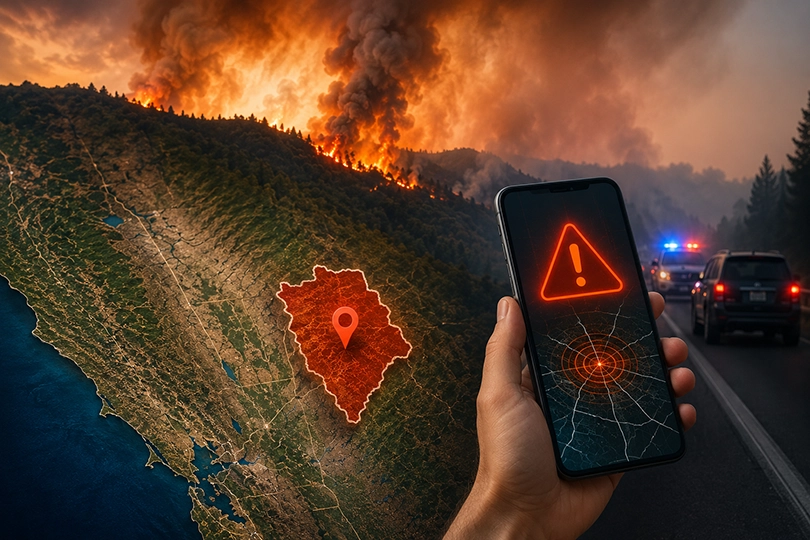
Gann Fire Burns More Than 10,000 Acres in Northern California as Evacuations Continue
A fast-moving wildfire in Northern California has burned more than 10,000 acres, destroyed structures and forced residents of several Calaveras County communities to evacuate. Despite a massive response involving thousands of firefighters, the Gann Fire remained only 19 percent contained Wednesday night.
According to CAL FIRE, the blaze had grown to approximately 10,373 acres by the evening of August 5. Seven structures had been destroyed, and one firefighter had suffered a confirmed injury. Evacuation orders and warnings remained active in multiple zones as crews prepared for another period of hot and dry weather.
The numbers tell only part of the story. Families have been forced to leave their homes, livestock owners have scrambled to move animals, schools have adjusted operations because of smoke, and firefighters have worked across steep terrain where dry vegetation can carry flames quickly. Conditions can change within minutes, making official alerts and early evacuation critical.
A Small Fire That Expanded With Alarming Speed
The Gann Fire began shortly before 5:30 p.m. on August 3 near Hogan Dam Road and Gann Road in the Valley Springs area. It initially covered only a few dozen acres, but flames moved rapidly through grass, brush and oak woodland. Within hours, the fire had reached hundreds of acres. By the following evening, it had grown to nearly 6,500 acres.
The blaze continued expanding on August 5, eventually surpassing 10,000 acres. CAL FIRE reported that active fire behavior remained a challenge because vegetation was critically dry. Temperatures above 100 degrees were expected to continue, increasing pressure on crews working to reinforce containment lines and prevent flames from reaching additional communities.
More than 2,700 personnel were assigned to the incident Wednesday night. The response included hundreds of engines, dozens of bulldozers, ground crews, water tenders, helicopters and firefighting aircraft. Night-flying helicopters were also used when conditions allowed.
Crews conducted firing operations in selected areas to remove unburned vegetation ahead of the main fire. These controlled operations can help strengthen containment lines, but they may also produce additional smoke that is visible from surrounding communities.
Evacuation Orders Remain in Effect
Residents should not rely on social media posts, screenshots or previously published lists of evacuation zones. Orders can be expanded, reduced or lifted with little notice as fire behavior changes.
An evacuation order means there is an immediate threat to life and residents must leave. An evacuation warning means people should prepare to leave, while anyone who needs additional time should consider departing immediately. This includes older adults, people with disabilities, families with young children and residents transporting pets or livestock.
Anyone living near Valley Springs, Copperopolis or other affected areas should monitor the official CAL FIRE incident page and Calaveras County emergency communications.
Residents should keep mobile phones charged and make sure emergency alerts are enabled. If authorities issue an evacuation order, leaving immediately can prevent traffic congestion and reduce the danger faced by both residents and emergency personnel.
Shelters Are Available for Residents and Animals
The California Governor’s Office of Emergency Services reported that an evacuation shelter was operating at Jenny Lind Veteran Memorial, located at 300 Daphne Street in Valley Springs. An animal evacuation shelter was listed at the Calaveras County Fairgrounds, 2465 Gun Club Road in Angels Camp.
Shelter locations and operating conditions may change. Residents should confirm availability with local authorities before traveling, especially if they need accommodations for pets, horses or other large animals.
Livestock owners attempting to enter an evacuation zone may need appropriate Ranch Pass credentials. Officials recommend arranging animal transportation early because moving trailers through smoke, traffic and road closures becomes increasingly difficult as conditions deteriorate.
Smoke Can Travel Far Beyond the Fire
Wildfire smoke can affect communities many miles from the flames. Air quality may change throughout the day as winds shift, even in neighborhoods that are not under evacuation orders.
Children, older adults, pregnant women and people with asthma, heart disease or other respiratory conditions are particularly vulnerable. Residents should limit prolonged outdoor activity when smoke is heavy, keep windows and doors closed when practical, and use an indoor air purifier if one is available.
Drivers should also use caution. Smoke can reduce visibility rapidly, especially along rural roads. Motorists should avoid stopping in travel lanes to photograph the fire because this can block evacuation routes and delay emergency vehicles.
Federal Assistance Has Been Approved
California secured a Fire Management Assistance Grant from the Federal Emergency Management Agency to support the response. The grant allows state, local and tribal agencies to apply for reimbursement of up to 75 percent of eligible fire suppression costs.
The funding can help cover qualifying expenses associated with equipment, emergency operations, field camps, evacuations and firefighting work. It is intended to strengthen the government response and does not automatically represent individual financial assistance for every affected resident.
State officials said the additional support would help agencies deploy resources, protect communities and accelerate efforts to contain the fire.
What Residents Should Prepare Now
People living anywhere near an active evacuation area should prepare before receiving an order. A basic evacuation bag should include identification, insurance documents, prescription medications, water, food, phone chargers, flashlights, protective clothing and essential hygiene supplies.
Families should decide where they will meet if they become separated. Vehicles should have sufficient fuel, and drivers should identify more than one evacuation route. Pet owners should keep carriers, leashes, food and veterinary records ready. Important documents can be photographed and stored securely online, but residents should also take physical copies when possible.
People who require mobility assistance should contact relatives, neighbors or local emergency services before conditions become critical. Waiting until flames are visible can leave too little time to evacuate safely.
The Gann Fire is another reminder that containment does not mean a fire is extinguished. Even when the percentage increases, uncontained sections can remain active and dangerous. Residents should continue following official instructions until authorities confirm that evacuation orders have been lifted and roads are safe.
Official conditions can change after publication. Check the CAL FIRE incident page for the latest acreage, containment, evacuation zones, road information and emergency contacts.