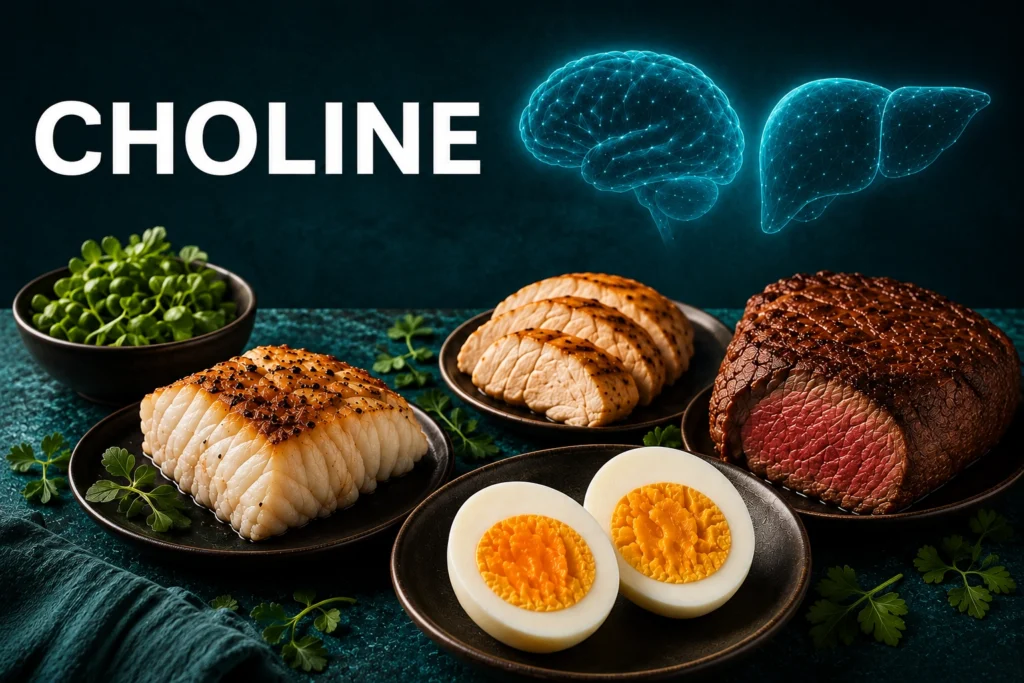
An ordinary egg may be doing far more for your body than you realize. Hidden in its yolk is choline, an essential nutrient that helps the brain send messages, supports muscle movement, protects the structure of cells, and allows the liver to handle fats. It performs several jobs that affect us every day, yet choline rarely receives the attention given to vitamin D, magnesium, or omega 3 fatty acids.
That lack of attention matters because the human body cannot make enough choline on its own. The liver produces a small amount, mostly in the form of phosphatidylcholine, but food must provide the rest. When the diet repeatedly falls short, the body has fewer resources for processes involving the nervous system, cell membranes, muscles, and fat metabolism.
One of choline’s best known roles begins with acetylcholine. This neurotransmitter allows nerve cells to communicate and contributes to memory, mood, muscle control, and other brain functions. The connection sounds dramatic, but it needs to be understood correctly. Choline is essential for normal physiology, yet taking extra choline is not a proven shortcut to sharper memory. Research has not shown clear cognitive benefits from choline supplements in healthy adults.
Choline is also needed to make phosphatidylcholine and sphingomyelin, two phospholipids that help form cell membranes. These membranes allow cells to maintain their structure, exchange signals, and function normally. This is one reason choline affects many parts of the body instead of serving only the brain.
Its role in the liver is especially important. Choline helps transport lipids out of liver cells. When intake becomes extremely low, fat can accumulate in the liver, while muscles and liver tissue may become damaged. This does not mean that every case of fatty liver disease is caused by low choline or that choline can be used as a cure. It means that adequate choline is one piece of normal liver function.
Most Americans consume less choline than the adequate intake levels, although obvious deficiency remains uncommon among healthy adults. The body’s limited production may offer partial protection. Genetics, age, sex, pregnancy, metabolism, and the rest of the diet can also influence individual needs.
For adult men, the adequate intake level is 550 mg per day. For adult women, it is 425 mg. The guideline is 450 mg during pregnancy and 550 mg while breastfeeding. These are population guidelines, not a prescription for every individual.
This brings us back to the breakfast table. One large hard-boiled egg contains about 147 mg of choline, and most of it is found in the yolk. Two eggs provide approximately 294 mg. That equals more than half of the daily guideline for a man and roughly two-thirds of the guideline for a woman. Egg whites contain protein, but removing the yolks also removes most of the choline.
Other animal foods can make a meaningful contribution. A 3 ounce serving of cooked lean beef contains about 117 mg. The same amount of roasted chicken breast provides approximately 72 mg, while cooked Atlantic cod contains around 71 mg. Beef liver is one of the richest sources, with about 356 mg in a 3 ounce serving. Because liver is unusually concentrated in several nutrients, it is not an everyday choice for everyone.
Plant foods also contain choline. Half a cup of roasted soybeans provides around 107 mg. One large baked red potato contains about 57 mg, half a cup of kidney beans contains approximately 45 mg, and one cup of cooked quinoa provides around 43 mg. Brussels sprouts, broccoli, cauliflower, peanuts, sunflower seeds, whole grains, and green peas add smaller amounts. Someone who avoids meat can still obtain choline, but variety becomes especially important.
A realistic day shows how these sources add up. Two eggs provide about 294 mg. A serving of chicken adds 72 mg, a cup of milk contributes 43 mg, and half a cup of broccoli adds around 31 mg. The total reaches approximately 440 mg before counting other foods. This is not a universal meal plan, but it shows how ordinary choices can contribute.
Pregnancy makes the conversation more important. Choline is involved in the early development of the brain and nervous system, yet many prenatal supplements contain little or none. Women who avoid eggs, meat, fish, or dairy products may find it particularly difficult to reach the intake guideline through food alone. The answer is not to choose a high dose without advice. A physician or registered dietitian can help evaluate the diet and determine whether a supplement is appropriate.
The same principle applies to a vegan diet. Soy foods, beans, quinoa, potatoes, cruciferous vegetables, peanuts, seeds, and whole grains can all contribute. Because most plant sources contain less per serving, it helps to include several throughout the day.
Supplement labels can make choline sound like a quick solution. Products may contain choline bitartrate, phosphatidylcholine, or lecithin, but research has not established that one form is universally superior. Supplements can be useful when diet is not enough, but claims about improving memory, preventing dementia, or curing fatty liver disease go beyond the evidence.
High doses also carry risks. The tolerable upper intake level for adults is 3,500 mg per day from food, beverages, and supplements combined. Excessive intake can cause a fishy body odor, nausea, increased sweating and salivation, low blood pressure, and liver damage. It is difficult to reach this level with a varied diet, but concentrated products make it easier to take far more than intended.
The most useful way to think about choline is neither as a miracle supplement nor as another nutrition trend. It is a basic nutrient with essential daily responsibilities. The body needs it to build cell membranes, make acetylcholine, move fats out of the liver, and support normal nerve and muscle function.
The surprising part is how familiar its food sources are. Eggs, fish, chicken, beef, dairy products, soy, beans, potatoes, quinoa, and cruciferous vegetables can all help. Before searching for a new bottle in the supplement aisle, it may be worth looking at what is already on your plate. How many reliable sources of choline appear in your usual week?