California Is Taking Phones Out of the School Day. Parents Are Asking What Comes Next
The school morning looks almost the same. Backpacks are zipped, lunches are packed, and parents send one last message before their children walk through the gate. But inside many California schools, one familiar part of the day is disappearing. The smartphone may still arrive with the student, but it may not be available again until dismissal.
For some families, that sounds like a welcome return to focus. For others, it raises an immediate and deeply personal question. What happens if my child needs me?
That tension sits at the center of California’s Phone Free Schools Act. The law, known as AB 3216, required every public school district, county office of education, and charter school to adopt a policy limiting or prohibiting student smartphone use by July 1, 2026. As students return for the new school year, families are beginning to see what those policies mean in daily life.
The first thing parents need to know is that California did not create one universal ban. The state set a requirement, then gave local education leaders room to decide how it should work. That means the experience of a student in San Francisco may look very different from the experience of a student in another Bay Area district, Los Angeles, Sacramento, or San Diego.
One Law, Many Different School Days
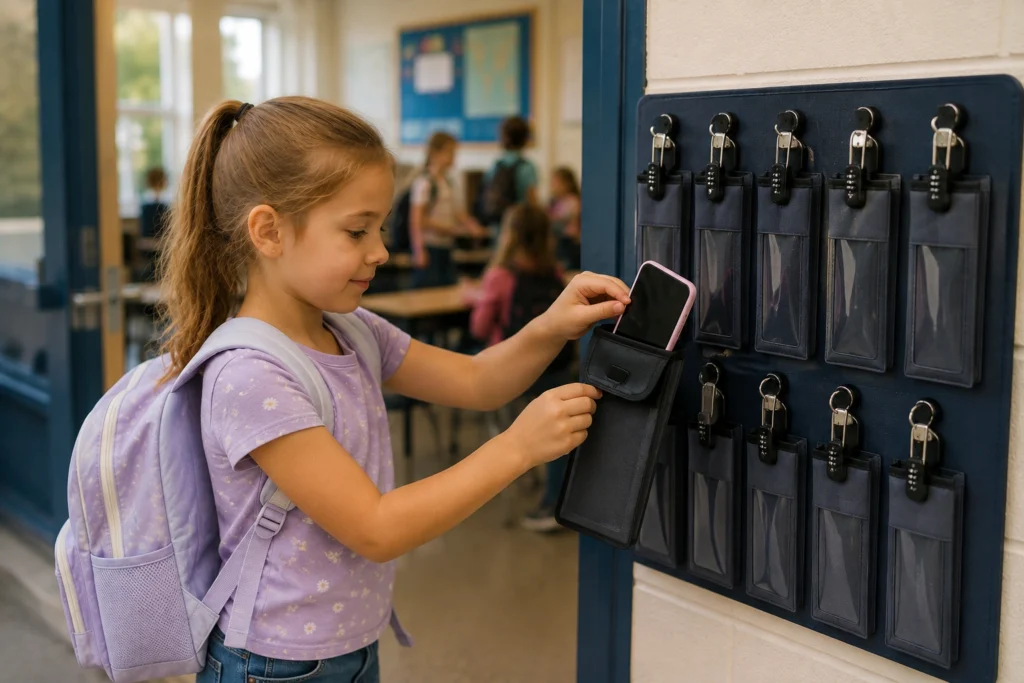
In some schools, a phone may remain turned off inside a backpack. In others, students must place their devices in lockers, classroom storage, or locking pouches that stay closed until the final bell. Some policies cover lessons only. Others apply throughout the day, including lunch and passing periods.
This local freedom helps schools respond to the age of their students and the needs of their community. It can also create confusion. Two teenagers who live a few miles apart may follow completely different rules. One may check a phone during lunch. The other may not touch it until the school day ends.
Why Schools Want the Phones Put Away
The argument for limits begins with attention. Teachers have watched a single vibration pull a student away from a lesson. Even when the sound is off, the possibility of a message can compete with the work in front of the child. A quick glance becomes a reply. A reply becomes a conversation. By the time the student looks up, the class has moved on.
Recent research adds weight to that concern. A 2026 study of young people ages 11 to 18 found that participants used smartphones during every hour of the school day and spent an average of more than two hours on them while at school. More frequent checking was associated with weaker cognitive control, a skill connected to attention, self regulation, and learning.
That does not mean every student who carries a phone will struggle, or that removing phones will automatically raise grades. Research on school restrictions remains mixed. One major study found that stricter school policies reduced phone use during the day but were not, by themselves, associated with better mental health or educational outcomes.
The evidence points toward a more careful conclusion. Smartphones can create a serious distraction, but a rule is only one part of the solution. Clear expectations, consistent enforcement, digital habits at home, student support, and honest communication with families all matter.
The Safety Question Schools Cannot Ignore
For parents, concentration is important. Safety is personal.
Many families bought their child a phone for one reason above all others. They wanted a direct line during an emergency. School shootings, wildfires, earthquakes, lockdowns, and medical situations have shaped the way California parents think about contact. Asking them to surrender that line, even for a few hours, can feel like asking them to give up control when it matters most.
Schools respond that personal calls during a crisis can create problems. Networks may become overloaded, rumors can travel faster than verified instructions, and students may miss directions from teachers or emergency personnel. Districts generally expect families to rely on official alerts and contact the school office when a message cannot wait.
That system works only when families trust it. A policy should explain how parents will receive urgent updates, which number they should call, how quickly a message can reach a student, and what happens if a phone is locked inside a pouch. If those answers are vague, anxiety will fill the gap.
Exceptions Are Not Optional Details
California law recognizes that some students need access to a device. Exceptions may apply during emergencies, for medical reasons, when a teacher or administrator authorizes use, or when access is included in an Individualized Education Program or a Section 504 plan.
This is especially important for students who use a phone to monitor a medical condition or connected health device. Families should document that need before a problem occurs. A conversation with the school nurse, administration, or student support team can help make sure the accommodation is understood by every teacher, not just one sympathetic adult.
Parents should also ask whether the policy distinguishes between personal entertainment and approved learning. A classroom may use digital tools without requiring students to depend on their own phones. If an assignment needs an application or internet access, the school should be able to explain what device is provided and how student information is protected.
What Parents Should Do Now
The most useful step is also the simplest. Read the policy for your child’s actual school. Do not rely on a social media post, a conversation at pickup, or the rules from another district.
Look for the hours when restrictions apply. Find out where the device must stay, what happens after a first violation, and whether a parent must collect a confiscated phone. Confirm that your contact information is correct in the district alert system. Save the main office number before the first day of school.
Then create a family communication plan. Decide which situations are urgent enough to go through the school office. Agree that routine questions can wait until dismissal. Choose a time when your child will check in after school. A clear plan reduces the temptation to break the rules because someone is afraid of missing a message.
It also helps to tell children why the rules exist. A policy presented only as punishment invites resistance. A policy explained as a shared effort to protect attention, reduce social pressure, and make room for real conversation gives students something more meaningful to understand, even if they still dislike it.
This Is Bigger Than a Phone
The debate is often framed as a choice between learning and safety. In reality, schools must protect both.
A smartphone can connect a child to family in seconds. It can also carry an endless stream of messages, videos, conflicts, and social pressure into a classroom that was never designed to compete with them. Pretending the device is harmless ignores what teachers and students experience every day. Pretending a ban will solve everything ignores the limits of the evidence and the legitimate fears of families.
AB 3216 forces California schools to make a choice they could once postpone. Every district now needs a clear answer about when phones belong in the school day and when they do not. The quality of that answer will depend less on how strict the policy sounds and more on whether it is fair, practical, transparent, and safe.
For parents, the real test begins now. If schools communicate well, respect medical needs, enforce rules consistently, and provide a reliable path for emergency contact, a quieter school day may feel less like a loss of connection and more like a chance for children to be fully present again.