For decades Americans have heard the same argument. The United States is too big for high speed rail. Too car focused. Too late to catch up with Europe or Asia. California is trying to prove that assumption wrong.
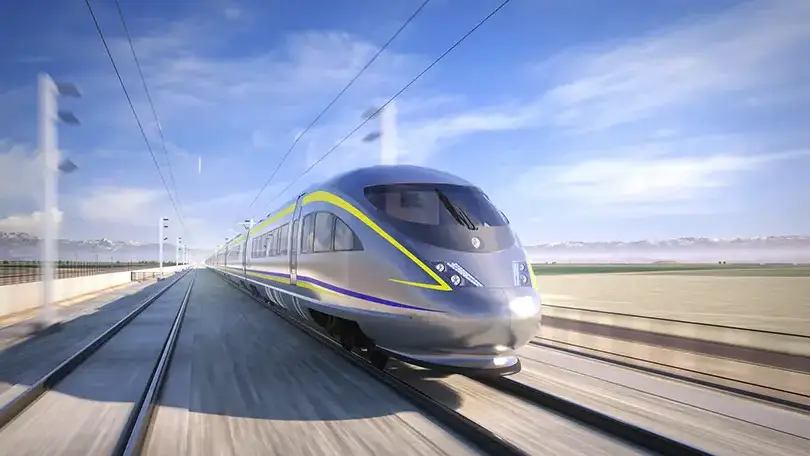
Right now hundreds of miles of track are being built across the state. Bridges rise from farmland. Tunnels are carved through mountains. Stations are planned in cities that have never seen a passenger train like this before. The California High Speed Rail project linking San Francisco and Los Angeles is no longer an idea. It is a physical reality.
This project is controversial. It is expensive. It is slow. It is political. Yet it may become the most important transportation experiment in modern American history.
A Vision Born From Distance
California is enormous. The distance between San Francisco and Los Angeles is about three hundred eighty miles. Driving can take six to eight hours. Flying is fast in the air but slow on the ground. Airports add stress delays and carbon emissions.
High speed rail promised something different. A train that could connect the two largest metro areas in under three hours. City center to city center. No security lines. No traffic jams. No weather delays.
Voters approved the project in two thousand eight. The vision was bold. A train moving faster than two hundred miles per hour. Powered by electricity. Built for the twenty first century.
From Blueprint To Bulldozers
The hardest part was never the idea. It was the execution.
Land acquisition took years. Environmental reviews stretched endlessly. Lawsuits challenged routes and funding. Political leadership changed. Costs rose. Skeptics grew louder.
But while the debate dominated headlines construction crews kept working. Today active construction spans the Central Valley. Viaducts cross rivers and highways. Rail segments are being laid. Stations are taking shape.
This is not a symbolic project anymore. It is infrastructure you can see and touch.
Why The Central Valley Matters
Critics often ask why the project started in the Central Valley instead of coastal cities. The answer is practical.
The Central Valley offers long flat stretches ideal for high speed testing. Land costs are lower. Construction is faster. The region also benefits enormously from investment.
Towns like Fresno Bakersfield and Merced are being transformed into future rail hubs. Jobs have arrived. Training programs have expanded. Communities that were long overlooked are now central to the state’s biggest infrastructure effort.
High speed rail is not just about connecting San Francisco and Los Angeles. It is about reshaping the middle of California.
A Climate Argument With Real Weight
Transportation is one of the largest sources of carbon emissions in the United States. Cars and planes dominate long distance travel. High speed rail offers a cleaner alternative.
The California system is designed to run on renewable electricity. Every passenger who chooses rail over air reduces emissions. Over time the impact could be massive.
This is one of the few climate strategies that also improves daily life. Faster travel. Less stress. Cleaner air. Fewer highway expansions.
In a country struggling to meet climate goals this matters.
The Cost Question Everyone Asks
Yes the project is expensive. Current estimates run into the tens of billions. Critics call it a money pit. Supporters argue it is an investment similar to the interstate highway system or the original railroads.
Those projects were also controversial. They also exceeded early budgets. Yet they reshaped the nation.
Infrastructure is not cheap. But neither is inaction. Congested airports crumbling highways and climate damage all carry hidden costs that Americans pay every day.
Technology That Changes Expectations
High speed rail changes how people think about distance. A trip that once required a flight becomes a simple train ride. Work travel changes. Tourism changes. Housing patterns change.
When cities are two hours apart they start to feel like neighbors. Business expands. Talent moves more freely. Regional economies blend.
This is why countries that invest in high speed rail rarely regret it.
A Test Case For The Entire Nation
What happens in California will not stay in California.
If this project succeeds it becomes a blueprint. Texas. Florida. The Northeast Corridor. Other regions are watching closely.
If it fails skeptics will say America tried and could not do it. If it works it will be impossible to argue that high speed rail is unrealistic in the United States.
California is carrying that weight.
Delays Do Not Mean Defeat
Large projects move slowly. Especially in democracies. Especially in places with strict environmental protections.
Delays are frustrating. But they also reflect public oversight. Transparency. Accountability.
The real question is not how fast the project moves. It is whether it ultimately delivers.
Right now trains are being built not debated. That is a meaningful shift.
The Human Side Of The Rails
Behind every mile of track are thousands of workers. Engineers electricians welders planners. Many come from communities along the route.
Training programs are creating long term careers. Union jobs are growing. Skills learned here will shape future infrastructure projects across the country.
This is not only a transportation story. It is a labor story.
What Comes Next
The next phase focuses on connecting the Central Valley to the Bay Area and Southern California. These segments are technically challenging and politically sensitive.
Tunnels through mountains. Urban corridors. Complex negotiations.
Success will depend on stable funding and sustained political will. The hardest part is still ahead.
But momentum exists. And momentum matters.
A Future That Feels Possible
America often talks about the future but struggles to build it. High speed rail challenges that pattern.
It asks a simple question. What if we built something ambitious again.
California is trying to answer that question with concrete steel and rail.
The result will shape how Americans move for generations.