Cheese Sold Nationwide Recalled After E. coli Outbreak
A package of cheese can sit in the refrigerator for weeks. That is why a recall announced in late September deserves a look even if you have not bought cheese recently. The U.S. Food and Drug Administration says Sierra Nevada Graziers raw milk cheeses were sold at stores nationwide and online. They are now being recalled amid a multistate E. coli outbreak.
As of September 25, 2026, health officials had identified 13 illnesses in nine states. Eight people had been hospitalized, and three had developed hemolytic uremic syndrome, a serious condition that can damage the kidneys. No deaths had been reported. More than half of those who became ill were children age five or younger, according to the Centers for Disease Control and Prevention. The known cases include California residents, but the cheese was distributed nationwide.
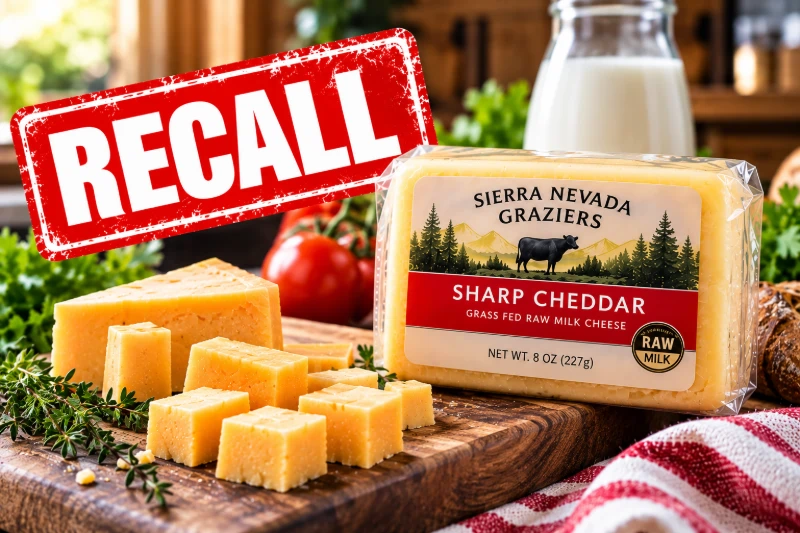
The affected products are Sierra Nevada Graziers grass-fed raw milk medium cheddar, sharp cheddar, jalapeño jack and Monterey jack. Retail packages came in 8-ounce and 16-ounce sizes. The same cheeses were also available to food-service customers and wholesalers in 5-pound loaves. FDA advises consumers, restaurants and stores not to eat, serve or sell any of the recalled cheeses.
The detail that matters at home is the shelf life. A package bought before the announcement may still be in a refrigerator or freezer. Check the brand and variety, including any cheese you moved into another container. If you can no longer identify an unpackaged piece and it could be part of this recall, FDA advises throwing it away. Recalled cheese can also be returned to the place of purchase for a refund.
Investigators have a strong lead, though their work is continuing. All nine people interviewed about what they ate before becoming ill reported eating Sierra Nevada Graziers raw milk cheese. Genetic testing found that bacteria from patients were closely related, supporting the conclusion that the illnesses have a common source. FDA says it is still working to determine the source of contamination and whether other products may be affected. The evidence links this outbreak to the cheese, while the precise path of contamination remains under investigation.
On September 24, FDA contacted Sierra Nevada Cheese Company and recommended a recall. The company agreed and initiated a recall of all Graziers raw milk cheeses that day. The agency’s September 25 advisory listed cases in California, Colorado, Georgia, Kentucky, Michigan, Nevada, Oregon, Tennessee and Utah. The list shows where people are known to have become ill, not every place where the products were sold.
E. coli infection can begin a few days after exposure or as late as nine days afterward. Symptoms may include severe stomach cramps, diarrhea, nausea, vomiting and fever. Diarrhea can be bloody. In some cases, infection leads to hemolytic uremic syndrome and serious kidney problems. A person who ate the recalled cheese and develops symptoms should contact a healthcare provider promptly and mention the product.
CDC urges immediate medical attention for bloody diarrhea, diarrhea with a fever above 102°F, diarrhea lasting more than two days without improvement, vomiting that prevents someone from keeping liquids down, or signs of dehydration such as little urination, a dry mouth or dizziness when standing. Parents should be especially alert because young children account for more than half of the reported cases. Do not wait for a recall investigation to conclude before seeking care for these warning signs.
There is another step after removing the cheese. Wash items and surfaces that may have touched it with hot, soapy water or use a dishwasher where appropriate. FDA also asks businesses that handled the recalled products, including wholesalers and retailers that repackaged them, to remove the cheese from sale and clean and sanitize contact surfaces. This helps prevent any contamination from spreading to other foods.
The outbreak also raises a familiar question about raw milk products. “Raw milk” means the milk was not pasteurized. CDC recommends choosing pasteurized milk and dairy products, particularly for children under five, who are more likely to have severe foodborne illness. The immediate warning here concerns the named Graziers products. Check the label and act on the specific recall notice.
The 13 confirmed illnesses are a snapshot, not necessarily the final total. CDC notes that some people recover without being tested, and it can take several weeks for a recent illness to be connected to an outbreak. Officials may update the case count or the product guidance as the investigation progresses. For now, the practical advice is clear: check your refrigerator and freezer, remove any recalled cheese, clean anything it touched and seek care if symptoms appear.
Please share this information with someone who may have bought cheese for their family.