When Pain After Eating Signals Trouble: 6 Gallbladder Warning Signs You Should Not Ignore
Pain under the right ribs after a heavy dinner is easy to dismiss as simple overeating. Nausea may seem like a reaction to bad food. An uncomfortable feeling in the shoulder may look like the result of poor posture or physical strain. This is exactly why gallbladder problems can go unnoticed until an attack becomes severe.
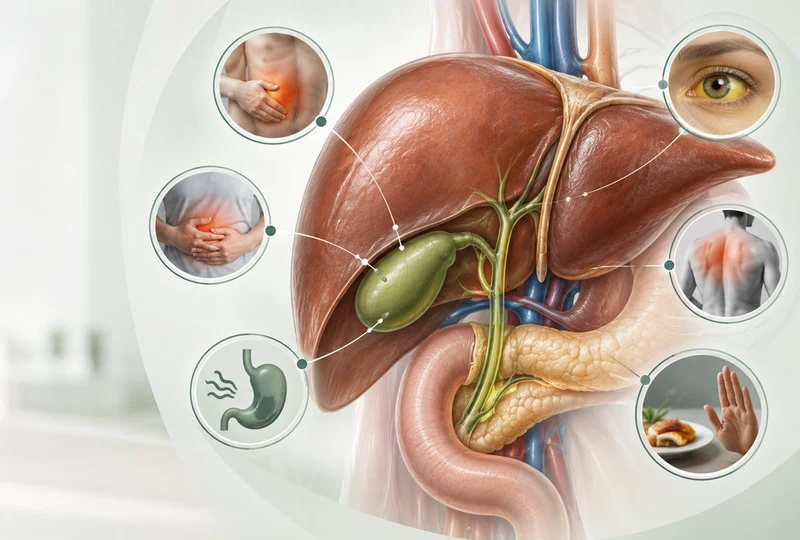
The gallbladder is a small organ located beneath the liver. It stores bile and releases it into the small intestine, where bile helps the body digest fats. If gallstones form and one of them blocks a bile duct, bile cannot flow normally. The result may be a painful episode often called biliary colic or a gallbladder attack.
Gallstones do not always cause symptoms. Many people live with them for years and learn about them only during an unrelated medical exam. Trouble often begins when a stone blocks a duct or inflammation develops. At that point, waiting too long can lead to complications involving the gallbladder, liver, or pancreas.
One point matters from the start. None of the signs below can confirm a gallbladder condition on its own. Similar symptoms can occur with gastritis, ulcers, pancreatitis, liver disease, acid reflux, and even certain heart problems. A doctor must evaluate the full picture and order the right tests.
1. Pain under the right ribs
The most recognizable sign of a possible gallbladder attack is sudden pain in the upper right part of the abdomen. It may grow stronger quickly, remain steady, and last from several minutes to several hours. Some people feel pressure or heaviness. Others describe pain so intense that they cannot find a comfortable position.
The location makes sense because the gallbladder sits directly beneath the liver. Still, location alone is not enough for a diagnosis. Pain in this area can also come from the stomach, intestines, liver, lungs, ribs, or muscles.
2. Pain that travels to the right shoulder or back
With gallbladder problems, the source of the pain is in the abdomen, but the discomfort may appear somewhere else. It can spread below the right shoulder blade, between the shoulder blades, or into the right shoulder. Doctors call this referred pain. It happens because of the way nerve signals travel through the body.
A person may assume they pulled a muscle or slept in an awkward position. What deserves attention is the pattern. Shoulder or back pain that appears together with discomfort under the right ribs, nausea, or symptoms after eating should be described clearly to a medical professional.
3. An attack after a rich or fatty meal
The gallbladder contracts after we eat, especially when a meal contains a lot of fat. If a stone is blocking the flow of bile, pain may begin at that moment. Gallbladder attacks often follow a large meal and may start in the evening or during the night.
This does not mean fatty food is the only cause of the problem. A meal may simply trigger symptoms from a condition that is already present. If the same reaction keeps returning, endlessly removing foods and experimenting with strict diets is not the best answer. Write down when the pain begins, how long it lasts, and what happened before it started. Bring those notes to your medical appointment.
4. Discomfort in the upper abdomen
Not every attack begins with sharp pain. Some people feel heaviness, pressure, fullness, or discomfort in the center of the upper abdomen, just below the breastbone. Because of this location, the symptom may be mistaken for heartburn or an upset stomach.
Repetition is an important clue. If the discomfort returns after meals, appears with pain on the right side, or follows a familiar pattern, it is worth scheduling an evaluation. Heartburn medicine may temporarily change the sensation, but it cannot explain why the symptom keeps happening.
5. Nausea or vomiting after eating
Nausea and vomiting may occur during a gallbladder attack, but they are not specific to gallbladder disease. They can happen with many conditions, from food poisoning to migraine. The full pattern matters more than one symptom. Pay attention to whether nausea occurs with pain in the upper right abdomen, returns after meals, or continues during a prolonged attack.
Do not wait for a routine appointment if vomiting keeps happening, the person cannot keep water down, or severe pain and weakness develop. These symptoms need prompt medical assessment because dehydration and other complications can progress quickly.
6. Severe pain with fever
Strong or persistent pain together with fever and chills may signal inflammation or an infection. Jaundice is another serious warning sign. It causes the skin or the whites of the eyes to look yellow. Dark urine and unusually pale stools may also appear when the normal flow of bile is blocked.
This is not the time to wait and see. Urgent medical care is needed when pain lasts for several hours, becomes unbearable, or occurs with a high fever, chills, repeated vomiting, or jaundice. In the United States, call 911 for a medical emergency or go to the nearest emergency department.
How doctors check the gallbladder
Diagnosis begins with a conversation about the symptoms and a physical exam. The doctor will want to know exactly where the pain occurs, when it begins, how long it lasts, whether it is linked to food, and whether similar attacks have happened before. Blood tests can reveal signs of inflammation, infection, or problems involving the liver and pancreas.
Ultrasound is the imaging test most often used to look for gallstones. According to the National Institute of Diabetes and Digestive and Kidney Diseases, ultrasound is the best imaging test for finding stones in the gallbladder. In some cases, a doctor may order a CT scan, an MRI, a specialized scan of the bile ducts, or an endoscopic procedure.
An online image or a symptom list cannot confirm the diagnosis. Different medical conditions can create a similar set of complaints, and the right treatment depends on what the examination and testing reveal.
Is surgery always necessary?
If gallstones are found by accident and cause no symptoms, treatment may not be needed. A doctor makes that decision after considering the person’s overall health and individual risks. When attacks or complications occur, the usual treatment is often surgery to remove the gallbladder. This procedure is called a cholecystectomy.
A person can live without a gallbladder. After removal, bile flows directly from the liver into the small intestine instead of being stored in the gallbladder. Treatments that do not involve surgery are reserved for certain situations. They are not suitable for everyone, may take a long time, and do not always prevent stones from forming again.
What can help lower the risk?
No habit can remove every risk, but some choices may help. Maintaining a healthy weight, staying physically active, and eating fruits, vegetables, beans, and whole grains can support digestive health. It also helps to limit refined carbohydrates, added sugar, fried foods, and unhealthy fats. Very rapid weight loss and extremely low calorie diets can increase the risk of gallstone formation.
This is not a call to eliminate all fat. The body needs healthy fats, and the gallbladder needs to contract and empty regularly. If symptoms are already present, a universal diet found online cannot replace a medical evaluation. Changes in eating habits should be discussed with a doctor and matched to the diagnosis and the person’s overall health.
The main message is simple. One mild episode of discomfort does not always mean disease, but recurring pain after meals deserves attention. Severe pain, fever, chills, vomiting, or jaundice requires a fast response. Finding the cause early can reduce the risk of facing a serious complication at the worst possible moment.