Why America Was Not Named After Columbus. The Story That Surprises Even Historians
Imagine a man who makes a journey that changes the course of world history. His name is known by billions of people. Cities, squares, holidays, and even an entire country are named in his honor. But the greatest discovery of his life receives the name of someone else. That is exactly what happened to Christopher Columbus.
We are so used to the word “America” that we rarely stop to wonder why such a huge continent was not named after the man we were taught in school to call its discoverer. And the deeper you look into this story, the more surprising the answer becomes.
It Was More Complicated Than School Taught Us
In 1492, the Genoese navigator Christopher Columbus, serving the Spanish crown, set out to find a sea route to India. He crossed the Atlantic Ocean and reached the islands of the Caribbean.
The most interesting part is that Columbus believed until the end of his life that he had reached the eastern edges of Asia. He did not think he had discovered a new continent. To him, these were lands near India and China. That is why he never spoke about a new continent. This seemingly small mistake later changed the history of world maps.
Each of us knows that making a discovery is not enough. It is just as important to understand what that discovery means. Sometimes the interpretation of an event becomes more important than the event itself.
The Man Who Saw More Than Others
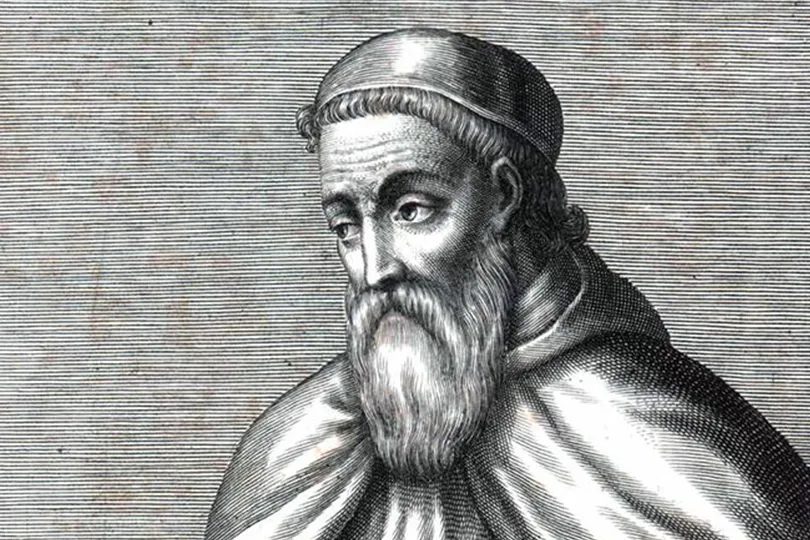
A few years later, another Italian traveler sailed to the New World. His name was Amerigo Vespucci. He was not the first to cross the ocean. In fact, most historians believe that Columbus was the one who opened the way to these lands for Europeans. But Vespucci did something his famous predecessor could not do.
While exploring the coast of South America, he concluded that this was not Asia at all, but a completely new continent unknown to Europeans. For his time, this was almost a revolutionary idea. Vespucci was among the first to openly call these lands the New World. Today this seems obvious, but at the time it completely changed how people imagined the planet.
The history of science has many examples where the main contribution is not made by the person who arrives first, but by the person who understands what is happening more deeply than others.
Why Europe Believed Him
There is another reason that is rarely mentioned. Amerigo Vespucci turned out to be a talented storyteller. After his voyages, he left behind many letters, journals, and detailed descriptions of his expeditions. These texts spread quickly across Europe. People were fascinated by stories of unknown shores, new peoples, unusual animals, and the riches of overseas lands.
At a time when printing was only beginning to gain power, such publications created the effect of a true sensation. Vespucci also had strong ties with influential people who funded sea expeditions. His name was constantly heard among scholars, mapmakers, and publishers.
This creates a curious paradox. Columbus made the voyage, while Vespucci managed to explain its meaning to the world. That is how fame is born. Sometimes it is not enough to do something great. You also have to convince others of what actually happened.
One Mapmaker Changed History
The decisive moment came through the work of the German mapmaker Martin Waldseemuller. In the early 16th century, he was preparing a new map of the world and carefully studying Vespucci’s published notes. In Latin texts, the traveler’s name appeared as Americus.
Waldseemuller suggested naming the new lands America, by analogy with Europe, Asia, and Africa, whose names were used in feminine form. This decision appeared in the book “Introduction to Cosmography,” which quickly became popular among scholars.
At first glance, it was just a label on a map. But details like this sometimes change history more powerfully than wars and discoveries. Later, other famous mapmakers, including Johann Schoner and Gerardus Mercator, began using the same name. When the same word appears on dozens of maps, it gradually becomes normal. That is how America finally received its name.
What About Columbus
This does not mean Columbus was forgotten. The Republic of Colombia was named in his honor, although the traveler himself never went there. In the United States, there is the District of Columbia, where the capital city, Washington, is located. There are rivers, cities, universities, monuments, and countless streets bearing his name, but not the continent itself.
The irony of history is that the man who opened the road to the New World remained forever connected mostly with separate geographic names. The continent received the name of the man who first understood its true nature.
Was Columbus Really First
Modern historians also remind us of another interesting fact. There is strong evidence that the Vikings reached the shores of North America about five hundred years before Columbus’s expedition. Archaeological findings in Canada confirm the existence of the settlement of L’Anse aux Meadows, founded by Scandinavians around the 11th century.
But their voyages had almost no effect on European civilization. A discovery becomes a true discovery only when it changes the world. It was Columbus’s voyage that launched the Age of Discovery, transforming trade, politics, the economy, and human history.
The Main Lesson of This Story
The story of America’s name reminds us that human memory works in a far more complicated way than it seems. Sometimes one person comes first, while another becomes the symbol of the era. Sometimes fate is decided not by a ship, but by a book. Not by an expedition, but by a map. Not by the heroic act itself, but by notes published at the right time.
Similar things happen in our lives every day. Someone creates an idea, someone else makes it popular, and someone else becomes forever connected with it.
The story of America shows something remarkable. One great act is not always enough. It is just as important to understand its meaning, tell the world about it, and convince people to look at familiar things in a new way. Perhaps that is why, more than five hundred years later, we live on a continent named not after the most famous navigator of his age, but after the man who managed to explain to the world that a completely new world had opened before them.